NaCzarter Team
· Updated
How to start an outboard on a charter sailing yacht
Same order every time: open the tank vent, pump the primer bulb until firm, pull the choke, set neutral, clip on the kill cord, then pull the starter. Once it fires, push the choke in and check for the cooling water stream. If it dies in neutral right after starting, blame a choke pushed in too early or a closed vent.
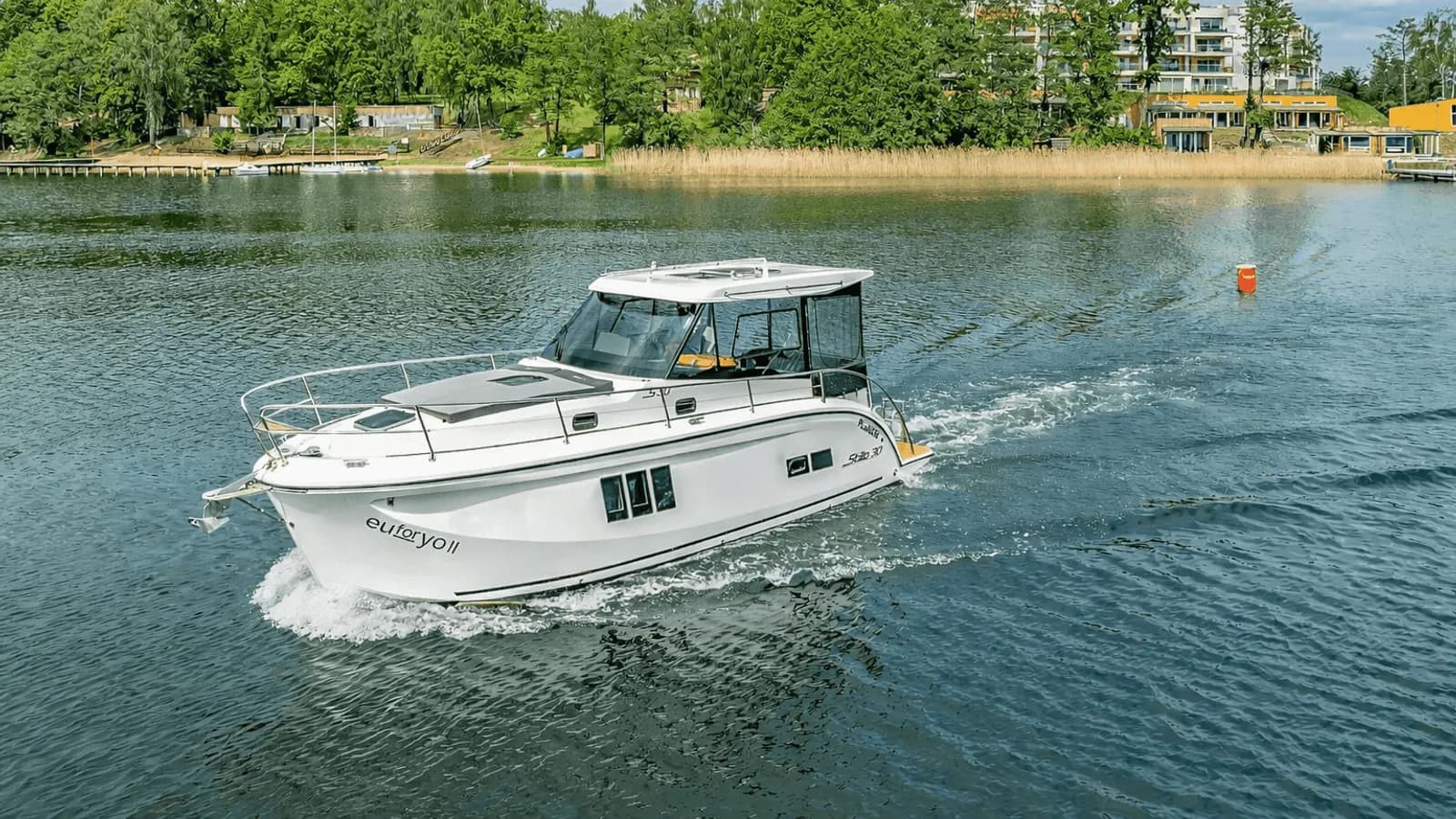
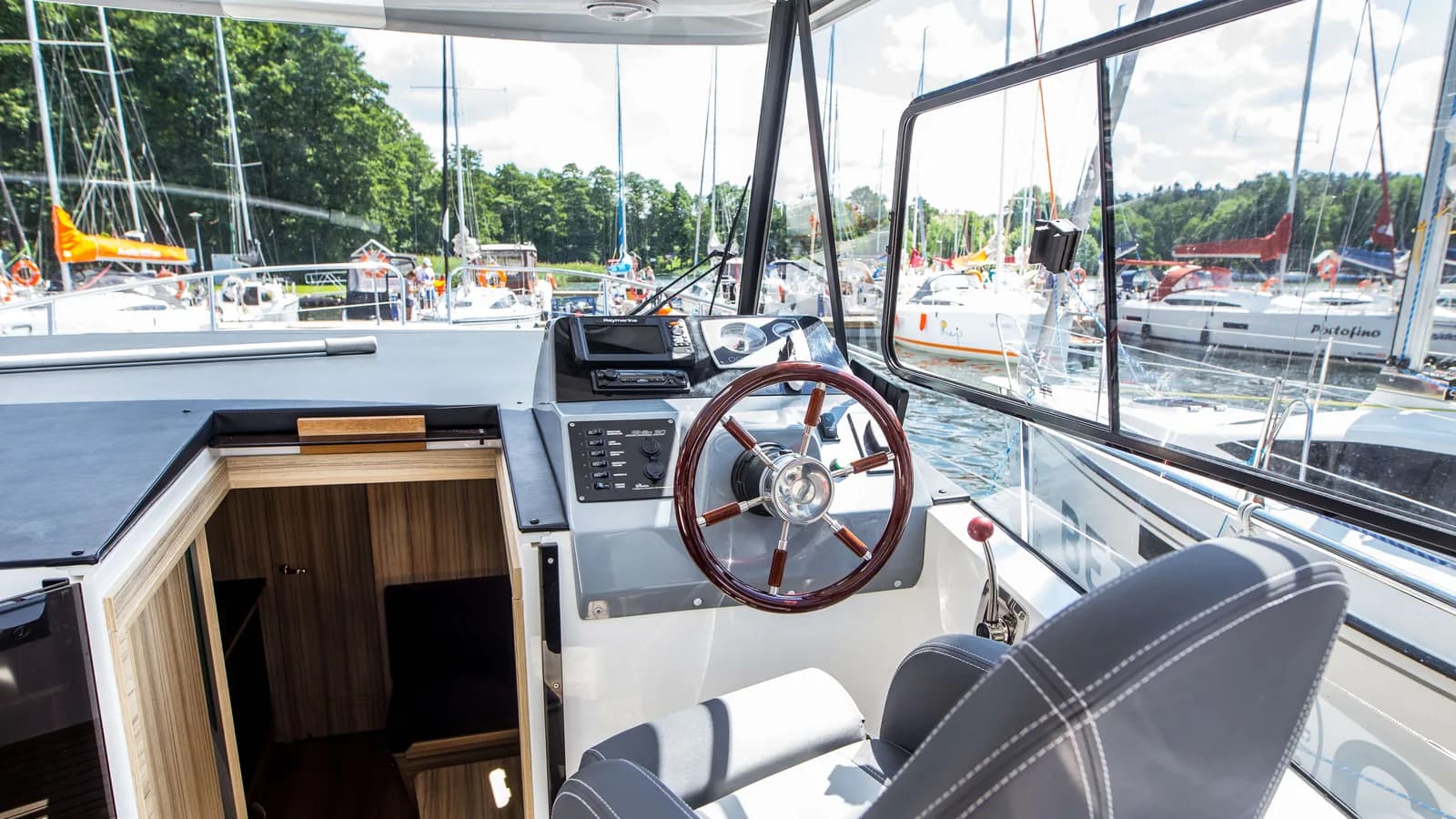
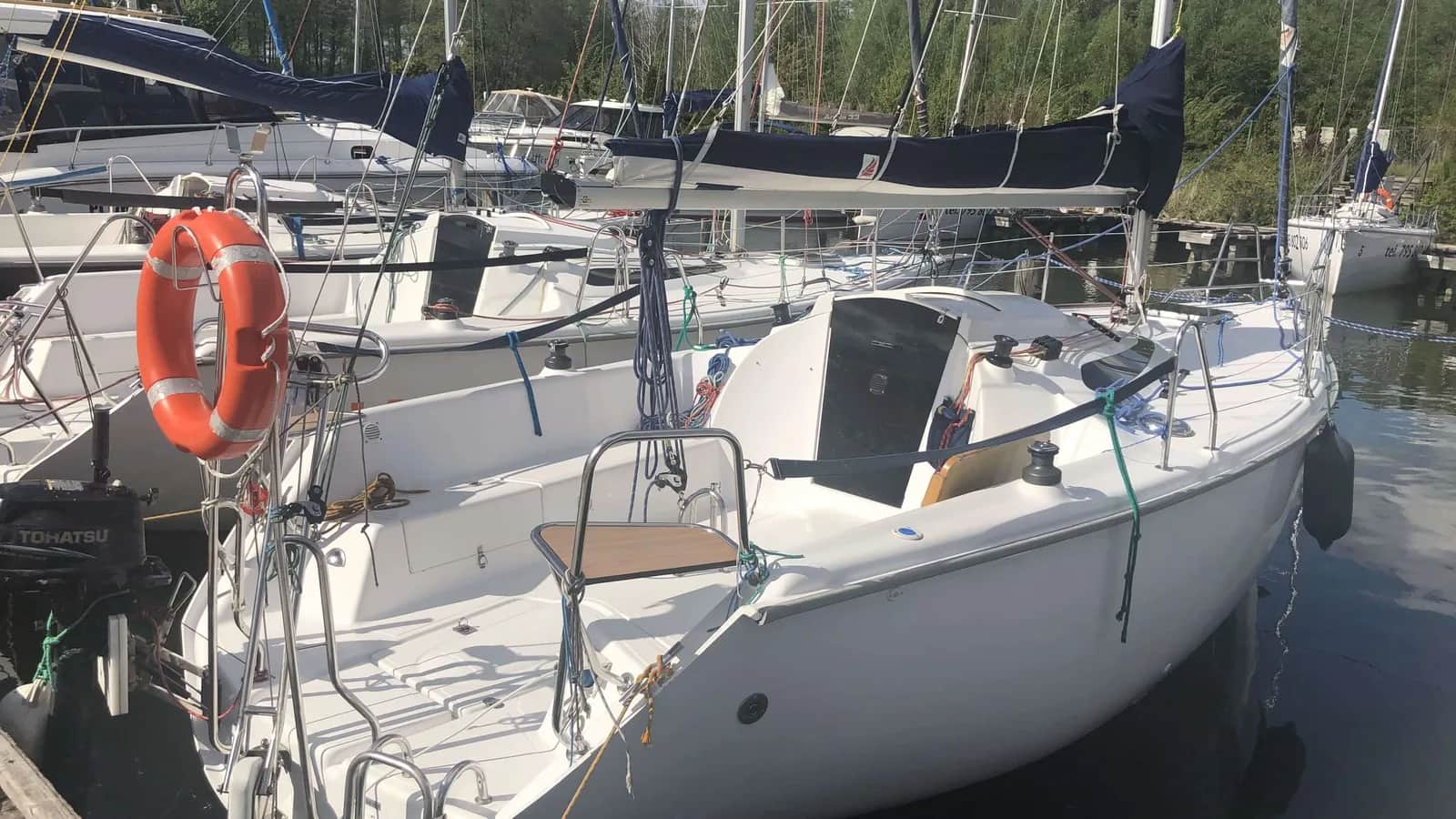
On NaCzarter, most sailing yachts carry a petrol outboard (autumn 2026). Median power 6 HP, range 4 to 20 HP, tank 12 l, owners quote about 2 l/h at that power. Houseboats with an outboard usually run about 30 HP with a 75 l tank. Same handling, usually with electric start and a remote throttle.
At handover: what the owner shows, what you check
The owner starts the motor at handover. Watch once, then do it yourself while they are still there. Four questions to ask:
- four-stroke on straight petrol or two-stroke on a mix, what ratio;
- where the spare kill cord is, and is there a spare spark plug with a wrench;
- electric starter: does manual start work too;
- how much fuel is in the tank and jerry can.
Then check yourself: fuel line clicked onto the quick connector, primer bulb uncracked, propeller free of chips and fishing line. Clamp screws on the transom tight, motor safety line on. Shortfalls and damage go into the report. The full yacht handover checklist is covered separately.
Ask about fuel too: usually you return a full tank or pay by consumption in the marina. Rules vary by owner, details in our guide to fuel in Masuria.
Starting step by step
- Check astern: no mooring line or sheet in the water, nobody swimming nearby.
- Lower the leg and lock the tilt latch. The cooling water intake must be submerged.
- Open the vent on the tank cap (and the fuel tap, if fitted), check the line, pump the bulb until firm.
- Lever to neutral or "start", if it has that position. In gear, most motors lock the starter.
- Cold motor: pull the choke. Warm motor restarted after a short break: leave the choke in.
- Clip the kill cord to your wrist or lifejacket. Its clip must sit in the kill switch, otherwise no spark.
- Pull the starter rope gently until it resists, then one firm pull. Never yank to the end or let go, guide it back. Electric starter: a few seconds, pause, try again.
- Running: push the choke in gradually as the revs settle. Too fast and it dies. Too long and you flood the plug.
- Within seconds a tell-tale stream of cooling water should flow from the back of the motor. None: switch off, never troubleshoot with it running.
- Let it warm up for a moment in neutral. Only then lines off and into gear.
Under way: leg, neutral, reverse and waves
Under sail the motor is off and tilted up: a lowered leg brakes the boat. Raise it after hoisting sails, lower it before dropping them. Practical rule: start the motor in neutral first, then drop sails. No start? You still have sails and time.
When lowering, check the latch. An unlocked leg lifts in reverse, the propeller sucks air, no braking. In the marina: minimum revs, short bursts, neutral in between. Shift only at idle: forward to reverse under throttle wrecks the gearbox. A small outboard brakes weakly in reverse, and a sailing yacht with eight aboard is heavy, so brake earlier than you think. More in our text on harbour manoeuvres under motor.
In waves the propeller jumps clear, sucks air and the revs surge. That is propeller ventilation, often confused with cavitation, not a fault. Ease the throttle, crew aft, run at an angle to the waves. In strong wind Śniardwy and Mamry build a short, steep wave that keeps lifting a small outboard out of the water. Cross those lakes in the morning or not at all.
Common faults and what to do
Air in the fuel line. The motor runs briefly and dies, the bulb is soft. If it stays soft after opening the vent and pressing the connectors home, the line leaks or the tank is empty.
Propeller in weed or on a rope. Revs rise, speed drops, the stern vibrates. Usually your own mooring line or a sheet that went over the side. Clear it with a boat hook or knife, leg up and kill cord out.
Overheating. No tell-tale stream, hot cowling, a burning smell. Stop at once. Often the tell-tale hole itself is blocked, not the pump: clear it with fishing line, clean the intake on the leg and let the motor cool.
Flooded plug and stalling in neutral: see the table below. Everything else: call the owner before unscrewing anything. Do not take the motor apart, DIY damage comes out of the deposit. Dead motor mid-lake: a sailing yacht has sails, a houseboat has an anchor on a line. Drop it so you do not drift ashore or into the fairway, then call. Numbers: see how to call for help in Masuria.
Safety: kill cord, water, fuel
Kill cord always on your wrist or lifejacket, not on a hook beside the switch "just in case". Fall overboard and the motor stops, the boat stays with you. Nobody enters the water with the motor running. Swimming from the boat: motor off, kill cord out, key in your pocket.
Refuel in the marina, on the jetty, motor off and cool. Lift the portable tank onto the jetty, do not pour in the cockpit. Carry the spare jerry can closed, in a ventilated cockpit locker, never in a sleeping cabin. Wipe up spills, nothing goes into the lake: Masuria is a protected area. Transom, locker and other terms: see the glossary of yacht parts.
Symptom, cause, what to do
| Symptom | Likely cause | What to do |
|---|---|---|
| Starter rope locked or electric starter does not turn | Gear engaged | Lever to neutral, try again |
| Turns, no fire, no petrol smell | Kill cord not clipped in, closed vent or fuel tap, disconnected line, empty tank | Kill cord in switch, vent open, connector pressed home, bulb firm, check fuel |
| Turns, no fire, petrol smell | Flooded plug: too long on choke or repeated pulls with choke out | Choke in, a little throttle, a few pulls; nothing: wait a few minutes, repeat |
| Starts and dies after a moment in neutral | Choke pushed in too early or closed vent | Start on choke, push it in gradually; open the vent, pump the bulb |
| Runs, no water stream | Blocked water intake or tell-tale hole | Stop at once, clean the intake, clear the hole, let it cool; still none: call the owner |
| High revs, low speed, vibration | Weed or rope on the propeller; in waves it sucks air | Stop, kill cord out, leg up, clear the propeller; in waves ease the throttle, crew aft |
| Jerks, smokes, dies on throttle, bulb firm | Water or old fuel, dirty filter | Add nothing, note the symptoms, call the owner |
| Motor lifts in reverse | Unlocked leg | Neutral, lock the latch, only then reverse |
First aid, not a service manual. Power and tank of a specific boat: see its yacht page among the sailing yachts in Masuria.
Frequently asked questions
How do two-stroke and four-stroke handling differ? A two-stroke burns a petrol and oil mix at the owner's ratio; on straight petrol it seizes. A four-stroke burns straight petrol and keeps its oil separately. Check which you have before topping up from the jerry can.
How much fuel does an outboard on a sailing yacht use? Owners on NaCzarter quote about 2 l/h for a 6 HP motor, so a full 12 l tank means a few hours under motor. More in waves and at full throttle.
Outboard will not start in the morning, what now? A cold motor needs choke, then in order: neutral, kill cord clipped in, vent open, bulb firm. Petrol smell means a flooded plug: choke in, a little throttle, a few pulls. Still nothing after a few minutes: call the owner.
May I change the spark plug myself? Only if the owner left a spare with a wrench and showed you how. Otherwise call. Anything else you take apart is charged to the deposit.
What if I lose the kill cord? Without the clip in the switch the motor will not start, so ask for a spare at handover. None aboard: do not jam the switch, call the owner.
Cover photo: NaCzarter.pl