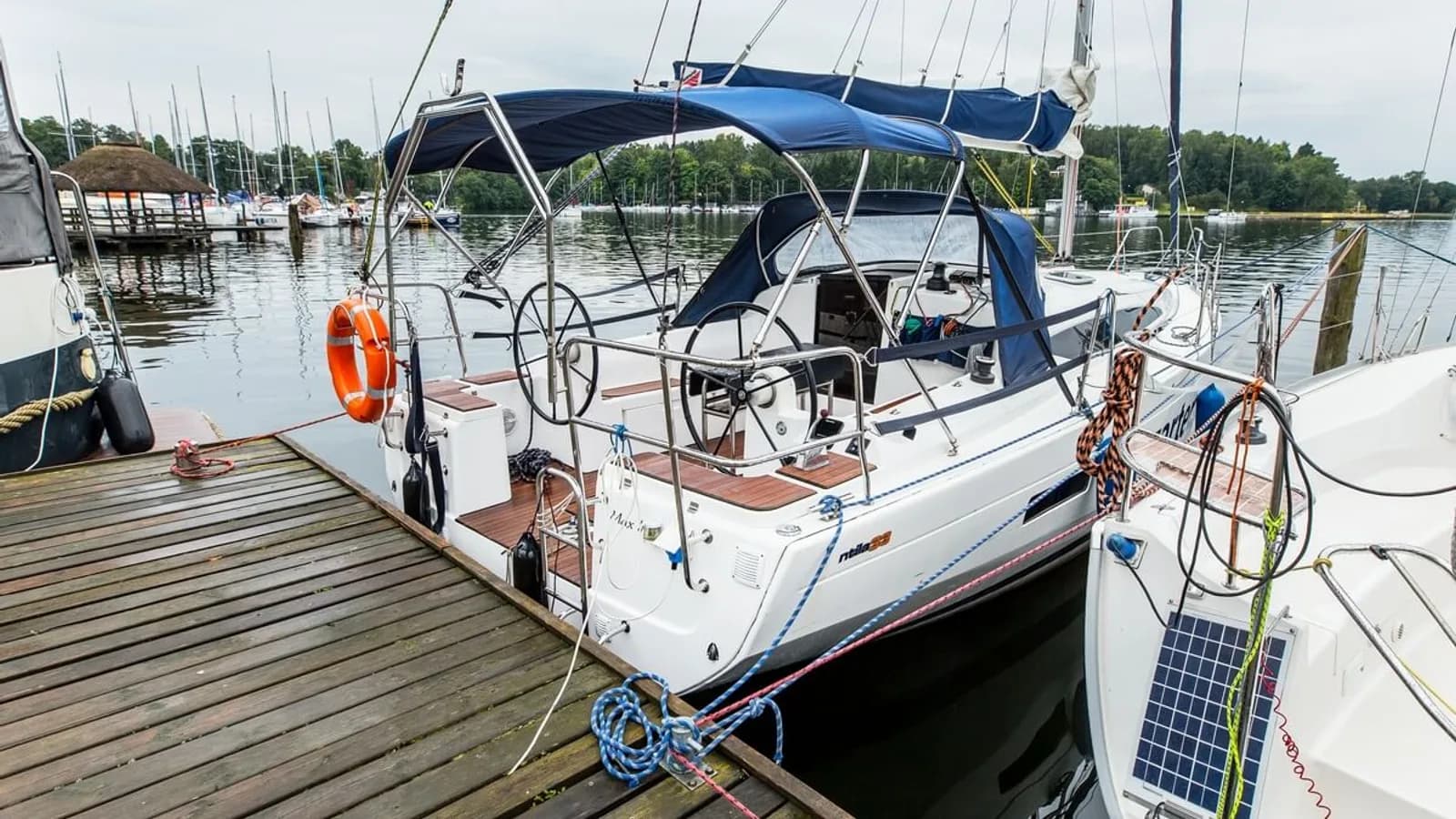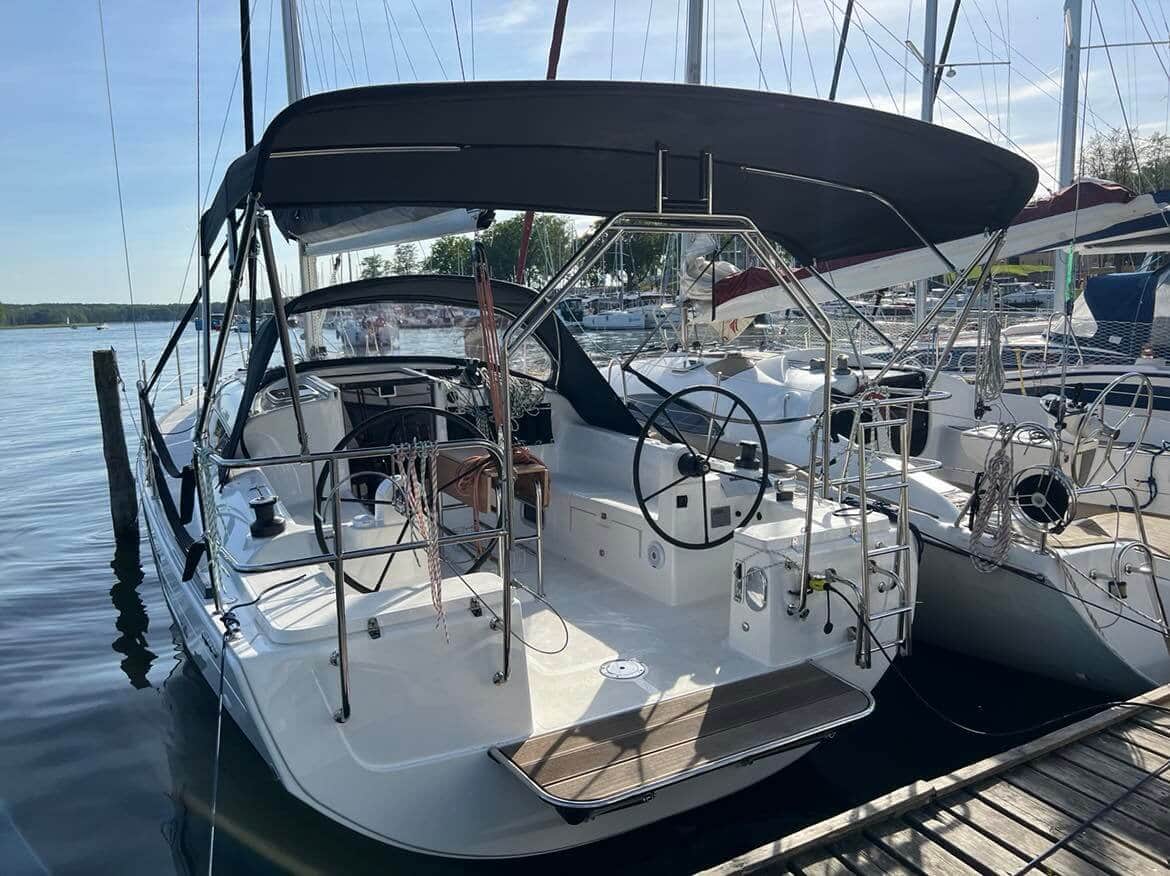
NaCzarter Team
· Updated
Where does electricity on a boat come from?
Electricity on board can come from batteries or a shore power connection in port. A 12 V system supplies equipment designed for that voltage, while 230 V sockets need a suitable power source. A household socket does not automatically work out on the lake. At handover, check which appliances you can use away from port.
Imagine your first evening in a bay: the light is on, your phone is charging through USB, but the laptop charger in the socket does nothing. This does not necessarily mean a fault. On this boat, the 230 V sockets may only work when connected to shore power. Establish this before your trip, especially if someone plans to work during the cruise.
12 V and 230 V: voltage is only the beginning
Boats can have a direct current system, often 12 V, alongside a separate 230 V alternating current system. Some vessels use a different voltage for their onboard systems, so follow the information for your particular boat. Equipment and sockets have specific purposes; a plug fitting into a socket does not prove that any appliance can be connected.
A battery stores energy. A charger replenishes it from an appropriate source, while an inverter converts battery DC into AC for compatible appliances. These roles appear in Victron Energy’s boat electrical system diagram. For the crew, the key question is: what are we using now, and what will still work after we leave the pontoon?
| Component | Purpose | What to establish at handover |
|---|---|---|
| Domestic battery | Stores energy for its connected loads | Where to check its condition and when to report a low level |
| Battery charger | Replenishes energy in the batteries | How to tell that charging is actually taking place |
| Inverter | Supplies compatible 230 V appliances from the batteries | Which sockets it supplies and what load the operator permits |
| Shore power connection | Supplies electricity from the marina | Who connects the cable and what limits apply at the berth |
A charger and an inverter do different jobs
A “charger” on the equipment list does not confirm that 230 V will be available at anchor. An inverter does not provide an extra energy reserve either: it powers appliances using energy stored in the batteries. Some units combine both functions, but you still need to understand their capabilities and how they are used on that boat.
Both the power an appliance draws and how long it runs matter. A laptop used throughout the afternoon has different requirements from a coffee machine switched on briefly. Mastervolt explains in its inverter guide that battery capacity can be the limiting factor, and energy conversion also involves losses. Do not assume that because one appliance works, you can run all the others at the same time.
Before packing a kettle, hairdryer or your own coffee machine, give the staff its power rating from the label. Ask them to confirm whether you may use it and under what conditions. Add chargers compatible with the boat’s sockets to your charter packing list, rather than buying adapters just in case.
What should you ask for at handover?
A demonstration on board is the clearest explanation. Ask the person handing over the boat to identify sockets that work away from port, explain the panel and show normal readings. Simply hearing “there is electricity” does not help when the cabin loses power after dark.
- Establish which circuits the crew may switch on and off themselves.
- Ask what charges the batteries on this boat and how to confirm that charging is working.
- Check restrictions on using the fridge, heating and your own electrical equipment.
- Ask for a demonstration of the shore power connection and identification of the correct cable.
- Save a contact number for alarms or loss of power.
Add these points to your boat handover checks. If several people will use the system, make sure they all hear the explanation. A short note on your phone is more useful than trying to remember later which switch controlled which appliance.
How do you plan an evening without shore power?
Start with the crew’s needs. Do you need to charge four phones, prepare a presentation on a laptop, or simply have light for dinner? List the devices you actually need and mention them at handover. Staff can then assess your plans against the equipment and condition of that particular boat.
Do not judge the remaining energy solely by whether the light is still on. Mastervolt explains the difference between measuring voltage and monitoring a battery: available energy depends on factors including load, temperature and battery condition. Use the readings and thresholds explained at handover instead of applying one voltage value found online to every boat.
If an essential device must run all night, establish its power requirements and supply arrangements before booking. This particularly matters for equipment you cannot simply put aside until your next stop. An evening in a marina with a suitable connection may fit your plans better than a night in a bay.
The shore cable and warning signs
Connect to shore power according to the handover instructions and marina rules. The Boat Safety Scheme highlights the condition of cables and connections, the need to uncoil the cable and to keep it from falling into the water. Do not use a damaged cable or a loose connection; report the problem to staff.
If you notice an overheating smell, smoke, sparks or a repeated alarm, stop using the equipment and follow the operator’s emergency procedure. Do not open the distribution board, replace protective devices with higher-rated ones, or repeatedly switch the system back on to force it past a fault. This guide explains the system’s functions; leave repairs to technical staff.
Frequently asked questions
Does every 230 V socket work while underway? No. It may be supplied only from shore power or by an inverter. Confirm the arrangement for that particular socket before planning to work on your laptop.
Will having a solar panel cover the whole trip? A panel alone does not confirm that. Ask staff to assess your planned appliance use; do not assume in advance that charging will meet every demand.
Can I bring my own inverter? Do not connect it without the operator’s agreement. First check the capabilities of the existing system and which arrangements are permitted on board.
Will running the engine always charge the batteries fully? Starting the engine is not confirmation of a full charge. Ask which batteries the system charges and how to recognise when charging is complete.
Choose equipment to suit your trip
When browsing boats for charter, check the power supply description as carefully as the berth layout. If you need 230 V away from port, confirm the inverter, the sockets it supplies and permitted appliances before choosing a boat. This detail can change the whole crew’s stopping plans.
Illustrative photo from the NaCzarter.pl catalog.