NaCzarter Team
· Updated
What does a thruster do?
A thruster helps move a boat’s bow or stern sideways while manoeuvring. A bow thruster acts at the bow, a stern thruster at the stern. It is an additional tool when approaching a berth. It does not replace a manoeuvring plan, the main propulsion system or the skipper’s skills. Check operating limits and permitted running time for the actual device.
On a charter listing, “bow thruster” can look like the answer to worries about entering port. It is worth understanding what that equipment actually helps with. Its key benefit is correcting the position of a particular part of the boat, rather than a promise that every tight space becomes accessible.
What happens to the bow and the rest of the boat?
A typical bow thruster produces transverse thrust. It helps move the bow left or right according to the control input. This is not the same as moving the whole boat sideways, parallel to the pontoon. The diagrams in the Sleipner PJC211 and PJC212 panel manual clearly distinguish a bow thruster, a stern thruster and their combined operation.
Imagine looking down at the boat from above. If you watch only the bow, you might miss the stern getting closer to a neighbouring vessel. The skipper therefore needs information about the entire boat and the space around it. A crew member helping with the manoeuvre can report what they see rather than suggest successive joystick movements.
This equipment is intended for manoeuvring at low speed. The exact speed limit depends on the model. Do not use a thruster as a substitute for normal steering during a passage or as a brake when approaching too fast.
| Situation | How the thruster may help | What the skipper still decides |
|---|---|---|
| The bow moves away from the intended heading | Correcting its position | Whether enough space and time remain for the manoeuvre |
| The boat approaches the pontoon | Adjusting the bow’s position | Approach speed and stopping the boat |
| The whole boat needs to move sideways | Capability depends on the complete propulsion arrangement | Whether the equipment can actually produce the intended movement |
| An alarm appears or there is no response | Do not assume the device remains available | Abandoning the attempt and following the prepared contingency plan |
Why is there no single running-time figure?
Different models have different limitations. Motor design, the control system and operating conditions all matter. The Sleipner SE and SE-IP manual describes a continuous-running limit and thermal protection that can shut the device down if it overheats. Its figures must not be applied to every other type of thruster.
At handover, ask for the model name, the correct manual and an explanation of the permitted duty cycle. Establish how to recognise a warning and what to do next. Hearing “you can hold it for three minutes” or “always use five-second bursts” is no substitute for information about the unit installed on your boat.
Not every joystick works the same way. Some systems switch thrust on and off; others allow the thrust level to vary. The VETUS BOW PRO range with proportional control is an example of the latter. A familiar-looking lever is therefore not enough to predict the equipment’s response.
Wind, power supply and performance limits
How strongly the device affects the boat’s position also depends on the vessel itself. In its technical questions and answers, Sleipner identifies factors including vessel size, the area exposed to wind and the thruster’s position relative to the pivot point. The manufacturer also explains how the voltage reaching the motor affects thrust.
In practice, do not compare two boats’ responses solely because their control panels have similar buttons. A tall houseboat and another vessel with a low profile face different manoeuvring conditions. This is one point worth discussing when choosing between a sailing yacht and a motorboat.
If the bow does not respond as expected, do not automatically assume that holding the button longer will solve it. Change your approach plan before you run out of room to make a decision. A berth recommended by marina staff, help taking a line or another attempt may make more sense than continuing merely because the boat has an extra propulsion device.
What should you check at handover?
A demonstration should be part of an unhurried briefing, not your first approach between occupied berths. Ask the person handing over the boat to demonstrate it in suitable conditions. Get to know the panel first, then the boat’s response. Add these specific questions to your handover checklist:
- Does the device act at the bow, at the stern, or does the boat have both?
- How is the panel activated and how do you confirm that it is ready?
- Which control operates each part of the boat?
- What limits on time, speed and power supply apply to this vessel?
- What do the alarms mean, and where is the emergency isolator identified by staff?
- How do you finish using the device and prevent accidental activation of the panel?
If two people will take turns at the helm, both should receive the briefing. Do not hand over control halfway through a difficult approach. Before entering port, also agree who is steering, who is watching the stern and who handles the lines. A thruster does not remove the need for these roles.
When should you stop using it immediately?
Do not operate the device when people, animals or objects are in the water near its intake. The Sleipner manual warns about suction into the tunnel and the rotating propeller. Watch for ropes hanging over the side too. If the crew notices unusual noise, vibration or a loss of thrust, report it to the skipper, stop using the device and contact support.
Do not try to remove an obstruction from the tunnel yourself or check the propeller with your hand. Do not open the installation in search of a quick repair. A charter crew’s role is to describe the symptoms and manage the situation according to the instructions, leaving diagnosis to the person responsible for servicing.
Frequently asked questions
Will a bow thruster stop the boat before the pontoon? A bow thruster does not brake forward motion. Your stopping plan must rely on correct handling of the particular boat and its propulsion system.
Does it let you handle a boat without experience? Equipment alone does not provide skills. The person in charge still needs to understand the boat’s behaviour, assess conditions and practise manoeuvres during suitable training.
How long can you hold the joystick? Follow the specific model’s manual and handover briefing. There is no single figure suitable for all thrusters.
Does every boat with a joystick move sideways? No. That capability depends on the entire system. A bow-thruster joystick alone does not confirm a stern thruster or integrated propulsion control.
Check the equipment on the actual boat
When comparing boats for charter, treat a bow thruster as useful manoeuvring assistance. Ask what type it is and request a demonstration at handover. Choose a boat whose size and handling requirements match the abilities of the person at the helm.
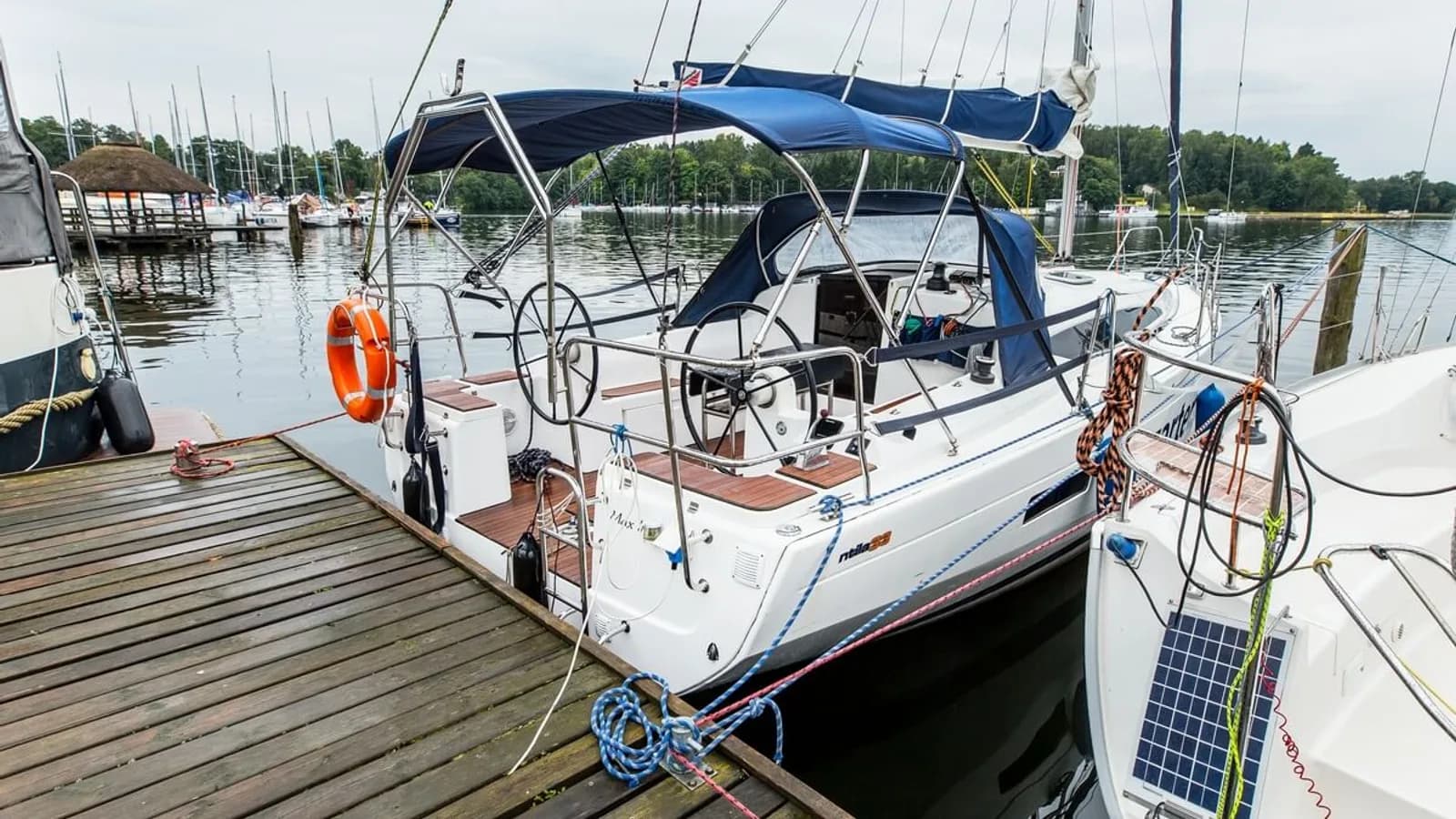
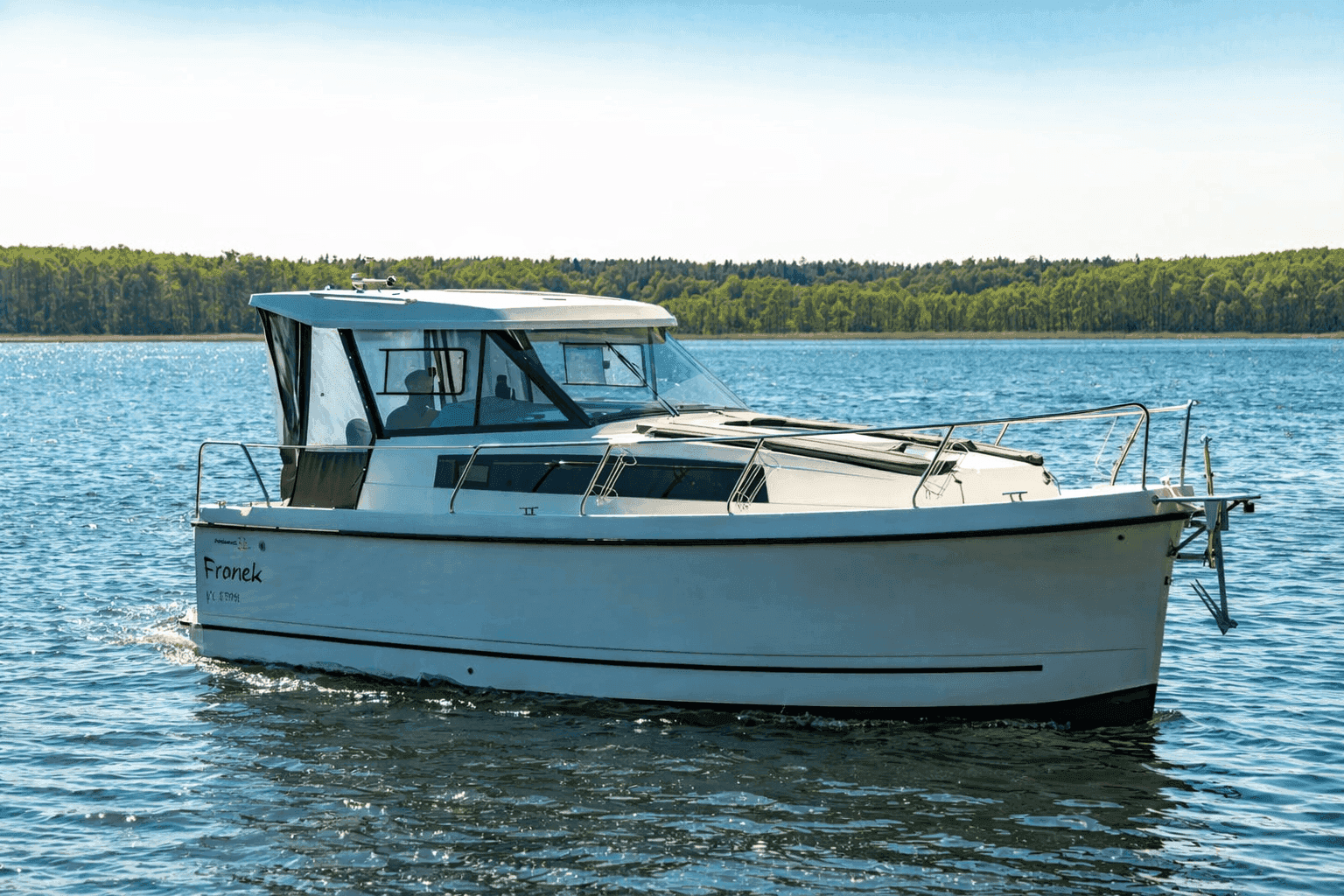
Illustrative photo from the NaCzarter.pl catalog.