NaCzarter Team
· Updated
Hold a sailing licence and love working the wind? Take a sailing yacht — on the Masurian Lakes that's still the fullest way to cruise. No licence, small children on board, or you simply want a predictable daily plan? A cabin motorboat or a houseboat within the licence-free limits will serve you better. That's the short version. The long one is more interesting, because three things decide this choice at once: the law, your wallet, and what you actually expect from a week on the water.
Start with the law, because it often decides for us
Polish regulations are specific here. Under Article 37a of the Inland Navigation Act, no qualification document is required to helm:
- a sailing yacht with a hull length of up to 7.5 m,
- a motor yacht with engine power up to 10 kW,
- a motor yacht up to 75 kW and up to 13 m of hull, with top speed structurally limited to 15 km/h — and this is precisely the gateway through which houseboats and cabin motorboats "for anyone who has done the briefing" sailed onto the Masurian Lakes.
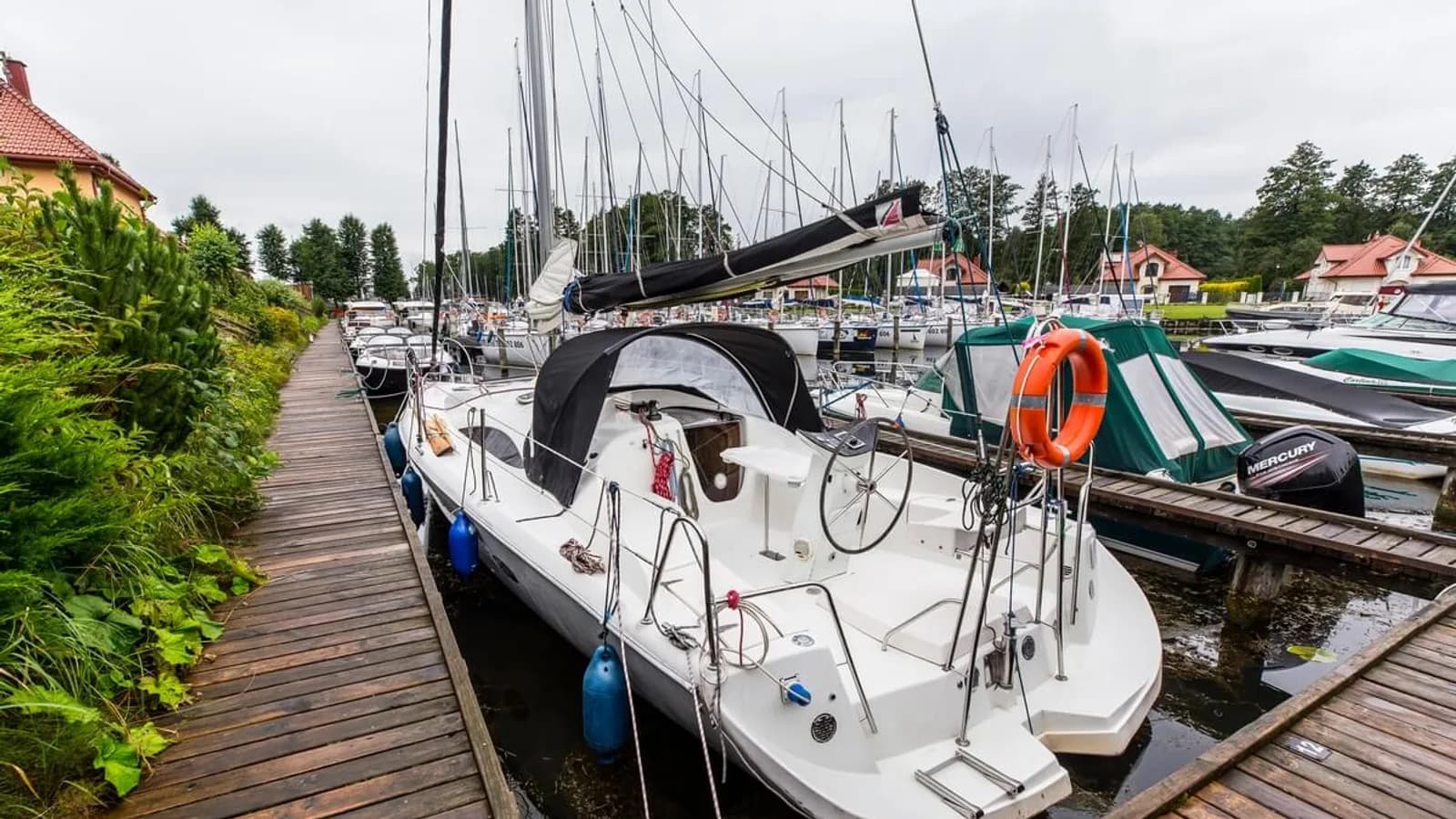
Now the catch that many guides skip over. Most charter sailing yachts in Masuria have hulls of 8–12 metres, which means they exceed the 7.5 m threshold. To skipper one of those you need at least the Polish żeglarz jachtowy sailing licence — you can earn it from the age of 14, after passing an exam, and on inland waters it entitles you to helm sailing yachts with no length limit. The details of licences are set out in the Regulation of the Minister of Sport and Tourism of 9 April 2013 (Journal of Laws 2013, item 460). If the thresholds and licence names start to blur, we've laid them out in plain language in which licence you need for a yacht in Masuria.
One more caveat that matters specifically for charters: "licence-free" does not mean "no formalities at all". The Act requires that anyone helming a yacht intended for hire completes water safety training (licence holders are exempt). In practice the charter company handles this at handover — before you leave the quay, you get a briefing covering the boat's systems, manoeuvres and safety rules. You'll find a discussion of the licence-free thresholds on Prawo.pl as well.
The practical takeaway: without a licence, your realistic route to a Masurian cruise is a motorboat or a houseboat that fits within the 75 kW and 15 km/h limits. A "proper" charter sailing yacht will almost always require qualifications.
Sailing yacht: a cruise where the sailing itself is the point
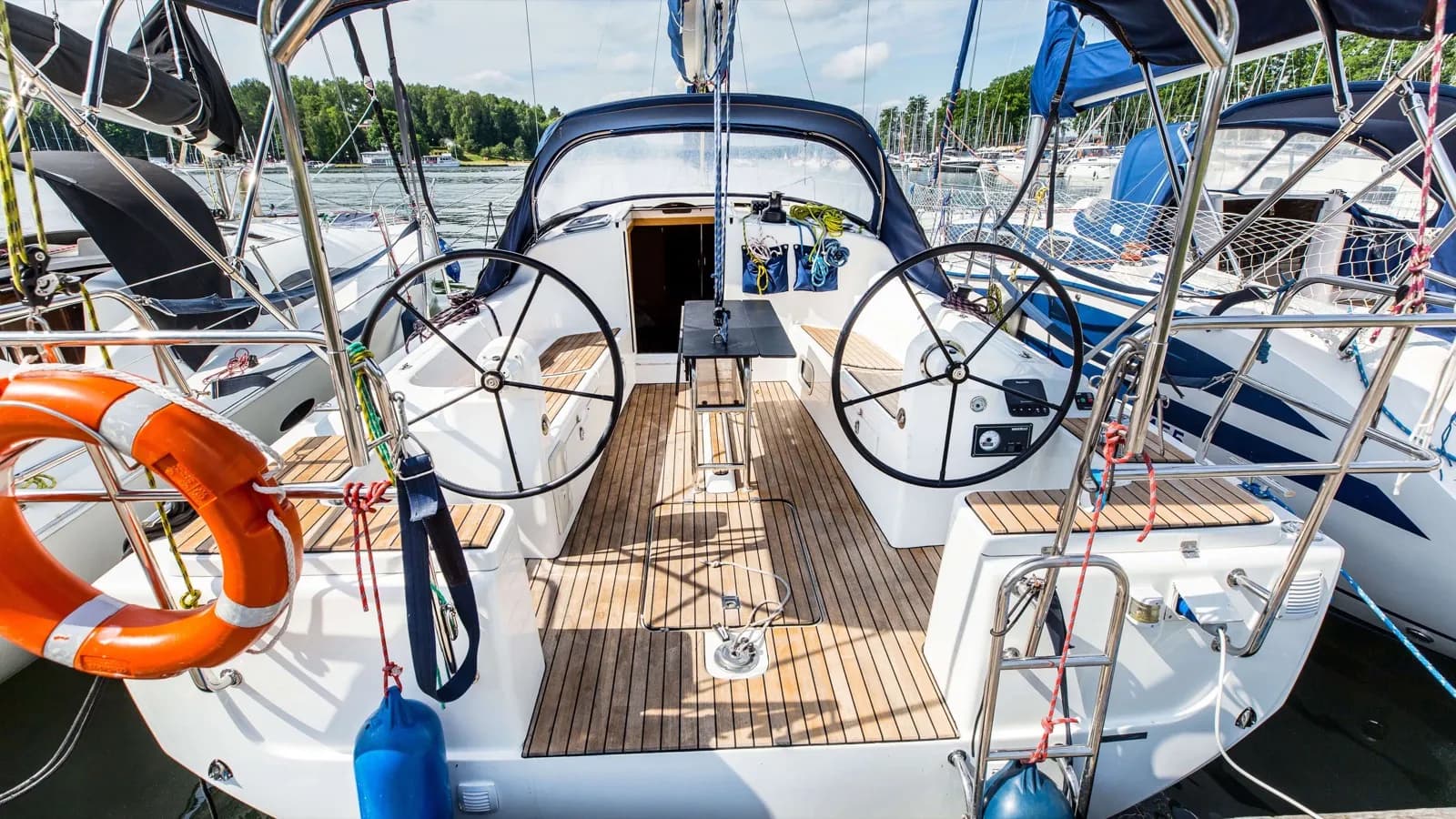
Sailing in Masuria means working with the wind. You hoist and reef the sails, trim, tack upwind, plan your route around the forecast. When the wind dies, you switch to the auxiliary engine; when it blows steadily, all you hear is water along the hull. No exhaust, no drone. For many crews, that is the whole point of the trip — not getting from port A to port B, but everything in between.
The price of that pleasure? A steep learning curve. Manoeuvring under sail, mooring in a crosswind, reading squalls — none of it comes together in an hour. Realistically you need a licence and practice, or at the very least an experienced skipper on board. You also have to accept that the wind sets the pace: a leg planned for three hours can take five, and sometimes you'll change your destination port altogether.
If a sailing yacht is your pick, the next step is matching a specific boat to your crew size — our guide to sailing yachts in Masuria and which one to choose will help.
Motorboat and houseboat: a daily plan independent of the wind
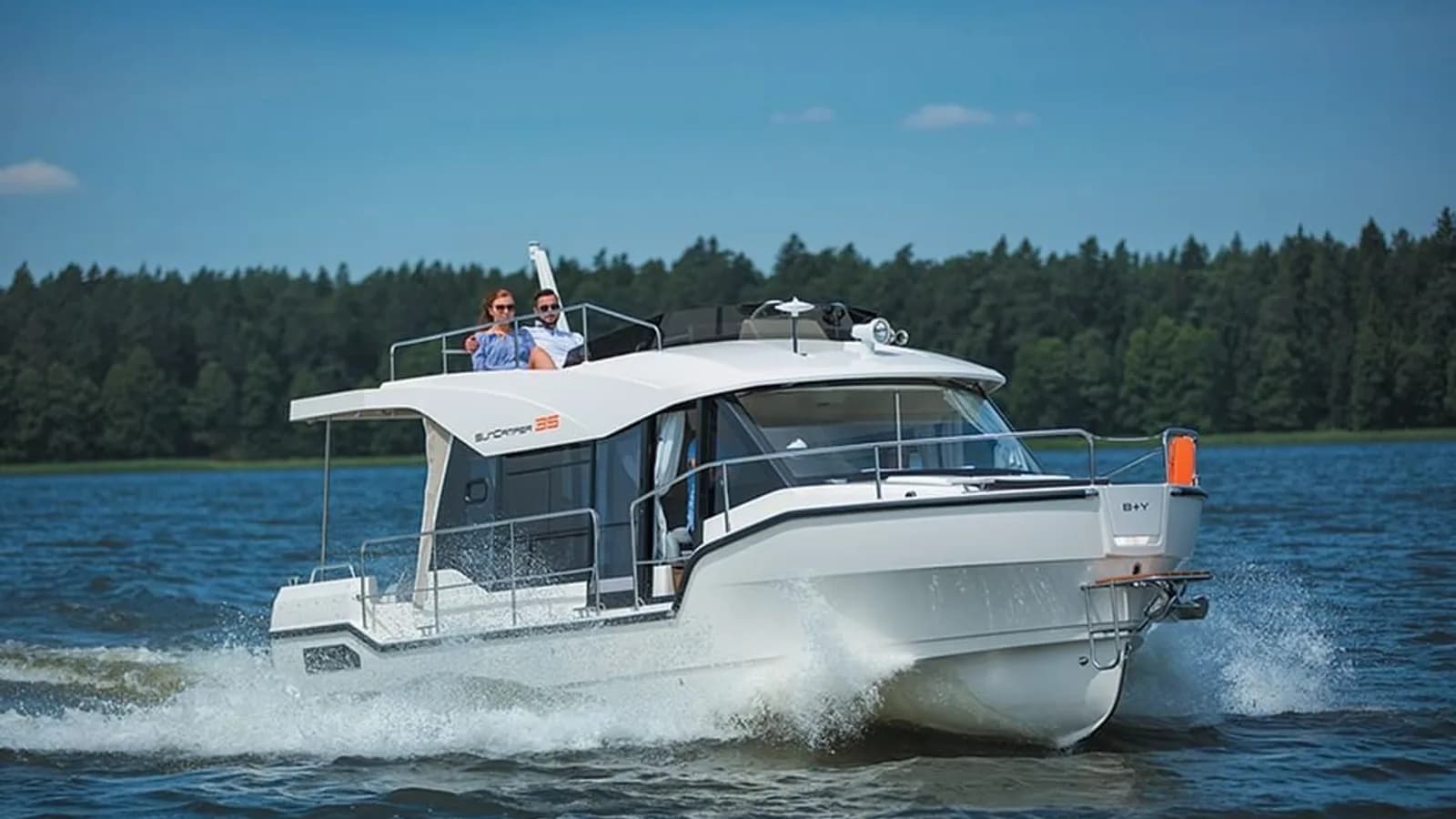
A motor yacht is intuitive to run: helm and throttle. No sails, no boom, no tacking — just a predictable route and a predictable arrival time, whether the wind blows from the north, from the south, or not at all. The only thing that genuinely takes practice is harbour manoeuvres: mooring, crosswinds, keeping your distance from other boats. That's exactly what the handover briefing covers.
A houseboat goes a step further. It's a motorboat conceived as a floating home: plenty of stable living space, full-size berths, a galley, often a rooftop terrace. It fits within the statutory licence-free limits (up to 75 kW, up to 13 m, speed capped at 15 km/h), so after safety training it can be helmed by someone with no qualifications at all. The 15 km/h cap works out to about 8 knots — a leisurely pace, but entirely sufficient for cruising the Great Masurian Lakes trail. We've gathered the full picture in our complete guide to houseboats in Masuria.
Houseboats have their weak points too. They depend entirely on the engine, so every kilometre covered means fuel burned. The tall, house-like superstructure also catches a lot of wind, which makes manoeuvring harder in stronger gusts and hurts performance.
Costs: where the sailing yacht wins, and where it evens out
We're deliberately not quoting figures here, because charter rates depend on the boat's type, size, standard and the dates — peak season in July and August is clearly pricier than June or September. We break down current price ranges and how pricing works in a separate article: how much a yacht charter in Masuria costs.
There is, however, one structural difference no price list can change: fuel. A sailing yacht runs mostly on wind — you fire up the auxiliary engine in harbours and during calms, so consumption is minimal. A motorboat or houseboat moves on engine power alone, and the cost climbs with power and speed. Displacement boats trundling along at their 15 km/h burn far less than fast planing hulls, but even so, every day of a motor cruise carries a "fuel" line that a sailor barely knows exists.
The rest looks much the same on both sides: at handover the operator collects a refundable deposit (its size depends on the boat's value and type), and insuring the boat is the operator's responsibility.
With kids, with family, with grandparents
Here the cabin motorboat and the houseboat hold a clear advantage. No heeling, no boom sweeping over heads during a tack, lots of stable space for playing and napping, predictable arrival times at a port with a playground. For a crew with a two-year-old, or with grandparents on board, it simply makes for a calmer week.
The sailing yacht pays you back in a different currency: it draws you in. School-age kids catch the bug fast — who holds the sheet, who spots the buoy, who steers on the leading marks. Families after an active holiday and a taste of real sailing come home with an entirely different kind of memories. Whatever the boat, one rule holds: life jackets for children are the standard, not an option.
Cheat sheet before you decide
- You hold a sailing licence → sailing yacht; the full fleet to choose from, minimal fuel costs, an "active" cruise.
- No licence → a motorboat up to 10 kW, or a houseboat/motorboat within the 75 kW / 13 m / 15 km/h limits; at charter handover you complete safety training.
- Small children or seniors aboard → houseboat or cabin motorboat; stable, roomy, predictable.
- A fixed daily plan, ports booked ahead → motor power; you'll arrive on time regardless of the forecast.
- Quiet, working the wind, sailing as an end in itself → sailing yacht, no contest.
- First cruise of your life → read our first charter guide beforehand — it will spare you a few classic slip-ups whichever boat you pick.
Frequently asked questions
Which is easier for a beginner — a sailing yacht or a motorboat? A motorboat or a houseboat. Operating one comes down to helm and throttle, and the only real challenge is harbour manoeuvres, which you practise during the handover briefing. A sailing yacht demands sailing skills — hoisting and reefing sails, tacking, reading the wind — and at the typical charter size (8–12 m) also a żeglarz jachtowy sailing licence.
Do you need a licence for a motorboat in Masuria? Not always. Without any document you may helm a motor yacht up to 10 kW, or a boat up to 75 kW and 13 m in length with speed structurally limited to 15 km/h — houseboats and many cabin motorboats fit within that limit. Above those thresholds you need a motorboat helmsman's licence. When chartering, an unlicensed helmsperson must additionally complete water safety training.
Which is cheaper to charter? Daily rates depend on size, standard and season on both sides, but in running costs the sailing yacht has a built-in edge: it runs on wind, so it burns a token amount of fuel. A motorboat or houseboat covers every kilometre on engine power, which adds up noticeably over longer legs.
Which is better for a cruise with kids? With small children, a houseboat or cabin motorboat is the more comfortable option — no heeling, more stable space, simpler daily logistics. A sailing yacht works well with older kids who want to take part in the sailing. Life jackets for children apply on every boat.
Sailing yacht, motorboat or houseboat? Sailing yacht — when you hold the qualifications and sailing itself is the point of the trip. Motorboat — when pace and independence from the wind matter most. Houseboat — when living comfort is the priority and nobody in the crew holds a licence; it's the simplest way onto the water for families and unlicensed groups.
Whichever side you land on, Masuria has a boat to match your style — from classic sailing yachts to houseboats helmed without a licence. Browse available dates and compare boat types in our search: yacht rental in Masuria. After this read, that first filter — sail or motor — should take you no time at all.
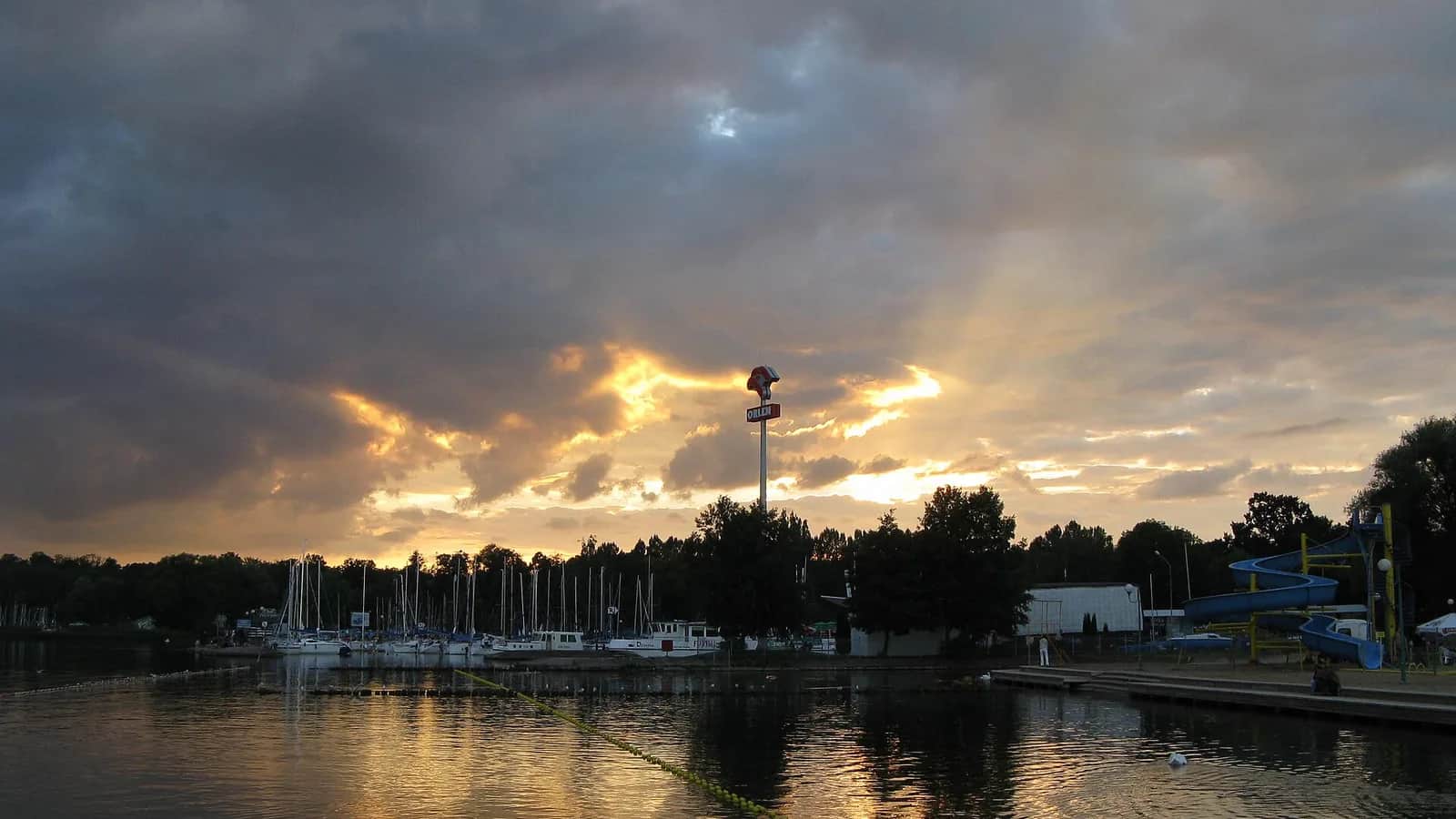
Cover photo: Margoz / Wikimedia Commons (CC BY-SA 4.0).