NaCzarter Team
· Updated
Fifteen minutes at the gangway decide the fate of your deposit
Taking over a charter yacht is not a formality to be waved through. The handover report is the only proof of the condition the boat was in when you got it, so a scratch you failed to note down on Saturday morning is simply yours when you hand her back. It sounds harsh, but that is how it works. The handover report is standard practice in charter, and that is exactly what it is for. The good news: a proper walkaround takes fifteen minutes, twenty at most.
Saturday is changeover day, because in Masuria charter weeks customarily run Saturday to Saturday. The harbour master has several handovers and several returns back to back, everyone wants to cast off already, and the pontoon gets crowded. The natural reflex is to wave it off: "everything's fine, just give me the keys". Don't. Those fifteen minutes work for both sides, because the base also prefers having it in black and white what the boat looked like before the trip, rather than arguing about it a week later. If this is your first time, a general guide to your first charter helps too, so you know what to expect from the whole Saturday.
Start with the hull, phone in hand
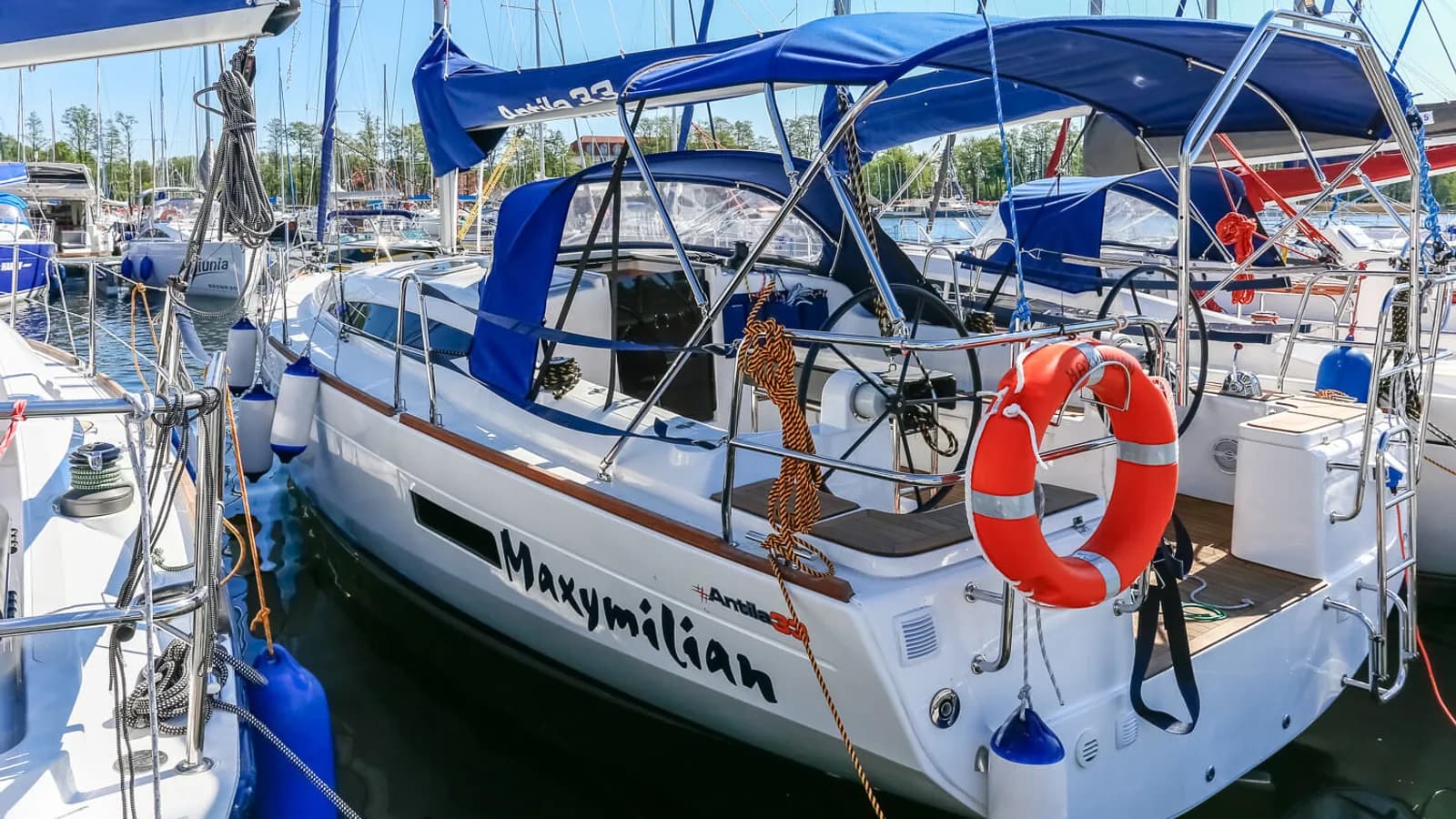
Walk around the yacht calmly, looking from above and from the side. Most of the souvenirs left by previous crews collect along the rubbing strakes, at the stern near the transom and at the bow, in other words wherever port manoeuvres went wrong. Crouch down and look at an angle, because scratches in the gelcoat only show up against the light.
Take photos with your phone. Not three pretty keepsake shots, but a dozen or more all around the hull plus close-ups of anything that is less than perfect. Your phone saves the date and time in the file, and that is the best attachment to the handover report you can have. If the boat has a centreboard or a fin keel, ask the harbour master how the mechanism works and what position it should be in for port manoeuvres.
Deck, rigging, engine
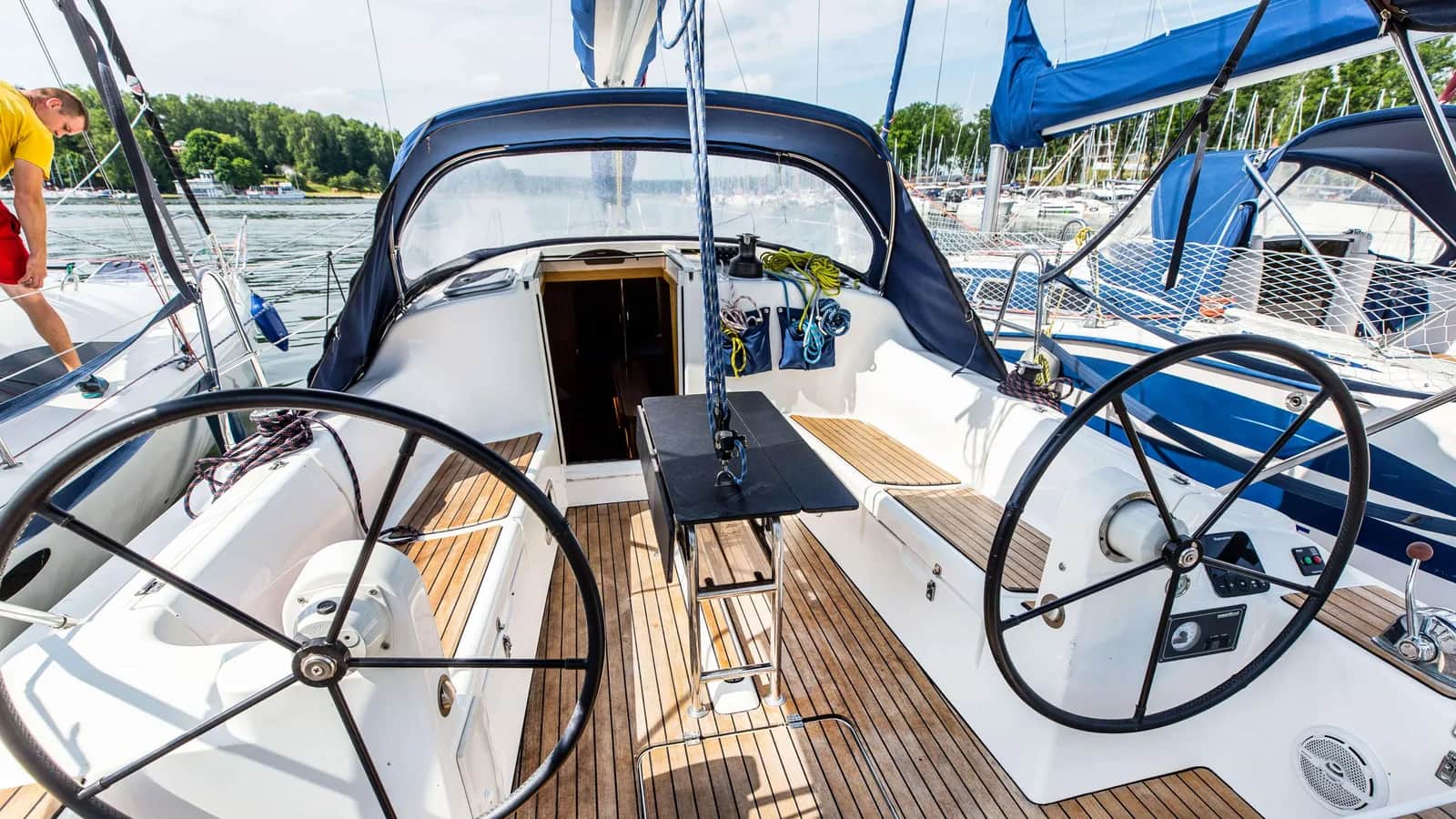
On deck you check the things you will be grabbing while under way: guard rails and stanchions, handholds, hatches (do they close properly, do they leak in the corners), the condition of the lines. On a sailing yacht run your eye over the shrouds and stays, look at the sheets and halyards for fraying. You don't need to be a surveyor. It is enough that you notice it and point it out.
Start the engine with the harbour master present, not on your own half an hour later. It should fire up, cooling water should flow, reverse gear should engage. While you are at it, note the fuel level in the report. That is the most common bone of contention on return, because everyone understands "almost full" differently. The entry "tank full, confirmed at handover" costs five seconds and closes the subject. Same goes for the water tank level.
Safety gear and systems: not "present", but "working"
Count the life jackets one by one, one per person on board, children separately and in their own size. Add a fire extinguisher in its place, a lifebuoy or throwing line within reach, a first aid kit. Glance at the label on the extinguisher and look inside the first aid kit, rather than just checking that the box is where it should be.
Systems are tested by switching them on. The water pump should give a flow at the galley sink and the washbasin, the fridge should start cooling, the sockets should have power, the cabin and navigation lights should come on. Check the anchor light too, you will need it for a night at anchor. Pump the heads through with the harbour master and settle straight away where and how the holding tank gets emptied. In Masuria nothing goes over the side, and that is not a matter of goodwill but of a protected area: sewage and rubbish stay in the port. How that works in practice we covered separately in the piece on the heads and water on a charter yacht.
Galley, mooring lines, boathook, anchor
Galley equipment is checked off against the list in the report: pots, frying pan, cutlery, mugs, plates. If something is missing, say so at once, usually the harbour master simply brings it over. It is worse when you notice on Lake Śniardwy.
Count the mooring lines separately and check whether any of them is chafed. Ask where the spare one is kept. There has to be a boathook, because without it you will not pick up the mooring line, and in Masurian ports you moor to piles or to a mooring line, not at anchor. You pick the mooring line up with the boathook at the stern and walk it along the side to the bow, so the boathook is essential kit, not decoration. Take the anchor out of its locker and pay out a bit of the rode. On charter boats the anchor is on rope, not chain, and you want to know how much of it you have before you start looking for an overnight spot in a sheltered bay off the fairway. The rest of the things worth bringing yourself we gathered in the charter packing list.
What exactly to check and what to write down
| Item | What exactly to check | What to note in the report |
|---|---|---|
| Hull and topsides | Walkaround, against the light; rubbing strakes, stern, bow | Every scratch and chip with its location, photo numbers |
| Deck and hatches | Guard rails, handholds, hatches closing, signs of leaks | Cracks, loose fittings, a leaking hatch |
| Rigging and sails | Shrouds, stays, sheets, halyards, condition of the sail cover | Chafe, missing shackles, a split seam |
| Engine | Start-up with the harbour master, cooling water, reverse gear | Fuel level, engine hours if there is a counter |
| Safety | Life jacket per person, extinguisher, lifebuoy or line, first aid kit | Number of jackets and sizes, gaps in the first aid kit |
| Systems | Water, heads, fridge, power, lighting: switch on and check | What does not work or works poorly, water level |
| Galley | Crockery and equipment against the list in the report | Shortages reported before casting off |
| Lines, boathook, anchor | Number and condition of lines, boathook present, anchor with rode | Chafed lines, no spare, length of the rode |
What to ask the harbour master before you cast off
Four questions that save evenings. Where are the seacocks, if the boat has them, and how do you close them. Where is the battery isolator, because with a fading battery that is the first thing the base will ask about over the phone. How do you fire up the heating, if the boat has it, and what not to do with it. And most important: what is the emergency number to the base and what should you do if something refuses to cooperate mid-trip. Save that number in your phone straight away, don't leave it on a scrap of paper at the chart table.
While you are at it, ask about the opening times of the swing bridge in Giżycko and the Guzianka lock, if you plan to pass through. You build the route around their clock, not the other way round.
If you are taking a houseboat without a licence, ask additionally how the boat behaves in a crosswind. A flat bottom and a tall superstructure turn her into a sail, and in port that can catch you out.
The deposit comes back where the report was done properly
The deposit is refundable and settled on the spot, in cash, when you hand the yacht back. It is not part of the online payment, same as mandatory fees such as final cleaning. Which means the money conversation happens face to face over a sheet of paper, and the winner is whoever has the facts written down. We covered the details in the piece on the deposit on a yacht charter in Masuria.
From experience: disputes over the deposit almost never concern major breakdowns. They concern the small stuff nobody wrote down at handover.
Frequently asked questions
How long does taking over a yacht take? Realistically fifteen to twenty minutes for the walkaround itself, plus a briefing on handling the boat if this is your first time on that model. In peak season, arrive with time to spare, because there may be another crew ahead of you.
What if I find damage once the trip has started? Call the base the same day and take photos. Damage reported in real time is treated completely differently from the same damage "discovered" at the return on Saturday.
Are phone photos worth anything? They are, because they carry the date and time in the file. They work best paired with an entry in the report: the photo shows the condition, the report shows that both sides saw it.
When do I get the deposit back? When you hand the yacht back, on the spot at the base, after looking the boat over together. If nothing has been added beyond what is in the handover report, you get it back in full and drive home.
Cover photo: NaCzarter.pl (own fleet)