NaCzarter Team
A deposit is not an extra cost of your trip — it is a refundable security that comes back to you in full, provided you return the boat in the same condition you received it. Even so, it tends to raise more questions than the charter price itself: how much do you actually need to set aside, in what form, when does the money come back, and what can the operator deduct it for? Over a quarter-century of running charters in Masuria, we have built complete transparency around this — and in this article we show how a deposit really works, without the usual industry small print.
What a yacht charter deposit is and why the operator takes it
A deposit (security, bond) is a refundable sum that the charterer hands over to the operator for the duration of the trip. It is not a rental fee — it is a form of guarantee that the boat will come back sound and complete. If everything is in order, the deposit is returned in full. In practice it works much like a damage deposit on a holiday rental: as long as there is no damage, the money is merely "frozen", not spent.
The logic of a deposit follows directly from the nature of a charter agreement. As the definition of a charter agreement on Wikipedia explains, the charterer takes over the vessel for their own use and at their own responsibility. The operator entrusts you with equipment often worth several hundred thousand złoty — sails, engine, electronics, galley kit and safety gear. The deposit gives them the assurance that any minor damage can be settled on the spot, without courts or debt collection, and gives you a clear ceiling on your financial liability.
One thing is worth remembering straight away: at NaCzarter the deposit is mandatory and — like other mandatory charges — payable on-site when you collect the boat. We do not add it to your online payment for the charter itself. Online you settle the deposit or the full charter fee, while the security is handled at the marina on the day you board. This is deliberate: a deposit should not sit on your card for months before the trip.
How much a deposit costs in Masuria — real ranges by type and size of boat
The most common question is: how much should I prepare? The answer depends on the type and value of the boat, because these determine the scale of potential damage. Below are the real ranges from our fleet — not theoretical figures, but ones based on actual contracts.
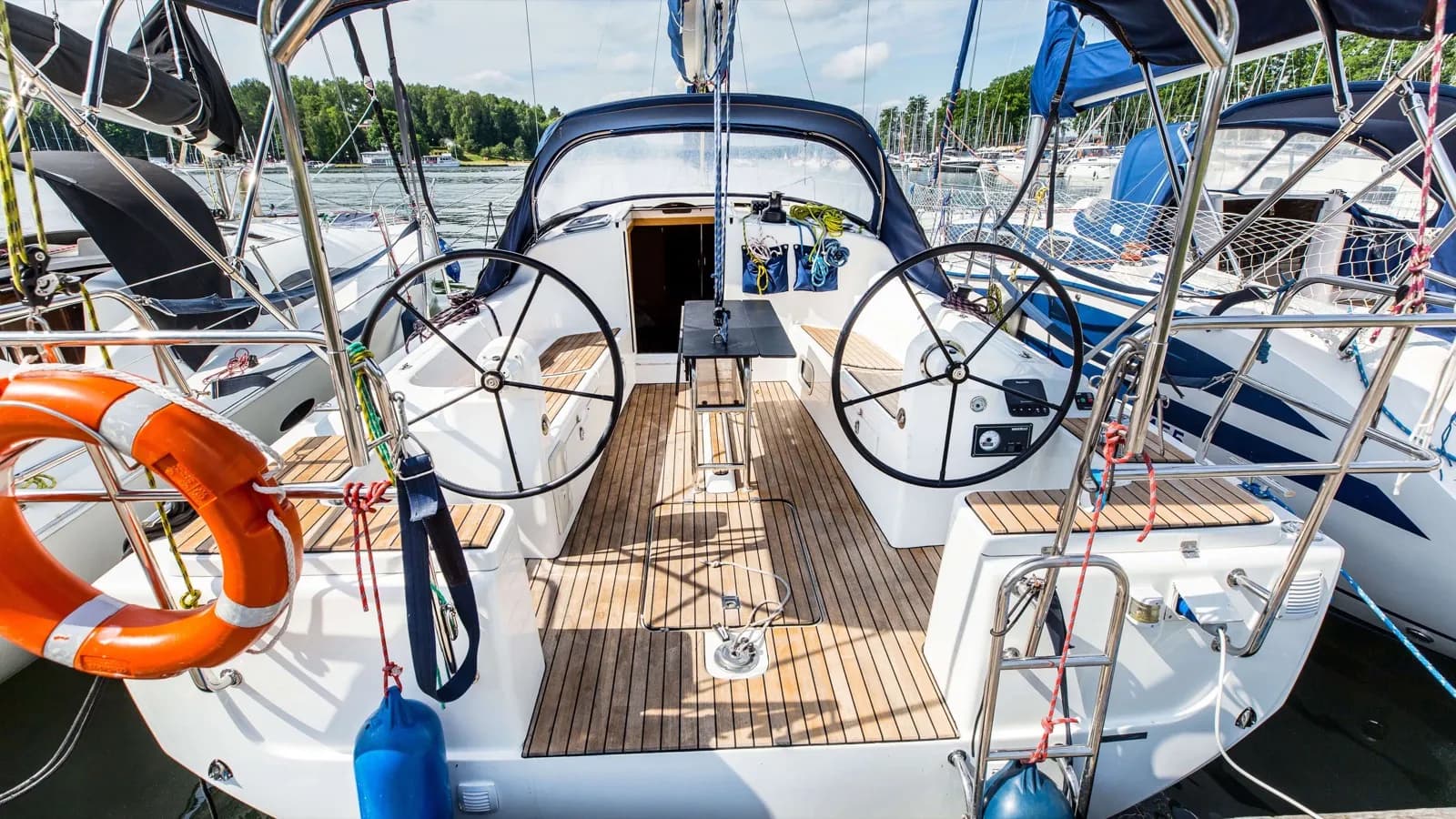
- Sailing yachts — usually around 1,000–3,000 PLN, with a median near 1,500 PLN. The smallest boats, including vessels you can skipper without a licence, sometimes carry a deposit from as little as 150–500 PLN.
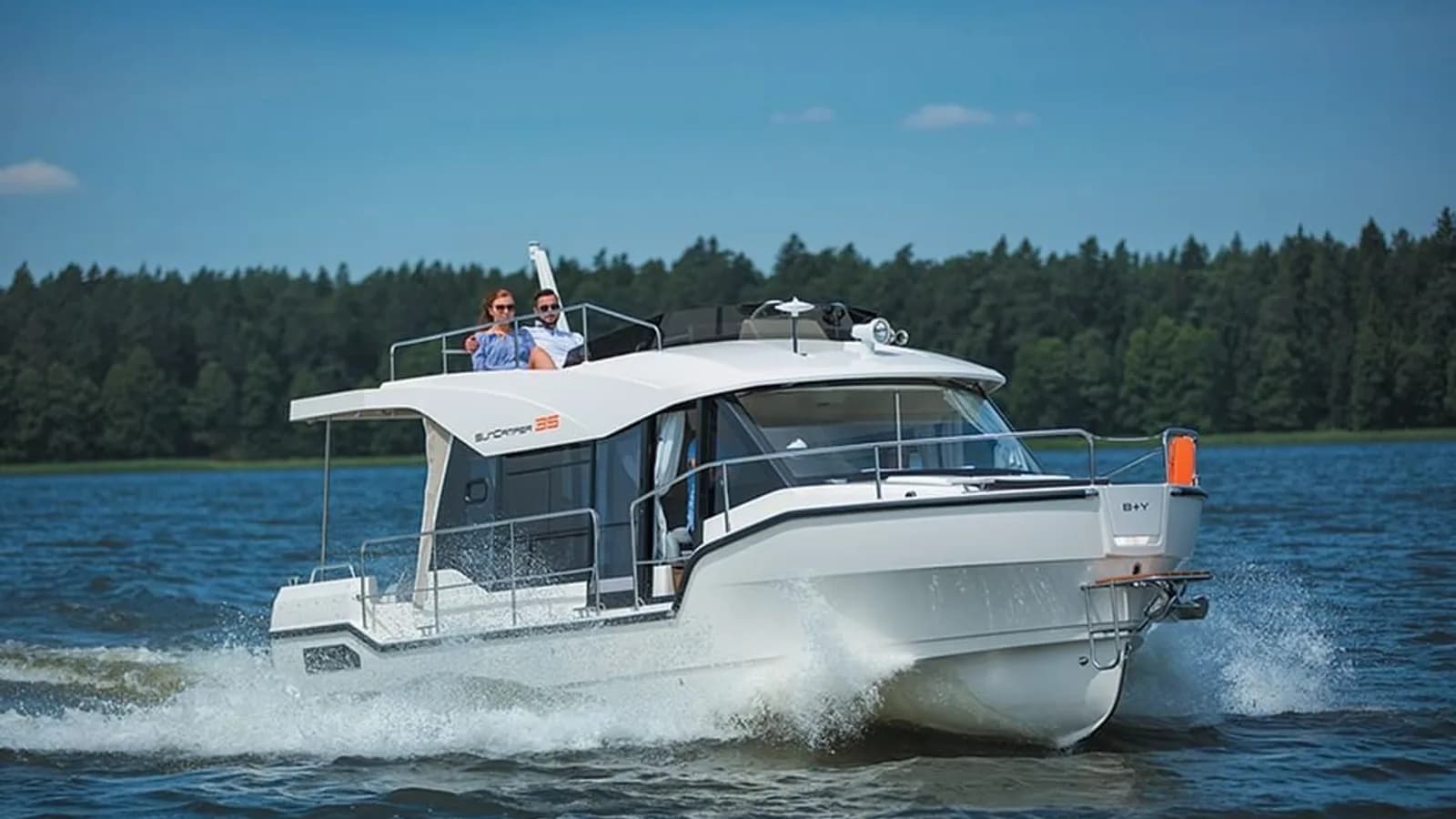
- Motorboats and houseboats — usually around 2,500–4,000 PLN, with a median near 3,000 PLN. These vessels are more expensive and have more powerful engines, hence the higher deposit.
- Larger, more powerful vessels — on the most luxurious houseboats and large motor yachts the deposit can reach as much as 10,000 PLN.
The rule is simple: the bigger and more expensive the boat, the higher the deposit. The same goes for engine power and equipment — a yacht with extensive electronics, a bow thruster and a fully fitted galley has more elements that can be damaged. If you are planning a Masurian trip on a houseboat, bear in mind that the houseboat category generally carries a higher deposit threshold than classic Masurian cabin sailboats — worth factoring in right at the point of choosing your vessel. We always state the exact figure for a specific boat before booking, so there are no surprises here.
How and when you pay the deposit — cash, card hold, bank transfer
You pay the deposit on-site, when you collect the boat — at the base, on boarding day, before you set off. It is the moment you sign the handover checklist and take over the vessel anyway, so everything wraps up in a single step.
The form depends on the operator and the base. Most often you will come across three options:
- Cash — the classic and simplest way; we hand the sum back physically when the boat is returned.
- Card hold (pre-authorisation) — the bank "freezes" the amount on your card without actually charging it. Once the boat has been checked, the hold is lifted and the funds return to your available limit on their own. It is convenient because you carry no cash, but make sure your card has enough available limit.
- Bank transfer — less common, usually when both sides agree to it; it needs planning, as the funds must clear before the trip.
A practical tip: ask about the accepted form when booking, especially if you are counting on a card hold. Not every bank and not every terminal handles pre-authorisation in the same way, and with higher deposits (motorboats, houseboats) you want to be sure the transaction goes through without stress on the jetty.
What the deposit covers — typical damage and situations
The deposit covers damage, harm and missing equipment caused by the charterer's fault. The key phrase is "by fault" — it refers to situations where you (or your crew) caused the damage, not to natural wear and tear or technical faults beyond your control.
In Masurian practice this most often involves:
- scrapes and dents to the hull from a botched manoeuvre in harbour or at a lock,
- a damaged rudder, propeller or keel after running aground,
- a torn or scorched sail, a snapped fitting, a broken boat hook,
- a blocked or damaged chemical toilet (a classic we cover below),
- lost gear — from mooring lines and fenders to life jackets, crockery or electronics.
What the deposit does not cover, on the other hand, is normal operation: fuel used (settled separately), minor signs of use, or a failure that did not stem from a mistake on your part. This is exactly why a thorough handover checklist matters so much — we return to it later.
Deposit insurance — how it works, what it covers, when it is worth it
Every boat in a legitimate charter is insured — typically third-party liability and hull (casco) cover with a set excess, that is, a deductible. The mechanism is the same as for any other policy: as the general definition of insurance on Wikipedia explains, the insurer covers damage above an agreed threshold, while below that threshold the insured party is liable — in a charter, most often from the deposit.
This is where the idea of deposit insurance (an excess waiver) comes in. It is an optional extra that limits your real exposure: if you buy the excess reduction, your maximum loss in a more serious hull-damage event shrinks. For a family houseboat trip or your first solo charter, it can be peace of mind worth the price.
An important caveat: deposit insurance is not a bottomless pit. It does not cover gross negligence or damage caused under the influence of alcohol — in those cases the insurer and operator will settle the damage with you directly, regardless of any extras you bought. The standards of responsibility and good seamanship upheld by organisations such as the Polish Yachting Association draw a clear line between the ordinary risks of a trip and recklessness.
The most common exclusions — what you will pay for regardless
There are situations in which the deposit will be deducted and no insurance will shield you. They are worth knowing before the trip, because every one of them is easy to avoid:
- Gross negligence — e.g. setting off despite a storm warning, leaving the boat unattended and unmanned, or ignoring obvious signs of a fault.
- Damage under the influence of alcohol — operating a vessel after a drink voids your insurance cover and leaves you liable for the full cost of the damage.
- A blocked or damaged chemical toilet — the most frequent and most irritating deduction in Masuria. Nothing goes into a boat toilet except what the manual allows — no tissues, no paper towels, nothing else. Clearing a blocked system is a real cost.
- Torn sails and damaged rigging — often the result of holding full sail too long as the wind builds.
- Lost or damaged equipment — from fenders and mooring lines to electronics and galley kit.
- Late return of the boat — a delayed return holds up the next crew, so it usually comes with a deduction.
The good news: this is a list of things that are within your control. A sober, attentive crew, reefing in good time and a few minutes of care around the toilet cover the vast majority of the risk.
When you get your deposit back and how to speed up the refund
The deposit comes back after the boat is returned and its condition checked — that is, after the handover checklist is completed at the end of the trip. If everything matches up, there are two scenarios:
- Cash — usually refunded on the spot, right after the harbour master has signed the vessel back in.
- Card hold — the pre-authorisation is lifted and the funds return to your available limit, usually straight away or within a few business days, depending on the bank. This is on your bank's side, not the operator's — which is why you sometimes see a short delay in the funds reappearing.
How do you speed up the refund and avoid any back-and-forth? First — return the boat as agreed: clean, refuelled (if that was the arrangement), on time and complete. Second — set aside fifteen minutes for an unhurried handover rather than rushing for a train. Third — if anything happened during the trip, report and document it straight away; a problem solved as it occurs is always cheaper and less stressful than one discovered only at handover.
The handover checklist — how to protect your deposit at collection and return
The handover checklist is your best ally when it comes to the deposit. It is a document drawn up at collection (the starting condition) and at return (the ending condition). The difference between the two is precisely what you may be liable for — which is why a thorough collection is in your interest more than anyone's.
Here is the practice we recommend to every crew:
- Don't rush the collection. Go over the boat carefully with the harbour master — hull, rudder, propeller, sails, engine, electronics, galley kit and safety gear.
- Take photos. Photographic evidence of any existing scratches, scrapes or missing items is your insurance against a dispute. Photograph the fuel level and the engine-hours meter too.
- Flag everything immediately. Note any faults or shortfalls on the checklist at collection — otherwise they can "carry over" to your account at return.
- Learn how it all works. Ask to be shown the toilet, the water and gas systems, and reefing. Knowing "how it works" is the cheapest possible deposit protection.
If this is your first time at the helm of a charter boat, it is worth going through our guide to your first yacht charter beforehand — the collection will then feel far calmer. Our list of things worth packing for a charter helps too: a well-prepared crew improvises less, and improvisation is the most common source of minor damage.
The deposit and your trip budget — how to factor it in
A deposit is not a cost of the trip — but it is a sum you must have available for the duration of your holiday. That is a real distinction for budget planning. The charter price, fuel, harbour fees and provisions are money gone for good; the deposit is funds temporarily held that come back. When planning your finances, it is worth keeping it in mind as a separate line headed "available", not "to be spent".
A practical example: you charter a Masurian cabin yacht for, say, a few thousand złoty a week. Add fuel and fees, and alongside that — separately — set aside around 1,500 PLN for the deposit (in cash or as available limit on your card). With a houseboat that second figure will be higher, even a few thousand złoty. You build the full cost picture by reading our guide to how much a yacht charter in Masuria costs, and the specific rates for chosen dates are in our current yacht charter price list.
One more piece of good news to close this section: in the vast majority of trips the deposit comes back in full. Treat it as a safety deposit, not a hidden fee — because with careful sailing that is exactly what it is.
Frequently asked questions
Do I pay the deposit online with my booking? No. At NaCzarter the deposit is payable on-site when you collect the boat — just like other mandatory charges. Online you settle the down payment or the full charter fee, while the deposit is handled at the base on boarding day, in cash or as a card hold.
How much is the deposit for a yacht in Masuria? For sailing yachts it is usually around 1,000–3,000 PLN (median ~1,500 PLN, smallest boats from ~150–500 PLN), and for motorboats and houseboats usually around 2,500–4,000 PLN (median ~3,000 PLN), reaching as much as around 10,000 PLN on the largest vessels. The bigger and more expensive the boat, the higher the deposit.
When will I get my deposit back after the trip? After the boat is returned and its condition checked on the handover checklist. With cash the refund is usually immediate, and with a card hold the funds return to your limit straight away or within a few business days — depending on your bank.
Check availability and book your trip online
The deposit is the last piece of the puzzle — and once you know how it works, planning a trip becomes straightforward. For a quarter of a century we have helped crews set out across Masuria with no stress and no hidden surprises. See the available dates and vessels in our Masuria yacht rental, pick a boat that suits your crew and book online — and settle the deposit calmly on-site, at collection.