NaCzarter Team
· Updated
Windward and leeward: where is the wind coming from?
Windward is the side facing towards the wind; leeward is the opposite side. These names depend on the current wind direction and your reference point. They are not fixed names for starboard and port. On board they help you understand instructions, and on the water they describe one boat’s position relative to another.
When the skipper says “sit on the windward side”, they are not always pointing to the same cockpit seat. First you need to establish where the air is coming from. After a change of course, the side previously indicated may have a different name relative to the wind. This moving reference point often confuses first-time crew.
Learn the boat’s sides first, then add the wind
Starboard and port are defined while looking towards the bow: starboard is right and port is left. They remain the same wherever you stand. Turn to face the stern and starboard will be on your left, but its name will not change. This explains why simply saying “over there, on my right” is not enough on board.
Windward and leeward use a different reference: the wind. The Royal Yachting Association glossary describes windward as the side facing the wind and leeward as the side facing away from it. To get the fixed parts of a boat straight first, read our guide to the bow, stern, sides and cockpit.
| Term | Reference point | What can change the answer? |
|---|---|---|
| Starboard or port | Looking from the stern towards the bow | Turning yourself around does not change the side’s name |
| Windward or leeward side | Airflow relative to the boat | A change of course or wind direction |
| A boat to windward of another boat | The positions of both boats relative to the wind | Movement of the boats or a change in the wind |
| North, south, east, west | Compass directions | They do not change when the boat turns |
Two examples that make the terms clearer
Wind from the boat’s right-hand side
Imagine a stationary boat pointing north, with the wind coming from due east. Air arrives from starboard. Starboard is therefore windward and port is leeward. This is a direction exercise, so for now we leave out the boat’s movement and local changes in gusts.
Now turn only the boat in your imagination: its bow points south, while the wind still comes from the east. Air arrives from port, making that side windward. The wind’s compass direction has not changed. The boat’s orientation has, and with it the names of the sides relative to the wind.
Two boats beside each other
In the second example, two boats lie beside each other on an east–west line. With wind from the east, the eastern boat is to windward of the western one. From the eastern boat’s perspective, the other lies to leeward. NOAA also explains this use of windward and leeward.
The two bows do not have to point the same way for you to compare the boats’ positions on a chart. You do, however, need to state your reference. Saying “the boat is windward” without mentioning the other vessel can be incomplete. “That boat is to windward of us” is more precise.
True wind and apparent wind
Underway, things become more interesting. The airflow you feel on deck depends on both the wind and the boat’s movement. This is apparent wind. Raymarine’s sailing glossary explains that it includes the vessel’s direction and speed of travel. A wind sensor measures this airflow; calculating true wind requires additional data.
A bicycle makes it easy to imagine: even in still air, riding creates a breeze against your face. On a boat, your own movement also changes the direction and strength of the airflow you feel. So a forecast of “westerly wind” does not yet tell you which side it will come across at every moment of your trip.
To identify the sides on board, you observe airflow relative to the boat. To describe the positions of islands or two boats, the wind’s direction across the area is useful. Mixing these tasks can produce apparent contradictions. Learning the points of sail is the next step once you understand this distinction.
How can you practise without guessing instructions?
On a quiet stretch of the trip, ask the skipper to point out the windward side. First call it simply “starboard” or “port”, then add its name relative to the wind. Repeat after a planned course change. Notice what changed in the boat’s orientation and what changed in the breeze.
A useful question is: “Is starboard the windward side now?” That is much clearer than “should I move here?”, particularly when the skipper is looking ahead. During a manoeuvre, do not move around the deck merely to test a definition. Agree your position with the person in charge and leave the conversation until they can give you their attention.
You can also draw a boat and an arrow showing the direction of airflow on a piece of paper. Mark the start of the arrow as the side the wind comes from. Rotate the boat drawing while keeping the arrow fixed. Then leave the boat in place and move the arrow. Both exercises show why the same side is not always windward.
Where do misunderstandings arise?
Do not identify a side solely by the sun, the visible shoreline or where the crew is sitting. None of these points alone determines where the airflow comes from. Even “behind the island” needs clarification: behind it relative to the route, the observer or the wind?
With wind directly from the bow or stern, the simple example of wind coming across one side is no longer enough. Do not then try to work out rules for meeting another boat solely from the boom’s position or intuition. Terms used in navigation rules need a separate explanation. Here we are learning to describe positions, rather than deciding who must give way.
Frequently asked questions
Is windward always on the right? No. It can be on either side of the boat, depending on its orientation to the wind. Starboard remains starboard regardless of that change.
Does the windward side change after every turn? No. A small course change can leave the wind on the same side. What matters is the side from which the air now arrives.
Does leeward mean there is no wind there? No. It describes a direction or relative position. The word alone does not promise still air, shelter or calm water in a particular place.
Is knowing the windward side enough to decide right of way? No. That decision cannot be based on one term. The person in charge must assess the whole situation and the rules applicable to the waterway.
Practise the terms on your first trip
When choosing a boat for Masuria, allow time for a brief tour of the deck and an explanation of instructions with the skipper. Knowing these two words helps from day one, but you do not need to pretend to understand an instruction. Repeating it in your own words lets you clear up a misunderstanding immediately.
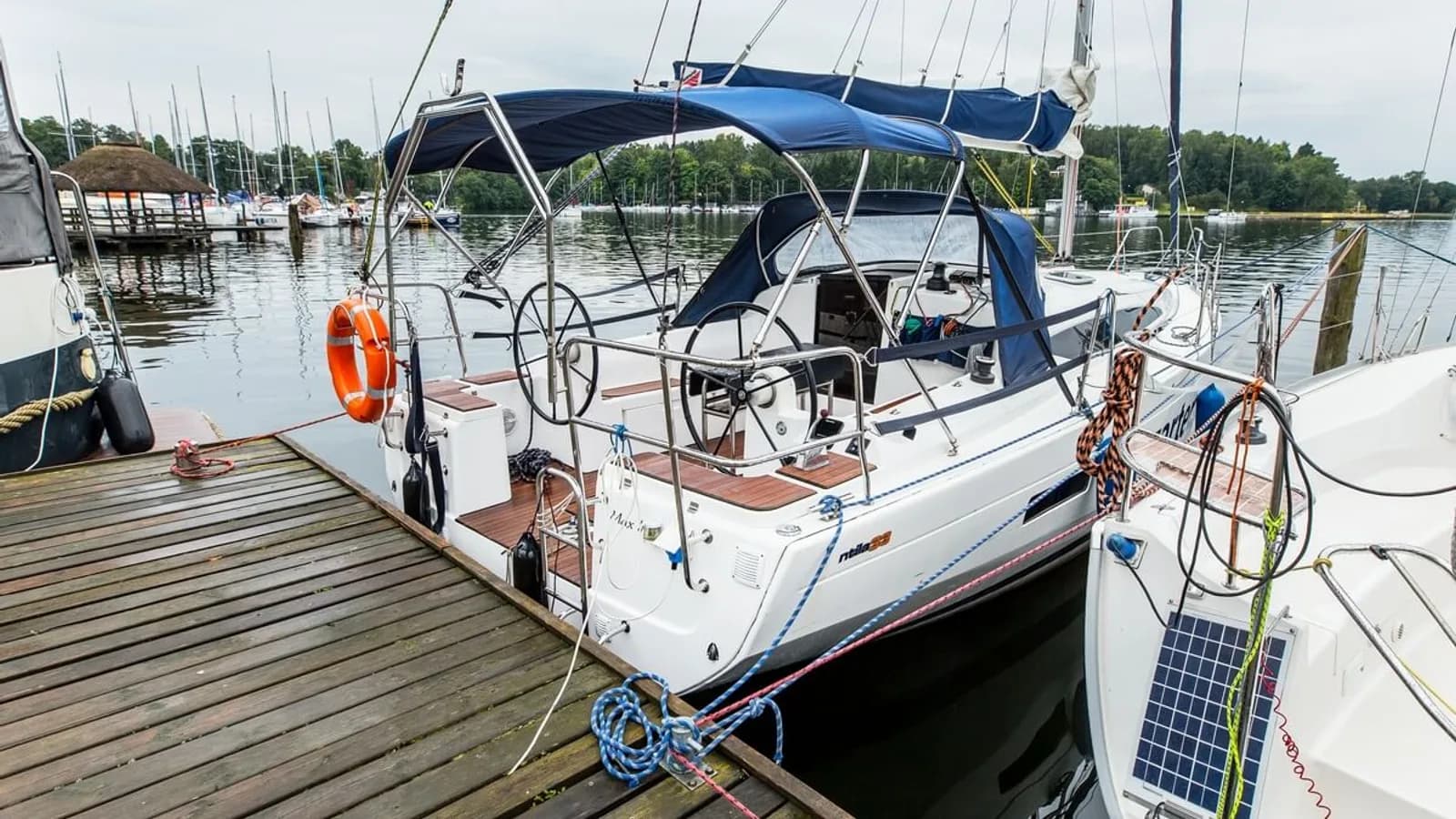
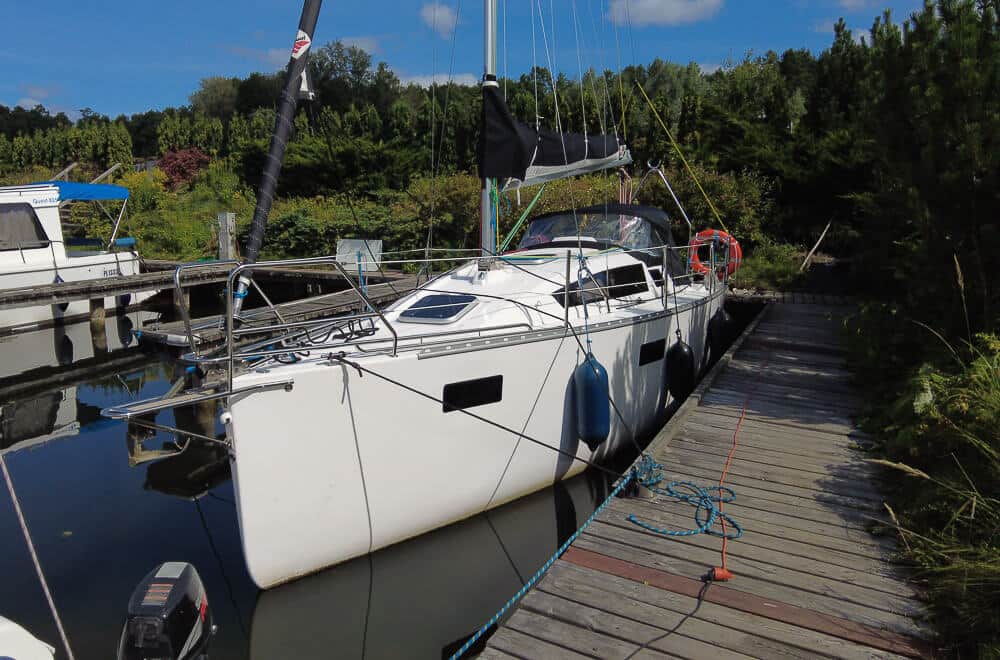
Illustrative photo from the NaCzarter.pl catalog.