NaCzarter Team
· Updated
Your first charter, minus the stress: a route that teaches instead of scaring you off
If your licence is brand new, or this is the first time the boat is your responsibility, the calmest week out of Gizycko runs Kisajno, Niegocin, the canals up to Talty and Mikolajki, then back the same way. Short legs, sheltered water, a harbour every hour or two. You never cross Sniardwy, you never queue at the Guzianka lock in peak season, and you never sail after dark. This is not a route for ambition. It is a route designed so that after a week you want to come back.
We have been sending crews out from Port Royal in Gizycko for twenty-five years, and one pattern repeats. First trips get ruined by the plan, not by the weather. Somebody pencils in Mikolajki on day two, Ruciane on day four, Wegorzewo on day five, and then the whole crew spends the week staring at a watch instead of at the water. A good first trip should teach two things: staying calm on the approach, and reading the wind. The rest arrives on its own, next season.
Kisajno as a warm-up: two days with no pressure
On day one you go nowhere. Seriously. Take over the boat, do the shopping, sort out the cabins, and if there is time left, a short run onto Kisajno and back. An hour, maybe two. The point is to feel how the boat answers the helm and the engine before you need that knowledge in a tight spot.
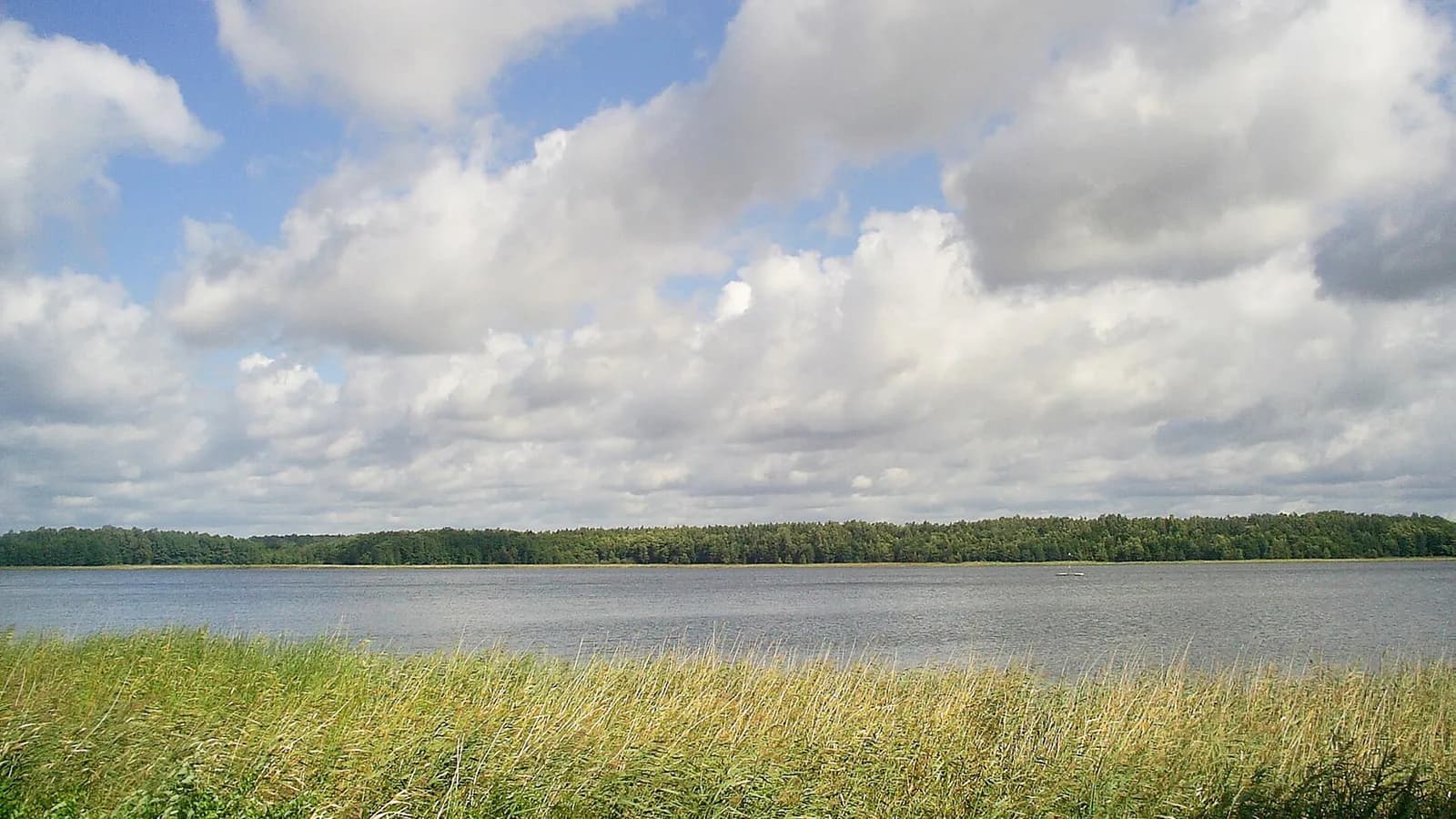
Kisajno is made for this. Sheltered, ragged shoreline, plenty of bays where the wind drops, and the base is a few dozen minutes from any point on the lake. If something goes sideways, you turn back or you call and somebody comes out. In the first days that comfort is worth more than the prettiest view. We put together more on the lake itself in our guide to Lake Kisajno.
Day two is anchoring practice. Pick a bay sheltered from the wind, clear of the fairway, and drop the anchor on a rope with a generous scope. Charter boats carry rope rather than chain, so you pay out more than instinct suggests. At night, switch on the anchor light.
Two more things new crews forget. Some of the islands on Kisajno are a nature reserve: no landing, no camping. Rubbish and black water go ashore at the harbour, nothing goes into the lake. And no barbecue on the deck of a charter boat, ever. There are designated spots on land for that.
Niegocin and a night in Gizycko
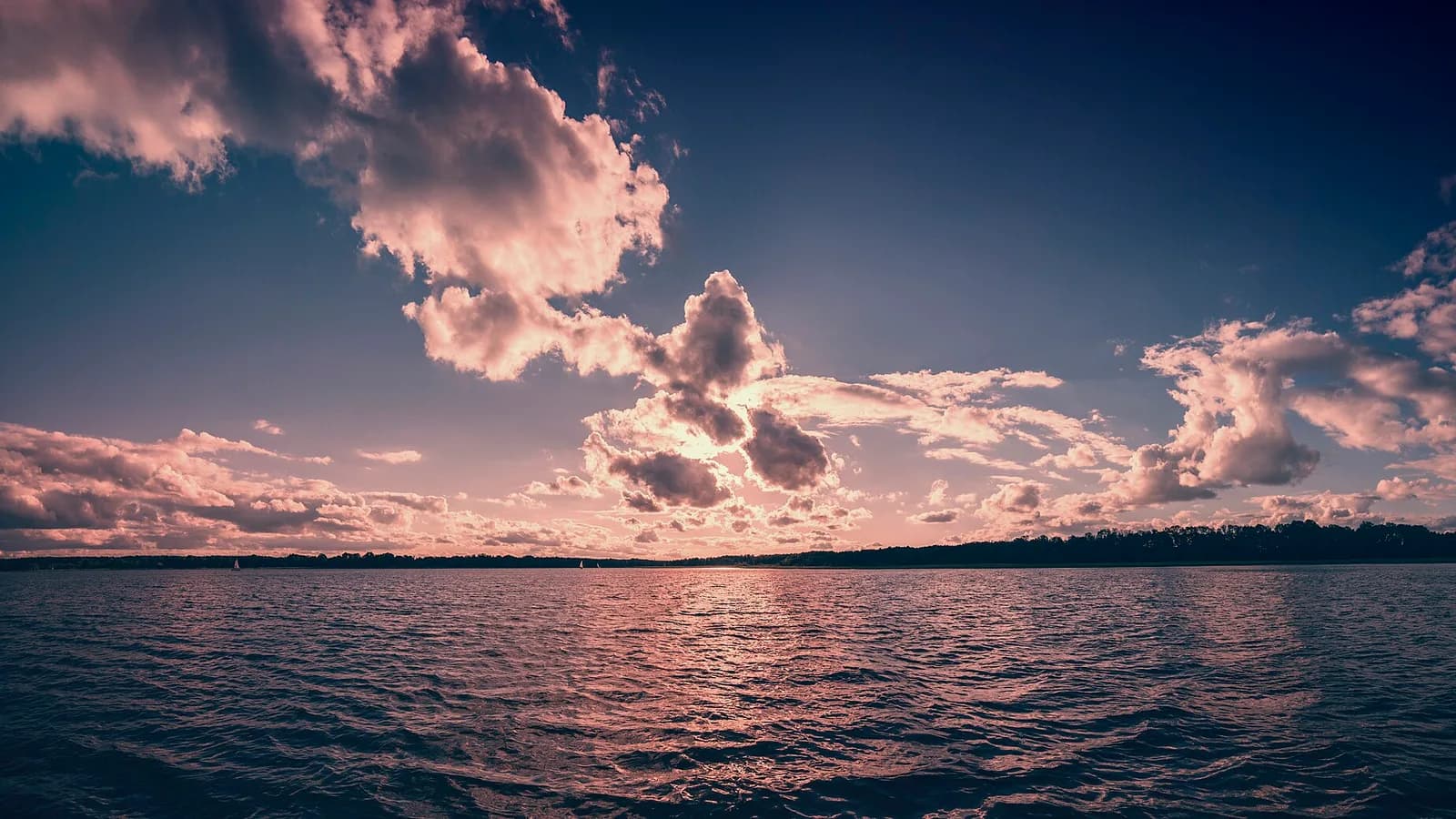
On day three you pass through the canal under the swing bridge and come out onto Niegocin. It is the first proper open water on the route and the first chance to see how the waves change with nothing to shelter them. The leg is short, two or three hours at an easy pace, so even if it pipes up, nothing dramatic happens.
The swing bridge has fixed opening times. Check them in the morning and time your departure so you are not circling in front of it with everyone else. That is a lesson for the whole week: you work around the infrastructure, not the other way round.
Mooring in town happens in front of an audience, and it is better to think about that before the approach than during it. Arrive early. After three in the afternoon the berths are gone and you end up manoeuvring in whatever space is left, next to people drinking coffee on the pontoon. Before noon the harbour is empty, you pick your berth, and nobody is watching. In the evening quiet hours apply, so dinner on deck yes, loud music no.
The canals and Talty down to Mikolajki
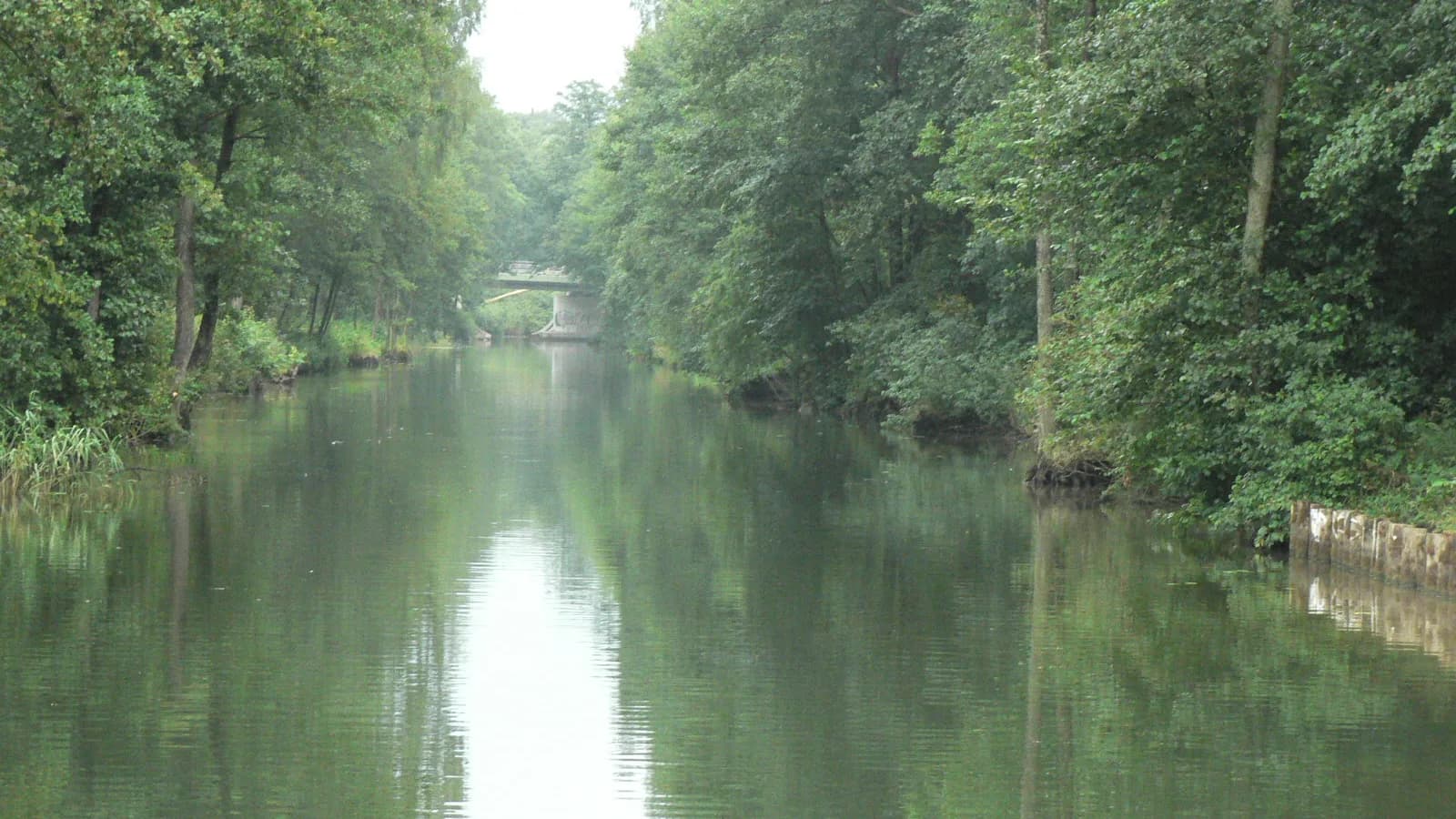
Day four is the prettiest stretch of the route and also one of the safest. The canals and Talty are narrow and lined with forest, so the wind has almost no room to build a wave. You motor, keep to the starboard side of the channel, and pass oncoming boats port to port. Dull, in the best sense of the word.
In Mikolajki you come into the harbour and moor on piles or on a mooring line. You do not drop the anchor in a harbour; the anchor is for wild spots. You pick up the mooring line with a boat hook at the stern and walk it forward along the side to the bow. Do it calmly once and the second time you will do it without thinking. Practise your approaches earlier, at an empty pontoon, and before the trip read up on harbour manoeuvres under engine.
Leave day five empty. For weather, for a lie-in, for the fact that somebody falls in love with the town. If the wind comes, you sit it out in the harbour and lose nothing. If it does not, you do a short loop around Talty. That one empty day is the difference between a holiday and a race.
Back the way you came
Days six and seven take you home, only now everything is familiar. The same canals, the same Niegocin, the same bridge. A crew that tensed up before every approach three days earlier now does it without a word. Get back to the base the evening before handover day, not in the final hour. The deposit is settled on site in cash, along with the fees payable on arrival, so there is no sense in charging back at the last minute.
What we deliberately skip on a first trip
No crossing of Sniardwy. In wind it builds a short, steep chop that comes over the deck and knocks the fun straight out of the crew. That is not a first-week lesson. No Guzianka lock in peak season either, because that means queuing and tight manoeuvres with the whole harbour watching. And no sailing at night. In daylight you see the piles, the buoys and other boats; at night you see nothing, and a shoal has no lights on it.
Four rules that save a first trip
Legs of two or three hours, four at the most. Be in harbour before three in the afternoon. Practise your first mooring at an empty pontoon, not a full one. And keep one day of the plan free. Four sentences that do more than any course.
| Day | Leg | Skill you are practising |
|---|---|---|
| 1 | Port Royal, short run onto Kisajno | Leaving and re-entering the harbour, working the engine |
| 2 | The bays of Kisajno | Anchoring on a rope, a night in a sheltered bay |
| 3 | Kisajno, swing bridge, Niegocin and Gizycko | Open water, bridge timings, mooring in town |
| 4 | Canals, Talty, Mikolajki | Narrow passages, passing traffic, mooring lines and piles |
| 5 | Spare day in Mikolajki | Reading the forecast and deciding whether to go out at all |
| 6 | Mikolajki, Talty, Niegocin | Running the route again without a chart under your nose |
| 7 | Niegocin, Kisajno, back to base | Coming into your own berth without rushing |
Nobody moored well on their first go
One last thing, and it matters most. Every one of those people standing on the pontoon watching you come in once entered a berth sideways, with the fender on the wrong side and somebody shouting from the bow. Every single one. The only difference is how many times they have repeated it since. If the first approach does not work, back off and make a second. Nobody is counting, and anyone who is has not been on the water in a long time.
Frequently asked questions
How many days do you need for a first trip? A week. Charter periods in Masuria traditionally run Saturday to Saturday, and that is the best fit for beginners. Shorter slots are sometimes available outside peak season, but at five days it turns into a rush, which is exactly what you are trying to avoid.
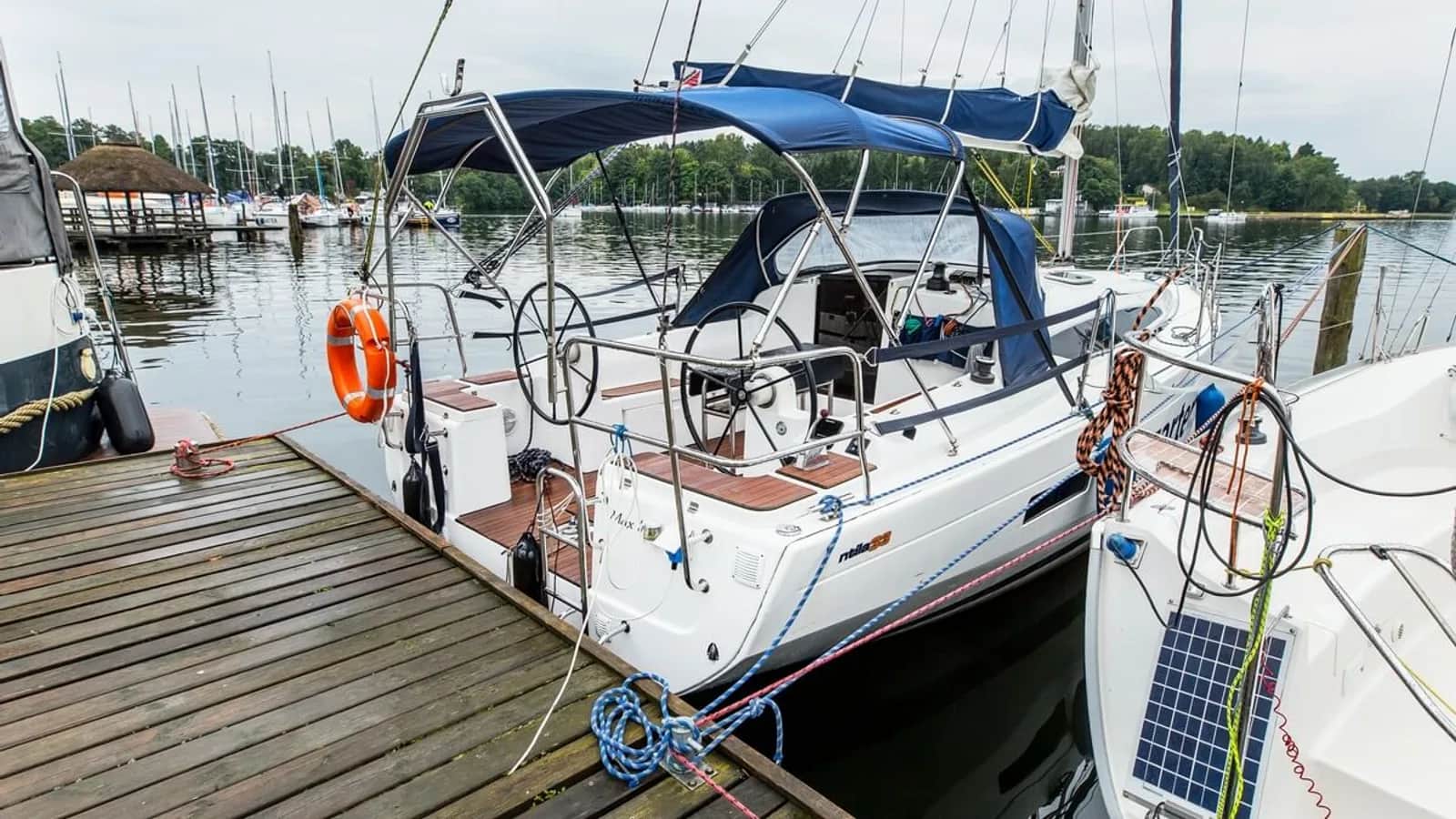
Do you need a licence for a first trip? For a sailing yacht yes, for example an Antila 33 or a Maxus 33.1 RS. If nobody in the crew holds one, that leaves a houseboat, such as a Stillo 30 or Stillo 31, which you can take out with no qualifications. It is a floating home with a flat bottom and no sails, but it is very sensitive to crosswind during harbour manoeuvres. We wrote up the whole procedure in our guide to your first yacht charter.
What if I cannot moor? Nobody can until they have done it. Make your first approaches at an empty pontoon, early in the afternoon, in light wind. Assign roles before the manoeuvre: who is on the helm, who passes the line, who picks up the mooring line with the boat hook at the stern. Quiet on deck helps more than muscle.
Is it worth hiring a skipper for the first time? It is a good idea if your licence is fresh or the crew is mixed, with children on board. A skipper is an optional extra, paid separately, and over the first few days they set the routine, demonstrate the manoeuvres and take the weather decisions off your hands. Details are in our piece on chartering with a skipper in Masuria.
Cover photo: NaCzarter.pl (own fleet)