NaCzarter Team
· Updated
Returning a yacht starts with planning the final day
Before returning your yacht, confirm the handover time and location, allow time to spare, and check the equipment and agreed fuel level. Prepare the boat according to the charter terms, take photos and inspect it with the owner's representative. Record its condition, any comments and the settlement, and keep your copy after leaving.
Several jobs remain at the end, just when the crew is thinking about the car and journey home. Divide the finish into preparations before returning, work after mooring and a joint inspection. Not everything can be dealt with in the final few minutes beside the pontoon.
Check what the return time means for your booking
Start with the agreement and charter confirmation. Check the time, location and person receiving the yacht. Establish whether the boat must already be clear of personal belongings and ready for inspection at that time. Simply entering the harbour may not complete the handover.
Do not assume the times from a previous trip apply. Grupa Czarter specifies return by 10:00 at the yacht's home port, while Mundi Czarter states return by 11:00. These illustrate different operators' terms, rather than a universal Masurian schedule. Sources: Grupa Czarter, Mundi Czarter.
Choose your final overnight stop so the morning leg does not require rushing. Check the forecast and any restrictions along your route. Allow time for the approach, a possible wait for a berth and unloading. If the plan becomes unrealistic, contact staff promptly instead of hoping to make up time under power.
Share out jobs before you moor
Have one person speak to staff and manage the paperwork. Others can pack belongings, tidy the galley and check equipment. Assign specific areas so two people are not counting the same plates while nobody looks after the keys or shore-power cable.
| Stage | What to prepare | How to complete it |
|---|---|---|
| Before the final overnight stop | Return time, route, fuel and staff contact details | A plan that allows an unhurried return |
| Before approaching the harbour | Assigned jobs and luggage ready to take ashore | Everyone knows the order of tasks |
| After mooring | Personal belongings, tidiness and equipment | The interior and deck are ready to inspect |
| During the joint inspection | Initial handover record, photos and details of faults | Condition and comments are recorded |
| Before leaving | Settlement, keys, cards and copies of documents | Completed matters and any follow-up are clear |
Put the crew's belongings in one agreed place while keeping the pontoon clear. Arrange trips to the car so the person signing documents stays by the yacht. They do not need to join every luggage run between the car park and berth.
Compare equipment with the original inventory
Open the document received at collection. Work through it item by item, returning objects to their agreed places. Check lockers, storage spaces and cover pockets. Pay attention to small items moved during the trip: adapters, a torch, a winch handle or galley equipment, if included on the list.
Do not mix personal equipment with the yacht's inventory. If your crew brought its own lifejackets or cable, check that the right items go into the car. Report a missing item before the joint inspection; staff can explain the next step.
Documentation from the start of the trip makes comparing the two conditions easier. Our separate guide to collecting a yacht explains how to prepare it. At return, the task is to complete the inventory and identify changes during your trip.
Settle cleaning and fuel according to the agreed terms
Check what any paid cleaning service covers. For example, Grupa Czarter lists jobs excluded from its service: emptying the toilet, putting the deck in order, washing dishes and removing rubbish. Base your own task list on your booking's terms. Source: the operator's cleaning conditions.
Empty the fridge and check every place where you stored food. Remove belongings from cabins, the bathroom and cockpit. Handle the toilet and tanks only according to the instructions for that yacht and in designated facilities. If something is not working, report it rather than attempting a repair before handing the boat back.
For fuel, compare the return requirement with the initial level. Prepare the fuel receipt, gauge reading or meter reading if it forms part of the agreed calculation. If staff refill the tank, establish how the quantity and amount charged will be confirmed. Do not assume that a meter reading automatically specifies the number of litres consumed.
Photos and the handover record: document the same condition
After preparing the boat, photograph the interior, deck and anything requiring discussion. Keep the original files together with photos from the start of the trip. Photographs help show the condition, but do not replace a conversation or a description of a fault that cannot be seen.
During inspection, report incidents and symptoms, even if they are intermittent. Instead of saying “the engine sometimes plays up”, explain when the problem appeared and what you observed. Separate observation from your guess about the cause. Staff can then decide more easily what needs checking.
Read the handover record before signing. Make sure it identifies the correct yacht, date and agreed comments. If you disagree about damage, ask for both views to be recorded. Keep a copy of the document and payment confirmations.
Finish the settlement before heading home
Ask for an itemised settlement and confirmation of how the security deposit is returned. If anything remains unresolved, record who will contact whom, about what and by the agreed deadline. Our guide to charter security deposits discusses the deposit in more detail.
Finally, check for personal belongings under mattresses, in charging points and inside storage spaces. Return the keys and cards specified by staff. First make sure they are not needed for the final passage through a gate or for leaving the car park.
Frequently asked questions
Must I return to the harbour the previous evening? Check the charter terms. Even where this is not required, you can choose an earlier return if it makes preparing the yacht on time easier.
If cleaning is paid for, do we only need to take our bags? Do not assume so. Check the service's scope and the crew's duties in your booking, particularly for dishes, rubbish and the toilet.
What if a disputed scratch is found at handover? Compare the initial documentation and photos, explain your observations and ask for them to be recorded. Keep the documents; settlement depends on the circumstances and agreement.
Can I leave the keys and go without a joint inspection? Agree this method of ending the charter in advance. Establish how the yacht's condition, settlement and delivery of the keys will be confirmed.
Planning another trip? Compare yachts for your dates and choose a harbour and handover times that fit the crew's travel schedule.
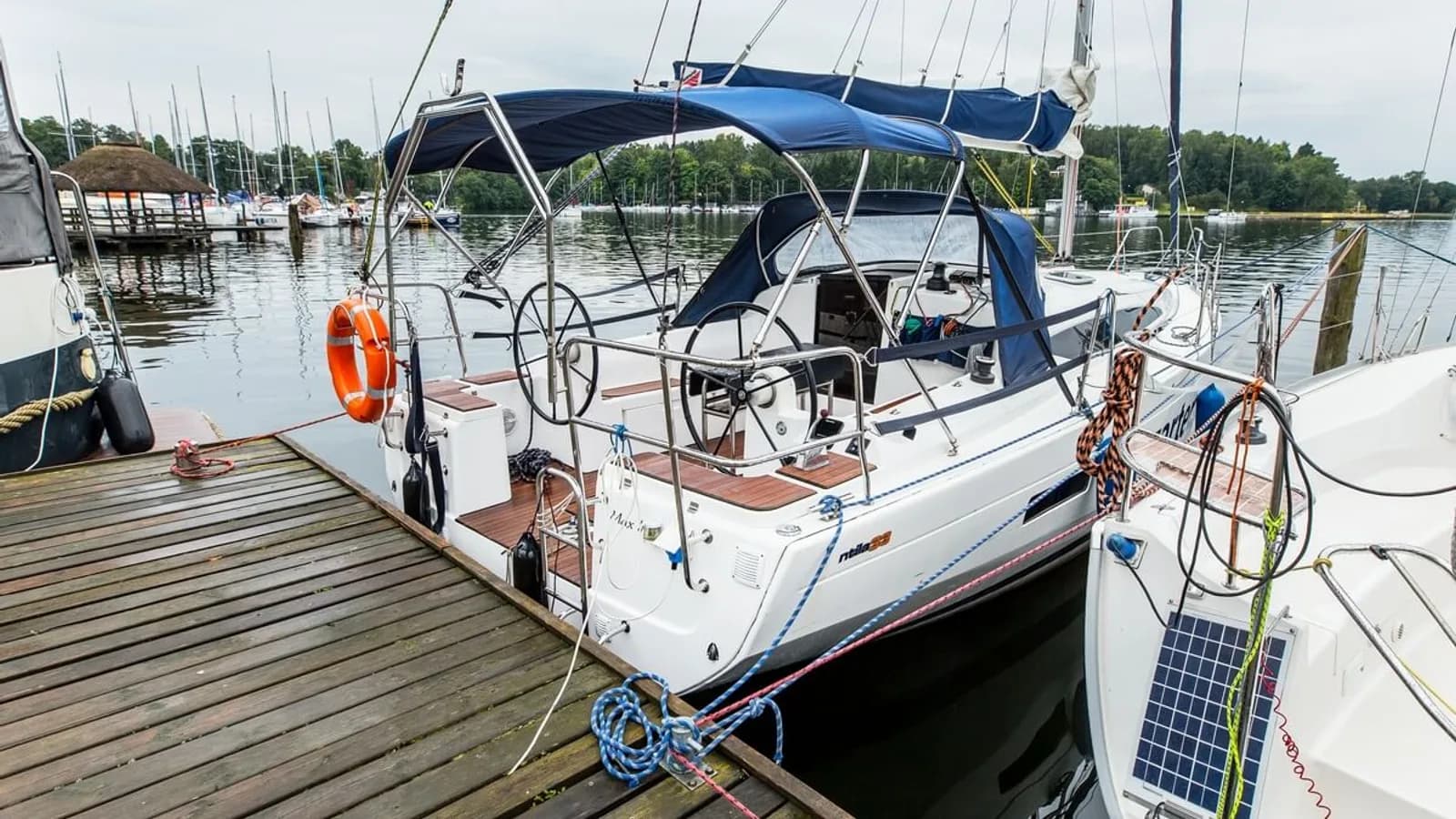
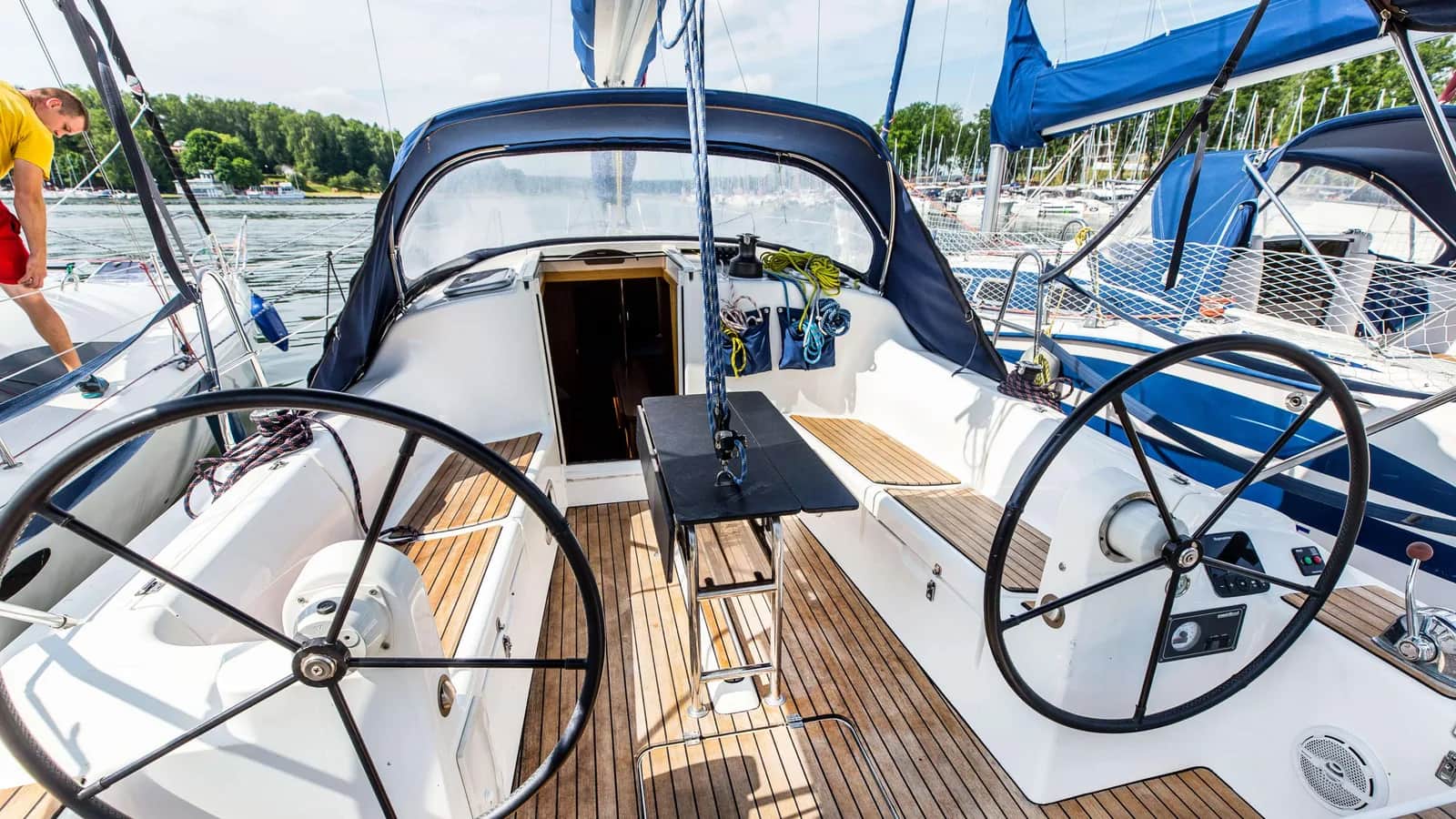
Illustrative photo from the NaCzarter.pl catalog.