NaCzarter Team
· Updated
What windward and leeward mean
Windward is the side the wind blows from. Leeward is the side it blows onto. The same words apply to a yacht's side, a lake shore, an island, a buoy and another yacht. The easiest way to remember: face the wind. In front of you is windward. Behind you is leeward.
Everything on the water moves from windward to leeward: waves, a drifting yacht, the cap that fell overboard. The masthead wind indicator shows where it comes from; a gust shows as a darker patch of ripples on the water. Wind direction names are covered in our text on the wind rose.
Windward and leeward side: where the crew sits
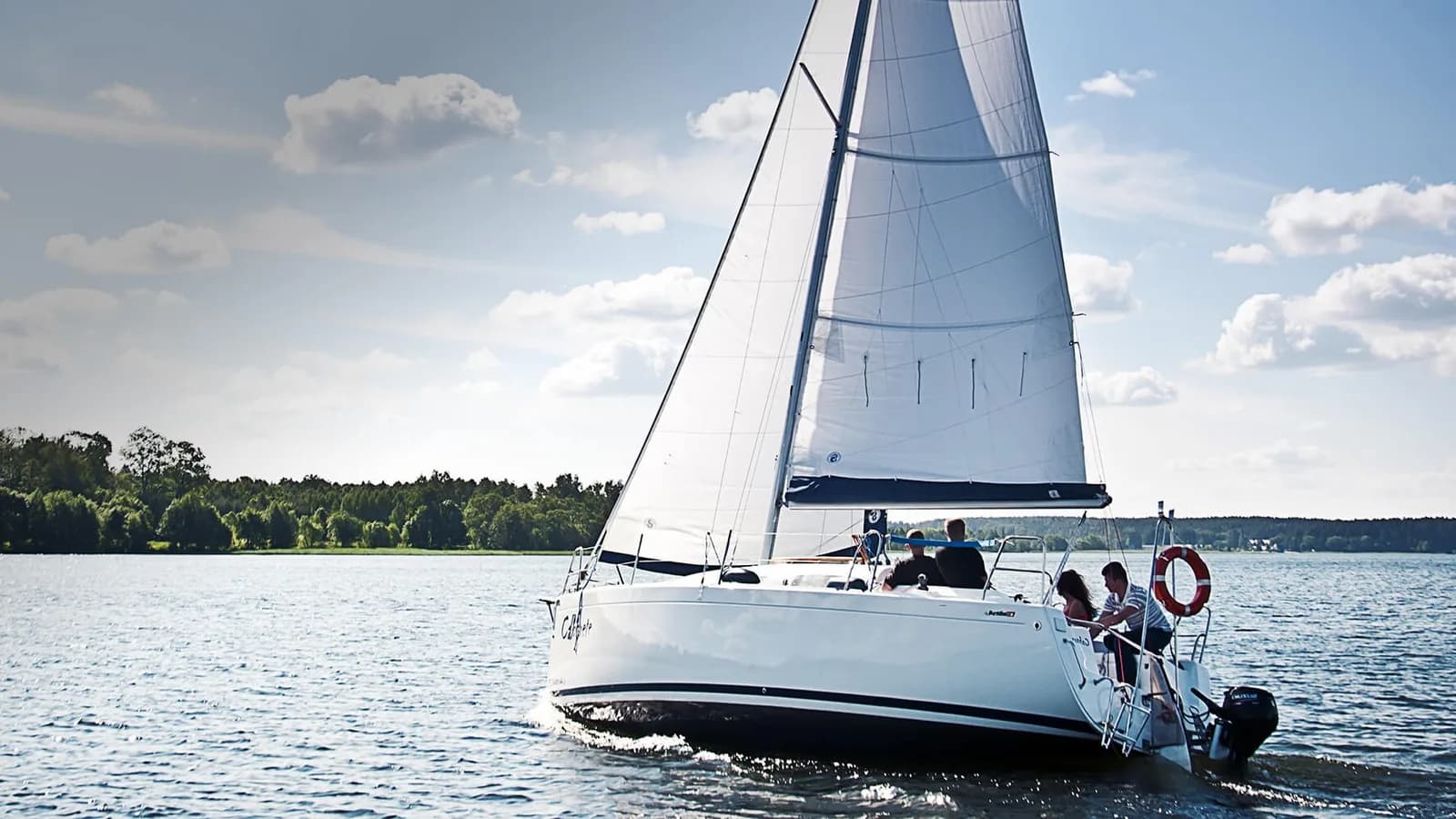
On a yacht the windward side is the one the wind hits. Close-hauled, the boat heels the other way, to leeward. Windward is high and dry, leeward low and wet. So the crew sits to windward: their weight keeps the boat upright. The helmsman sits there too, to see the sails and the gusts coming across the water. Heel is strong close-hauled and on a beam reach; with the wind astern it almost disappears. Course names, from close-hauled to running, are in our guide to points of sail.
The sails and boom swing out to leeward. The working jib sheet runs along the leeward side, the lazy one to windward. After a tack everything reverses: windward becomes leeward, the crew moves across, the sheets swap roles. We show it step by step in our text on tacking and gybing.
An example. You leave Giżycko onto Lake Niegocin and head south. The wind is westerly, from your right. Starboard is windward, port is leeward. The boat heels to port, the crew sits to starboard. You tack and head back north: the wind now comes from the left, port is windward and everyone moves across. The wind has not changed, only your course.
Windward and lee shore: where to anchor
The windward shore is the one the wind blows from. The wind comes off the land and the waves have no room to build. Right under it the water is smooth; the farther out, the bigger the waves. The lee shore is the one the wind blows onto. The waves run across the whole lake and break there. Under a lee shore it is loud and wet, and if something breaks you end up on rocks or in reeds. On Śniardwy and Mamry the waves in a strong wind are short and steep, so give the lee shore a wide berth.
Hence the rule: overnight in a sheltered bay under the windward shore, outside the fairway, with the anchor light on. If the anchor drags, you drift onto open water, not the shore. Pay out plenty of line, several times the depth; a short line jerks the anchor loose in every stronger gust. Do not overnight under a lee shore, even if the evening wind is light. In Masuria the wind often shifts at night, and the bay that sheltered you may be on the wrong side by morning. If a different motion wakes you, check what lies astern.
One expression is tricky: "the lee of an island". It means the sheltered side of the island, where you want to stop. From the deck that shore is windward, because the wind comes from the island to the boat. Remember that some islands in Masuria, including on Lake Kisajno, are nature reserves. You anchor in the bay; you do not camp on the island.
Windward in the harbour: approaching the quay and the mooring line
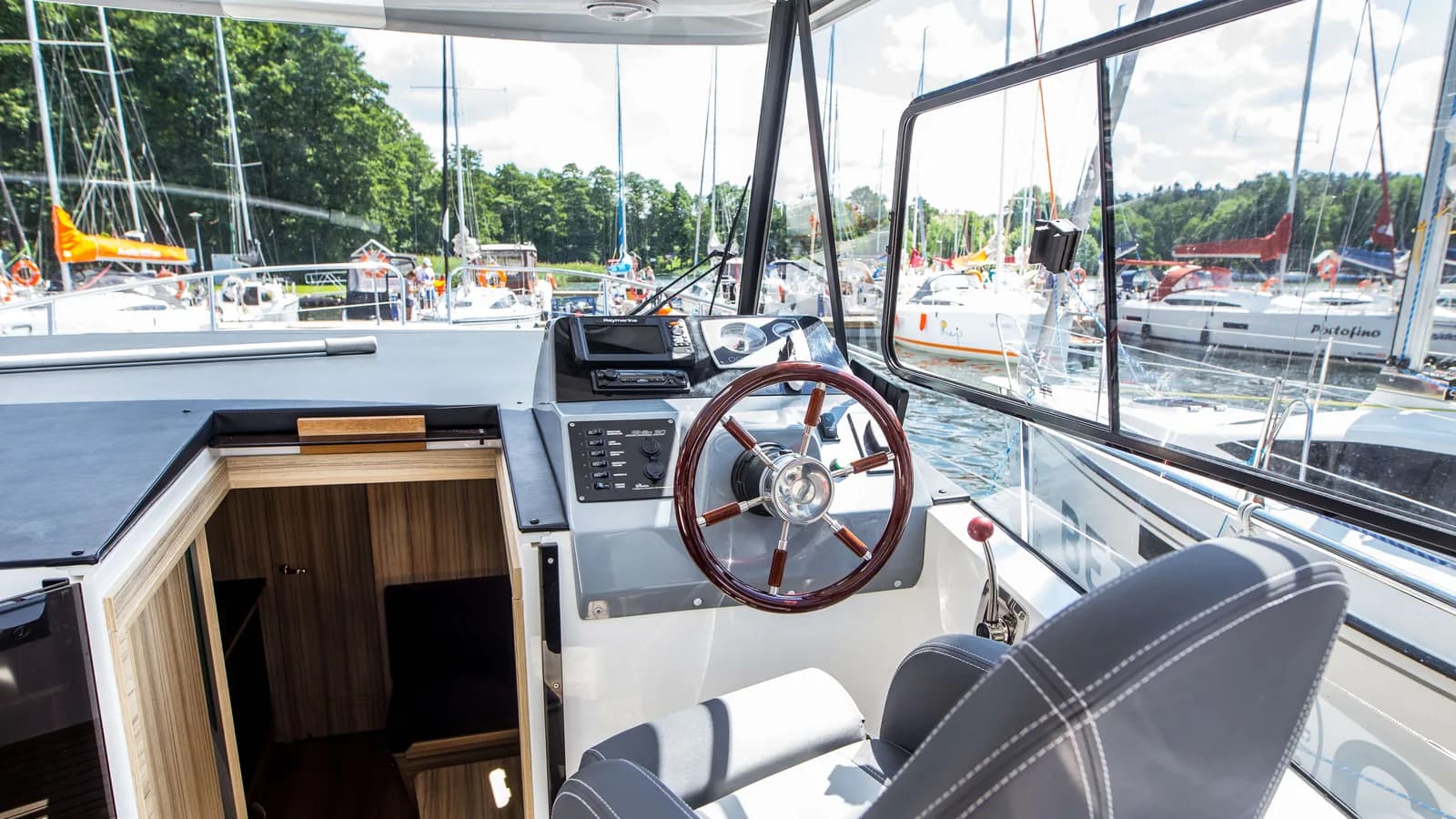
In a harbour you do not anchor but tie up to piles or a mooring line; the wind still decides your approach. An onshore wind blows from the water onto the quay: the quay is to leeward. Approach slowly, at a shallow angle, and stop early; the wind will push you onto the pontoon anyway. Hang the fenders low on the quay side before you start. Leaving against an onshore wind is hard, so if you can choose, pick a berth where the wind pushes you off.
An offshore wind blows from the quay onto the water: the quay is to windward. Approach more firmly, at a steeper angle, and pass the bow line fast. If you hesitate, the bow falls off the pontoon and you start again.
In a berth between piles or neighbours, the crosswind matters. Aim slightly to windward of the free slot: before you get there, the wind pushes the boat to leeward, exactly where you want to be. Hang the fenders to leeward, the side that meets the neighbour or the pile. A mooring line runs from the pontoon to a weight on the bottom and holds the bow when you lie stern-to. Pick it up with the boathook aft and walk it forward before the wind does its work.
Between yachts: who keeps clear and who steals the wind
When two sailing yachts converge on the same tack, that is, with the wind on the same side, the windward yacht keeps clear. The leeward yacht holds her course. Remember: whoever gets the wind first gets out of the way. On different tacks, the yacht with the wind on her port side keeps clear. Right of way over motorboats, passenger ships and kayaks is covered in our text on right of way on the Great Masurian Lakes.
An overtaking boat always keeps clear, to windward or to leeward. Then there is the wind shadow. Every yacht under sail steals the wind from one sailing close to leeward and slightly behind her. If someone overtakes you to windward, your sails go limp for a moment. Pass someone tight to windward and you do the same to them. In a race it is a weapon; on a cruise it is bad manners. Keep your distance.
Land casts a shadow too. A high shore or forest takes the wind far out onto the water: right under a windward shore the sails often hang, and a few dozen metres out it blows full strength. You see it leaving the wooded bays of Lake Kisajno: first a lull, then a sudden heel, so keep the sheets in hand, not in the cleat.
Cheat sheet: what to do to windward and what to leeward
| Situation | Windward | Leeward |
|---|---|---|
| Side when close-hauled | Crew and helmsman sit here; high and dry; lazy jib sheet | Heel, boom and sails go here; working jib sheet; do not lean over the rail |
| Shore in a strong wind | Smooth water, shelter; anchor and overnight here | Waves, noise, risk of drifting onto rocks; keep your distance |
| Night at anchor | Sheltered bay under the windward shore, outside the fairway, anchor light, plenty of line | Check what lies astern: you drift there if the anchor drags |
| Approaching the quay | Quay to windward (wind pushes off): approach firmly, steeper angle, bow line first | Quay to leeward (wind pushes on): approach slowly, shallow angle, fenders low |
| Converging on the same tack | Windward yacht keeps clear | Leeward yacht holds course |
| Wind shadow | Clean wind, but you take it from the boat beside you | Your sails hang in the shadow of a neighbour or the shore |
Frequently asked questions
How do I remember which side is windward? Face the wind. Windward is in front of you, leeward behind you. On a yacht there is a shortcut: the heel goes to leeward, the crew sits to windward.
Is windward port or starboard? Neither, not permanently. Windward is whichever side the wind comes from right now. Port and starboard belong to the hull, windward and leeward to the wind.
Which shore is safe in a squall? The windward one, where the wind blows from. The water is smooth there, and if something goes wrong the wind pushes you onto the open lake, not the rocks. Stay well away from the lee shore and reduce sail before the squall hits; see our guide to reefing.
What do "going to windward" and "working up to windward" mean? Gaining height: moving towards the side the wind comes from. You say it when you point higher to clear a headland upwind or keep some room in hand. Upwind you sail a zigzag; the technique is in our guide to beating upwind.
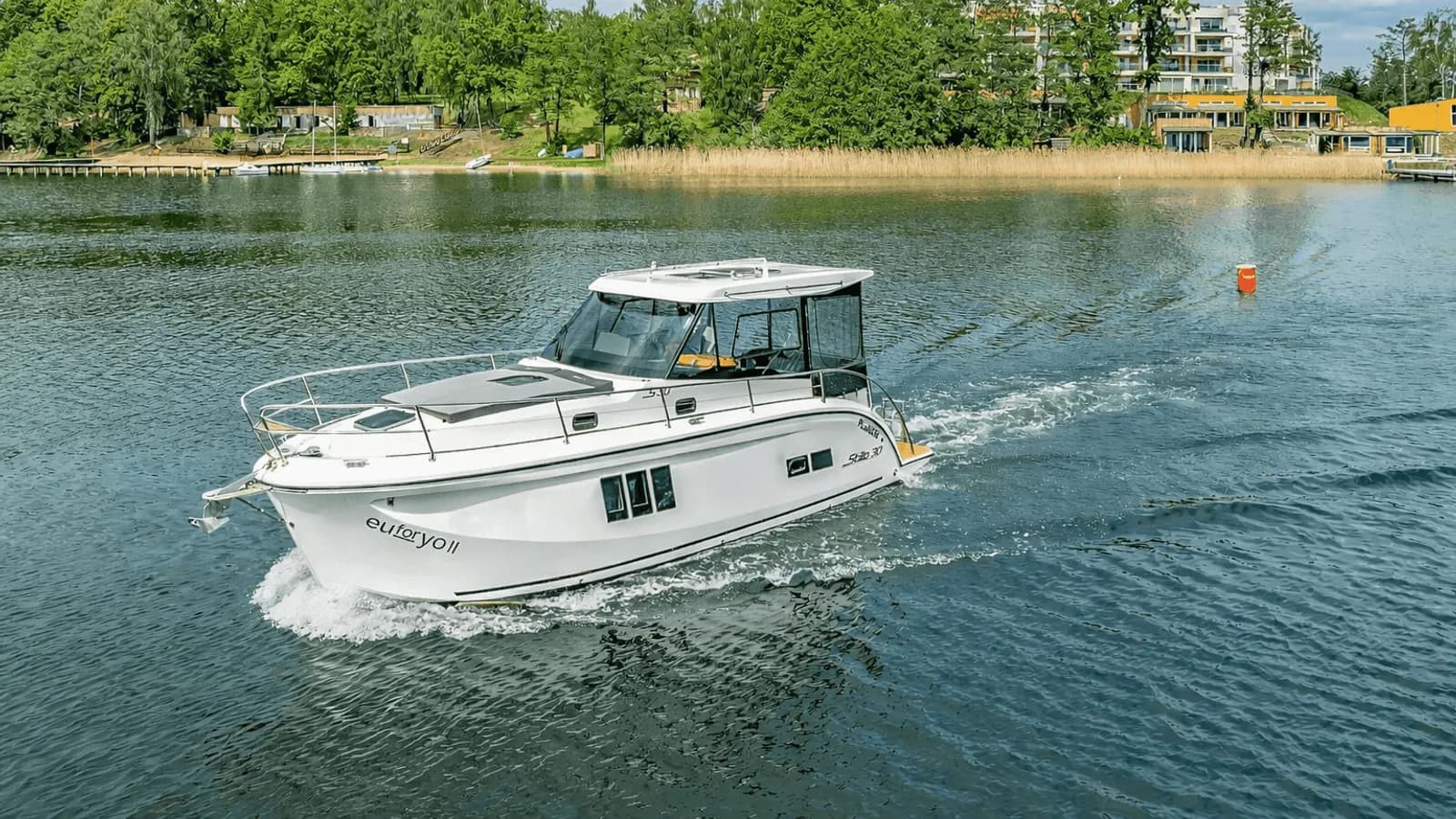
Do windward and leeward matter on a houseboat? Yes, most of all in the harbour. A houseboat has no sails and does not heel, but its flat bottom and tall superstructure mean a crosswind pushes it to leeward faster than a sailing boat. On approach, aim for the windward side of the berth and hang the fenders to leeward.