NaCzarter Team
· Updated
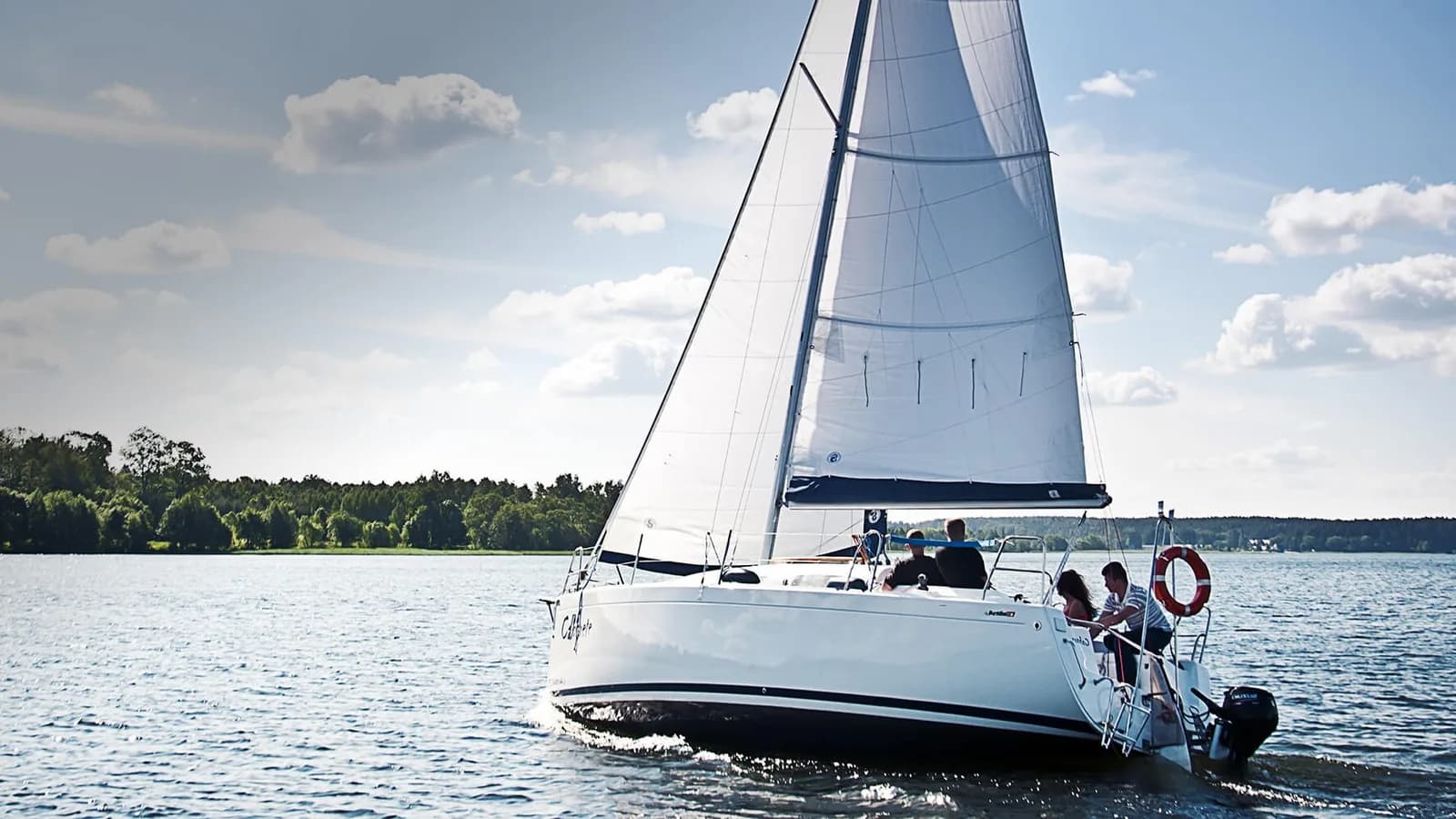
Tacking is the most important manoeuvre when sailing upwind: it is how you change tack, taking the bow of the yacht through the eye of the wind. It sounds simple, but this is exactly where beginners most often get lost: too little speed, badly given commands or a manoeuvre started from the wrong course end with the yacht "stuck" in irons, in the no-go zone. In this guide, based on our 25 years of experience with sailing yachts in Masuria, we explain step by step how to tack confidently and safely.
What is tacking
Tacking (in Polish zwrot przez sztag) is a manoeuvre for changing tack in which the bow of the yacht passes through the eye of the wind. The yacht "swings over" from one tack to the other, turning through the windward side. The whole manoeuvre has three phases:
- Heading up: you get onto a course as close to the wind as possible (close-hauled).
- Passing through the eye of the wind: the bow crosses the direction the wind is blowing from; for a moment the sails lose their lift (the no-go zone).
- Bearing away and sheeting in: you settle onto the new tack and trim the sails for the new course.
When to tack: check three things
Before you give the command, make sure three conditions are met. They decide whether the tack works:
- Clear water to windward. Check that there are no other vessels on the side you are turning towards. Right of way and safety come first.
- Speed. The yacht needs momentum to "push through" the no-go zone, where the sails do not work. Too slow = risk of getting stuck head to wind.
- A close-hauled course. A tack starts from a course close to the wind, not from a beam reach or a broad reach. The closer to the wind you are before the tack, the less you have to "turn through".
Reading the wind well helps here. If you are still learning to recognise wind directions, have a look at the guide to the wind rose.
Tacking step by step (with commands)
The manoeuvre follows a fixed, repeatable sequence. The helmsman gives the commands, and the crew confirms and carries them out:
- Sail close-hauled and build up speed.
- Announce the manoeuvre: "Ready about!" The crew gets the sheets ready.
- The helmsman pushes the tiller to leeward ("Helm's a-lee!"), or on a wheel turns the wheel to windward, and the yacht starts to head up.
- As the bow comes into the eye of the wind, ease the jib sheet and then the mainsheet: the sails start to flap.
- The bow passes through the wind; the jib swings over to the other side.
- On the new tack, sheet in the jib on the new leeward side, then trim the main.
- Bear away onto your intended course and centre the helm.
- Fine-tune the sails and check the trim. The manoeuvre is done.
Making the sheets fast and easing them smoothly is the foundation. If you mix up the fittings, take a look at the guide to the cleat and making a line fast.
Tacking vs gybing
Both manoeuvres change tack, but they differ in which end of the yacht passes through the wind. Tacking takes the bow through the eye of the wind (you turn into the wind); it is calmer and safer. Gybing takes the stern through the wind (you turn away from the wind), and the mainsail swings violently over to the other side; in a stronger wind it can be dangerous and requires control of the main. Beginners master tacking first.
The most common mistakes
- Too little speed: the yacht does not get through the no-go zone and "hangs" head to wind, losing steerage.
- Starting from a beam reach or a broad reach: you then have too wide an angle to turn through; start the tack from close-hauled.
- Too close to the shore or to other boats: no room for a correction if one is needed.
- No announcement: a manoeuvre without a command catches the crew off guard; someone may not have time to switch the sheet over or may get hit by the boom.
Frequently asked questions
What is the difference between tacking and gybing? Tacking takes the bow through the eye of the wind (upwind) and is calmer; gybing takes the stern through the wind (downwind) and can be dangerous in a stronger wind.
Why does the yacht "stop" during a tack? Most often because of too little speed going in: the yacht has no momentum to get through the no-go zone, where the sails do not work. Build up speed close-hauled before the manoeuvre.
Do you need an instructor to learn to tack? You will master it fastest in practice: on a sailing licence course or sailing with a skipper who will show you the manoeuvre live.
Not sure when to use which turn? We explain the difference between tacking and gybing in a separate guide.
Want to practise manoeuvres on calm, sheltered waters? Masuria is ideal for it. Check out yacht rental in Masuria, with live availability and online booking.