NaCzarter Team
· Updated
Charter insurance: what is covered, and what comes out of your deposit
Let's start with the sentence most people come here for: a charter yacht has its own insurance, but that does not mean every bit of damage is free. The owner's policy looks after the big, rare things. Small stuff, scuffs, missing equipment gets settled on the spot from the deposit. That is not the company being petty, it is plain arithmetic: if every scrape against a mooring pile went to the insurer, the fleet premium would climb so high that chartering would get noticeably more expensive for everyone.
I have been doing this for 25 years and I know when clients ask about insurance. Almost never before the charter. Almost always on a Wednesday evening, right after something went crunch. So read this now, while things are calm.
What the owner usually insures
A boat put into charter carries a policy. In practice it comes down to two things. Hull insurance, covering the yacht itself against serious damage, sinking, fire or theft. And third-party liability, covering damage you do to someone else, for instance the other boat you run into.
That is the safety net for a big event. A collision with real hull damage, a damaged rig, something that ends the season for the yacht. But every policy has an excess, the amount the insurer does not pay. In chartering that excess lands, in practice, on the charterer. That is why the deposit exists.
Second thing: the policy works when the boat has been used as intended and within the rules. If you head out into a gale on Lake Sniardwy with no sense, or after drinking, the insurer has every right to wash its hands of it. Then you pay out of your own pocket and the deposit is only the start of the conversation. Cover varies between owners, so check your own contract for exactly what the policy on your yacht includes.
What the deposit actually is
The deposit is not insurance. It is a practical excess and, at the same time, the owner's security for the duration of the charter. It is refundable, and it is settled on site in cash when you hand the yacht back. It does not go through the online payment together with the charter. The same goes for mandatory fees, final cleaning for example, which are paid on site.
The mechanism is simple. Return the yacht in the condition you took it, you get the whole deposit back. Something is missing or broken, we deduct the cost and hand back the rest. No workshop invoice, no procedure, no waiting a month.
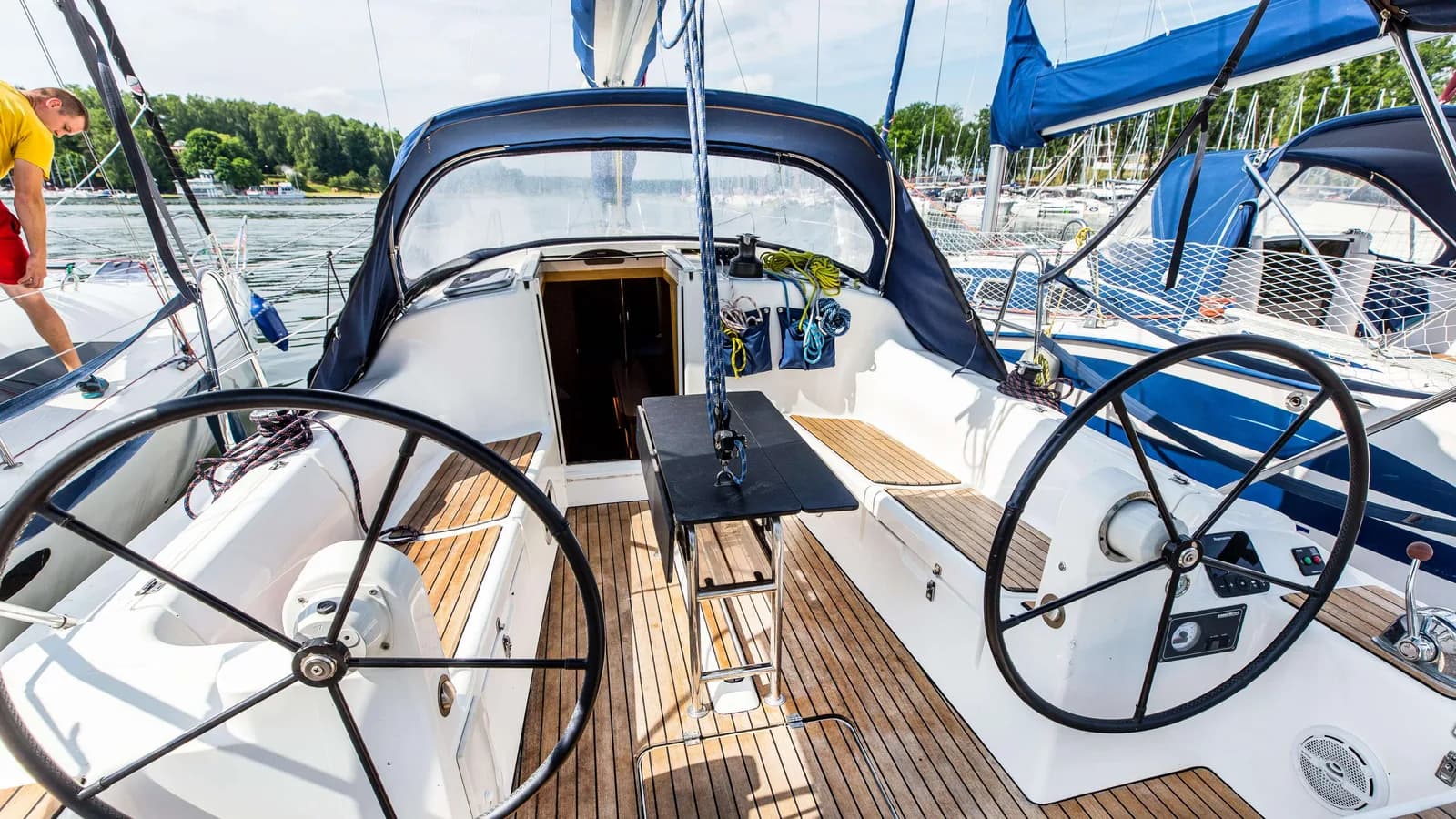
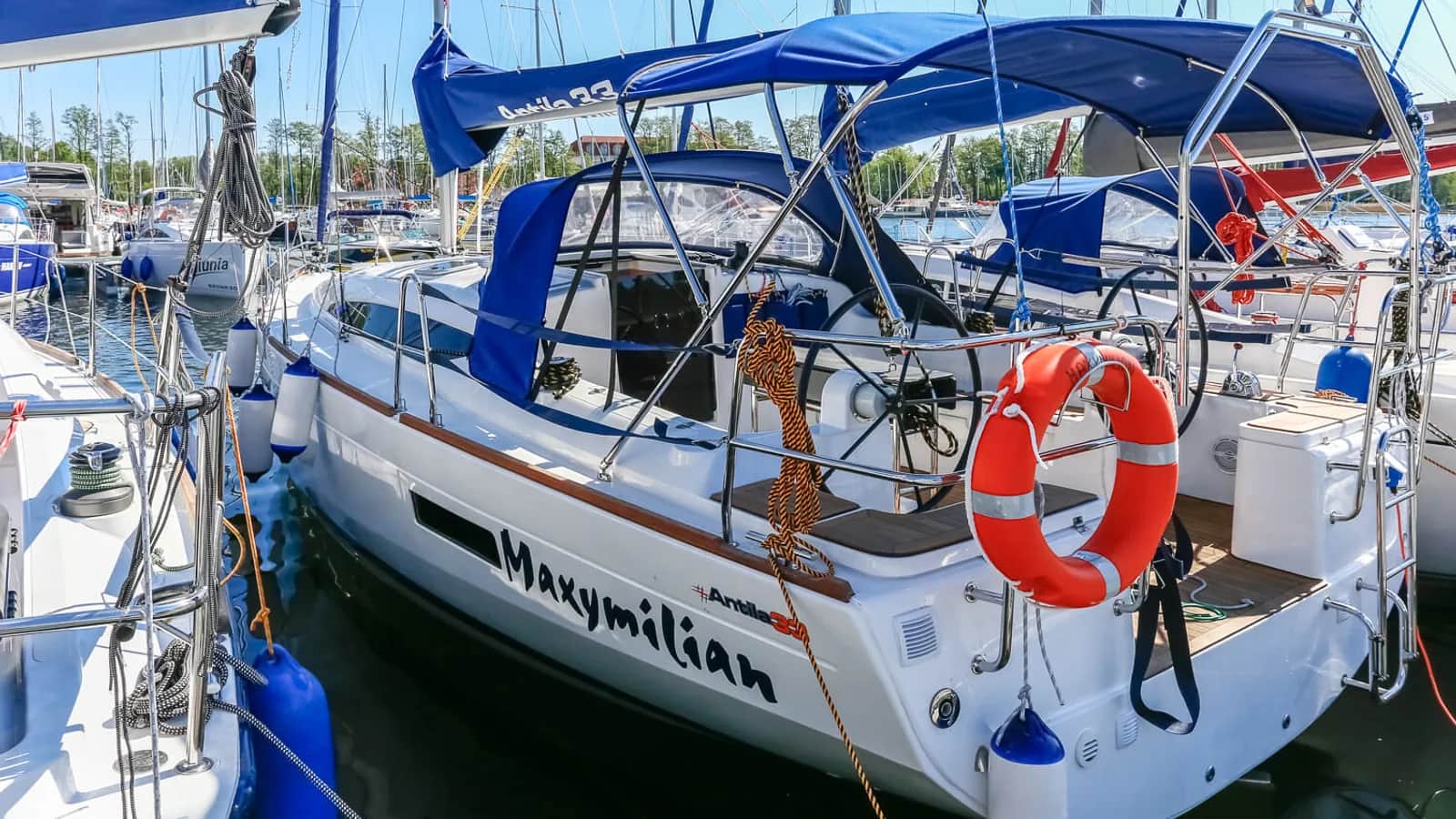
Which brings us to the thing people underestimate most: the handover report. That sheet of paper you want to sign as fast as possible because the sun is out and you want to get going. Don't. At our base, Port Royal in Gizycko, walking the yacht with the harbour master is standard, so use it. Look along the topsides at fender height, check under the stern, count the fenders, see whether the boat hook is there, whether the cooker works, whether all the cockpit cushions are aboard. Take a series of dated photos on your phone. If you spot a scratch, say so out loud and make sure it goes into the report. Five minutes at pickup can save a lot of money and nerves at drop-off. We wrote more about the mechanics in our piece on the deposit when chartering a yacht in Masuria.
What the boat's insurance never covers
I'll say it straight, there is no room for hedging here.
- The crew's personal belongings. Phone, camera, laptop, wallet, suitcase. The yacht's policy insures the yacht, not your kit. If a phone drops into the water while you are passing a line, that is your phone and your loss.
- People's health and accidents. A twisted ankle on the pontoon, a boom to the head, a burn from the cooker. That is not damage to the boat. Personal accident cover or travel insurance handles it, and you buy that yourself.
- Damage caused by gross negligence. Hitting a clearly marked rock, leaving the yacht badly moored and unattended, sailing at night without lights. The insurer looks into this and can refuse.
- Sailing after drinking. That ends the conversation about the policy. Alcohol and the helm do not mix, and if damage happens the insurer has every ground not to pay. Then we are no longer talking about the deposit, we are talking about your money. No exceptions, no "come on, it was two beers".
What is worth buying yourself
Three things, cheap relative to the cost of the charter.
Personal accident or travel cover for the whole crew. It covers injury and medical costs. If you are sailing with children, it is first on the list.
Baggage and equipment insurance. Many insurers offer it as an add-on to travel cover or to home contents insurance. Check whether electronics are covered away from home.
Cancellation cover. It makes sense if you book in winter for July. Life can surprise you, and peak-season slots usually run Saturday to Saturday and get snapped up, so the owner will not always resell your week to someone else.
Four real-life situations and who pays for them
Scraping a mooring pile in a crosswind happens to everyone who sails. The wind pushes the stern in, the fender rides up, the gelcoat picks up a scratch. That is a classic deposit case. If the scratch is superficial, the cost is often token.
A lost boat hook is not an insurance claim, it is missing equipment. We add the price of a boat hook and that is it. As an aside: boat hooks usually go overboard while picking up a mooring line, because people try to yank the line with the hook instead of grabbing it by hand. You pick the mooring line up with the hook at the stern, walk it along the side to the bow, then make it fast on the cleat.
A phone in the water is your loss and nobody will cover it from the yacht's policy. Unless you have your own equipment cover.
A mooring line parting at night is more interesting, because it depends on the circumstances. If the line was visibly chafed, it comes out of the deposit as damaged equipment plus any scuffs to the topsides. If a squall went through the port and half the pontoon has the same story, the conversation looks different. That is why you check the forecast before night falls and add extra lines, which we cover in the piece on weather and safety in Masuria.
| Situation | Who usually pays | What to do right away |
|---|---|---|
| Gelcoat scraped on a mooring pile | Charterer, from the deposit | Take a photo, phone the base the same day |
| Lost boat hook, fender, cushion | Charterer, from the deposit | Report it at handover, do not sweep it under the rug |
| Phone or camera in the water | Nobody, unless you have your own equipment cover | Report it to your own insurer, the yacht has nothing to do with it |
| Injury to a crew member | Personal accident or the crew's travel insurance | Medical help first, then a claim with your own insurer |
| Parted mooring line and scuffed topsides at night | Usually the charterer, from the deposit | Secure the yacht, add lines, call the base in the morning |
| Serious hull or rig damage | The owner's policy, deposit as the excess | Crew safety, call the owner immediately, repair nothing on your own |
| Damage after drinking | Charterer, the insurer has grounds to refuse | There is no good answer. Simply do not drink at the helm |
The most important sentence in this article
The charter contract says everything. Read the liability clause before you sign, not after the event. It states the amount you are liable for, what counts as damage, how the deposit is settled and how quickly you have to report an incident. Contracts differ between owners and a single sentence can change the bill. If something is unclear, ask before you sign. No sensible owner will take offence, and you will sail with a clear head. If this is your first time, also go through our first charter guide.
Frequently asked questions
Do I need my own insurance to charter a yacht? Formally, usually not, because the yacht carries its own policy, but check your contract. Either way, personal accident cover for the crew costs a fraction of the charter and is simply worth having, because the boat's policy does not insure people.
Is the deposit a form of insurance? No. The deposit is refundable security used to settle minor damage and missing items on the spot. Insurance kicks in for major events, and there the deposit plays the role of the excess.
What should I do straight after damage occurs? Crew and yacht safety first. Then photos, plenty of them, including a wide shot of the location. Then a call to the base, the same day. Do not repair anything yourself and do not settle privately with the other boat, because an insurance claim runs on data and documents, not a handshake.
Does alcohol affect liability? Yes, heavily. Alcohol and the helm do not mix, and in the event of damage the insurer has grounds to refuse to pay. The cost then falls on the charterer, and the deposit is only the first instalment. The details are in the liability clause of your contract.
Cover photo: NaCzarter.pl (own fleet)