NaCzarter Team
· Updated
On a windless afternoon a Masurian lake can be smooth as a mirror — and turn into a churning fury within minutes. No word in the Masurian sailor's vocabulary commands more respect than „biały szkwał” — the white squall. At NaCzarter we have sailed these waters for a quarter of a century, and we know their beauty goes hand in hand with a power that must be respected. This article explains what a white squall actually is, and recalls the history that made all of Masuria take the weather seriously.
What a white squall actually is
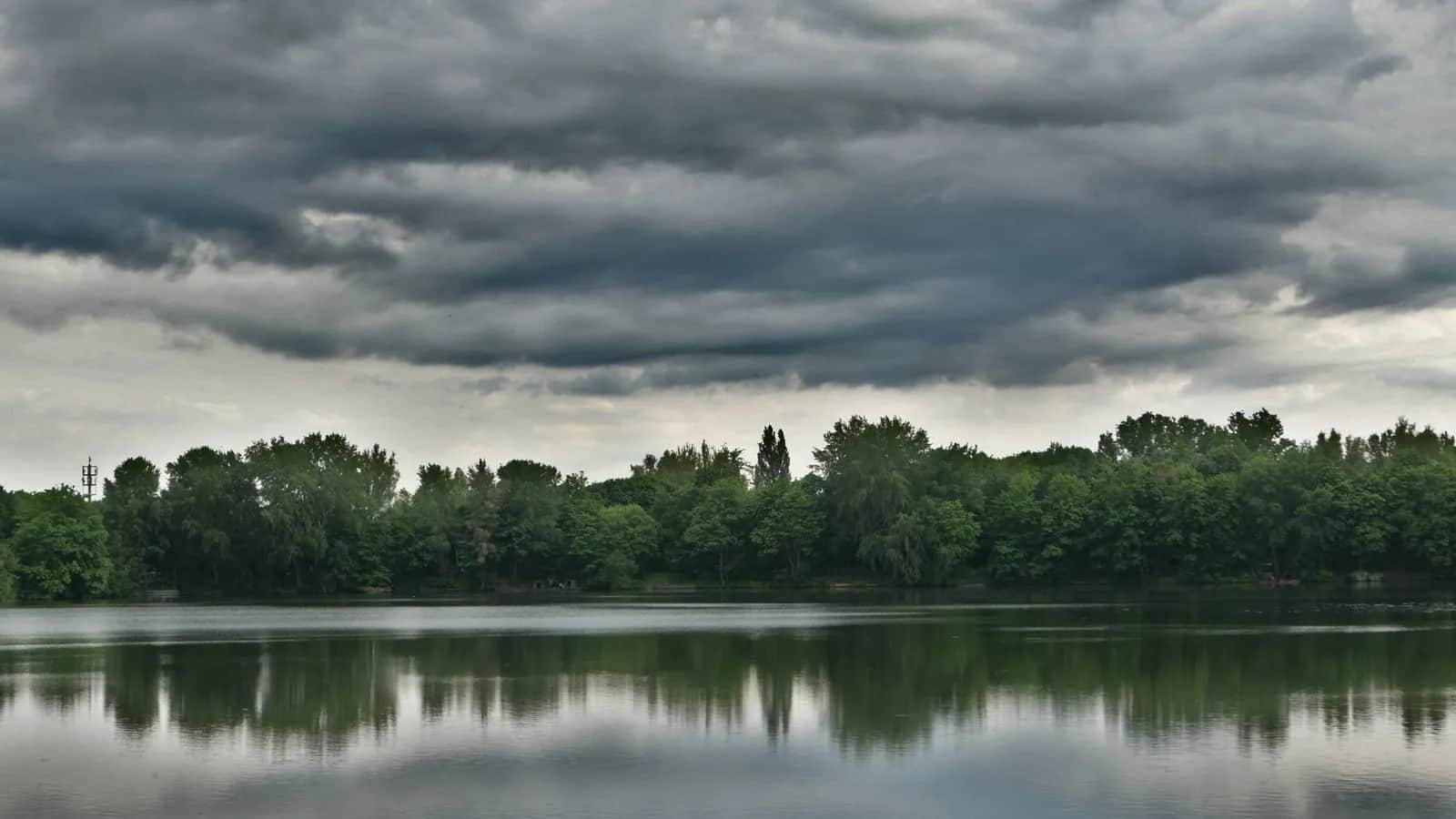
A squall is a sudden, violent increase in wind. The „white” kind is especially treacherous: the name comes from the fact that no wall of dark cloud announces it — the phenomenon can arrive almost from a clear sky, its only herald the fine droplets of water suspended in the air and the whitening, foaming surface. Hence „white”. In meteorological terms, what we popularly call a white squall is most often a downburst — a strong current descending from a storm cloud that, on hitting the water, spreads sideways in a violent gust. The wind in it can exceed 100–140 km/h and, on open water, builds a short, steep wave within moments. It is worth knowing the difference: a „classic” white squall from a clear sky is rare, while the great Masurian storms are usually a downburst or a squall line. For the sailor the result is the same — within a minute it becomes dangerous.
21 August 2007 — the darkest day on Poland's lakes
It was on that day that the phrase „white squall” entered the language for good. The storm cloud was born in the morning over the Bieszczady mountains, travelled north through Roztocze and the Lublin region, and over the Podlasie lowland met strong updrafts and grew into a vast system. Around 3 p.m. it stood over Masuria. The temperature crashed — in Mikołajki from 28°C to 16°C in moments. In the zone of descending currents the wind reached about 120 km/h, and the station in Mikołajki recorded the highest speed in its history: 35 m/s, about 126 km/h. On Lake Mikołajskie the waves rose to two metres, on Lake Śniardwy they topped three. The whole storm lasted about a quarter of an hour.
The toll was tragic: 12 people died, around 60 yachts capsized, a dozen or so sank, and rescuers pulled nearly a hundred people from the water. It is one of the greatest disasters in the history of Polish inland sailing. One factor that hampered warning the sailors was the gaps in the forecasting system of the time and the lack of fast information out on the water. That afternoon many skippers simply had no way to learn what was coming.
Why the Masurian lakes are so exposed
The Great Masurian Lakes are beautiful precisely because they are vast and open — but that same quality makes them dangerous in a sudden wind. Bodies of water like Śniardwy, Mamry and Niegocin are huge and at the same time shallow; when a strong gust strikes, the wave has no depth in which to „settle”, so it grows in a flash, short and steep — far more punishing for boat and crew than a long sea swell. In summer thermal storms add to this: hot, muggy days end in violent discharges, and with them come the downbursts. That is why the same heat that delights beachgoers can herald a dangerous evening on the water — we wrote about it in our guide to coping with heat on a yacht.
The mast system — memory turned into safety
From the 2007 tragedy came something that saves lives to this day: the Warning Signal System. It is a network of around 17 masts set along the Great Lakes route, fully operational since 2011. The masts emit a pulsing yellow light visible even in full sunlight from 8–9 kilometres away. The meaning of the signal is simple:
- 40 flashes per minute — CAUTION: storms and strong wind expected.
- About 90 flashes per minute — DANGER: a direct threat; head at once for a harbour or a sheltered bay.
The system works automatically — it responds to warnings from the Institute of Meteorology and Water Management, and registered users also receive SMS alerts. It is a solution unique in the country and one of the most important lessons Masuria drew from the white squall.
What the white squall means for you today
The key thing is that today you have the tools that were missing in 2007. Follow the forecast before and during your cruise, watch the warning masts and — above all — react early: on Masuria distances are short and harbours and bays plentiful, so you can almost always shelter before the storm front arrives. The full set of rules — how to read the signals and what to do when a squall is already upon you — we gathered in a separate guide to weather and safety on Masuria. If you are still getting to know large waters, a cruise with a skipper is a good idea — an experienced hand will take over the weather decisions and teach you to read the sky.
Respect, not fear
A white squall is no reason to give up on Masuria — it is a reason to treat it with due respect. For generations these lakes have given thousands of people the finest holidays of their lives, and the tragedy of years ago has made them safer than ever. The memory of 21 August 2007 is best honoured by good sense on the water: a checked forecast, a life jacket within reach and humility before the elements. At NaCzarter we have helped people set sail safely for a quarter of a century — check yacht availability and book online, and we will help you prepare well for any Masurian weather.