NaCzarter Team
· Updated
A hot day on the water is a dream and a trap at the same time. On a yacht the sun is deceptive: UV rays bounce off the lake surface and add to the dose your skin absorbs, while the wind and breeze cool your body so much that you do not feel how badly you are overheating and burning. After 25 seasons on Masuria, we at NaCzarter know that a few simple habits turn a punishing heat into a pleasant, safe cruise. Here they are.
Why the sun on the water is deceptive
Water reflects part of the UV radiation, so on a lake you catch the sun „twice” — from above and from the reflection. UV also penetrates tens of centimetres into the water, so a swim does not protect you. Worst of all, the wind on deck gives a false feeling of coolness — your skin is burning and you do not feel it until it is too late. That is why on the water you have to protect yourself more, not less, than on land.
Make shade — it is the foundation
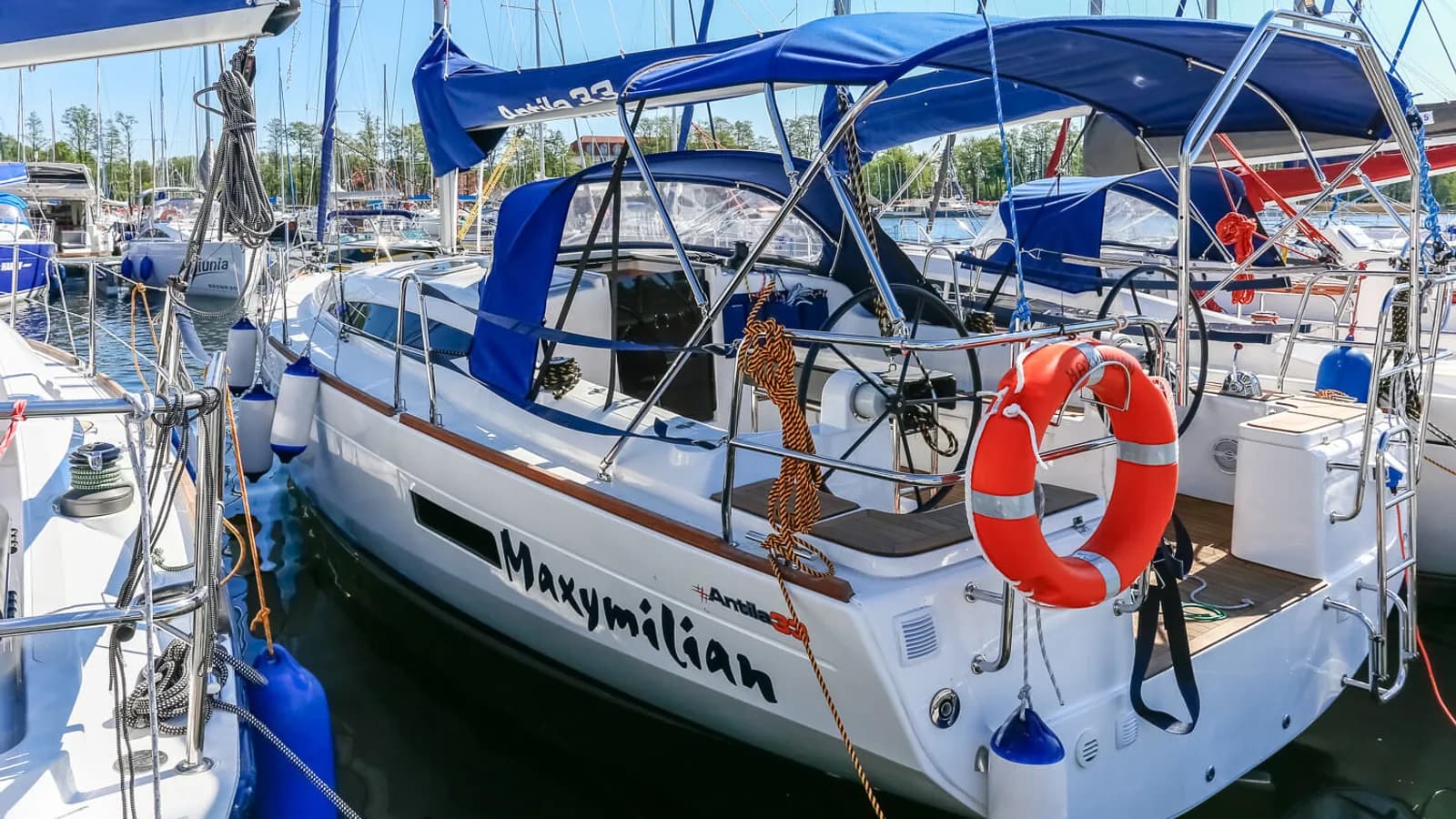
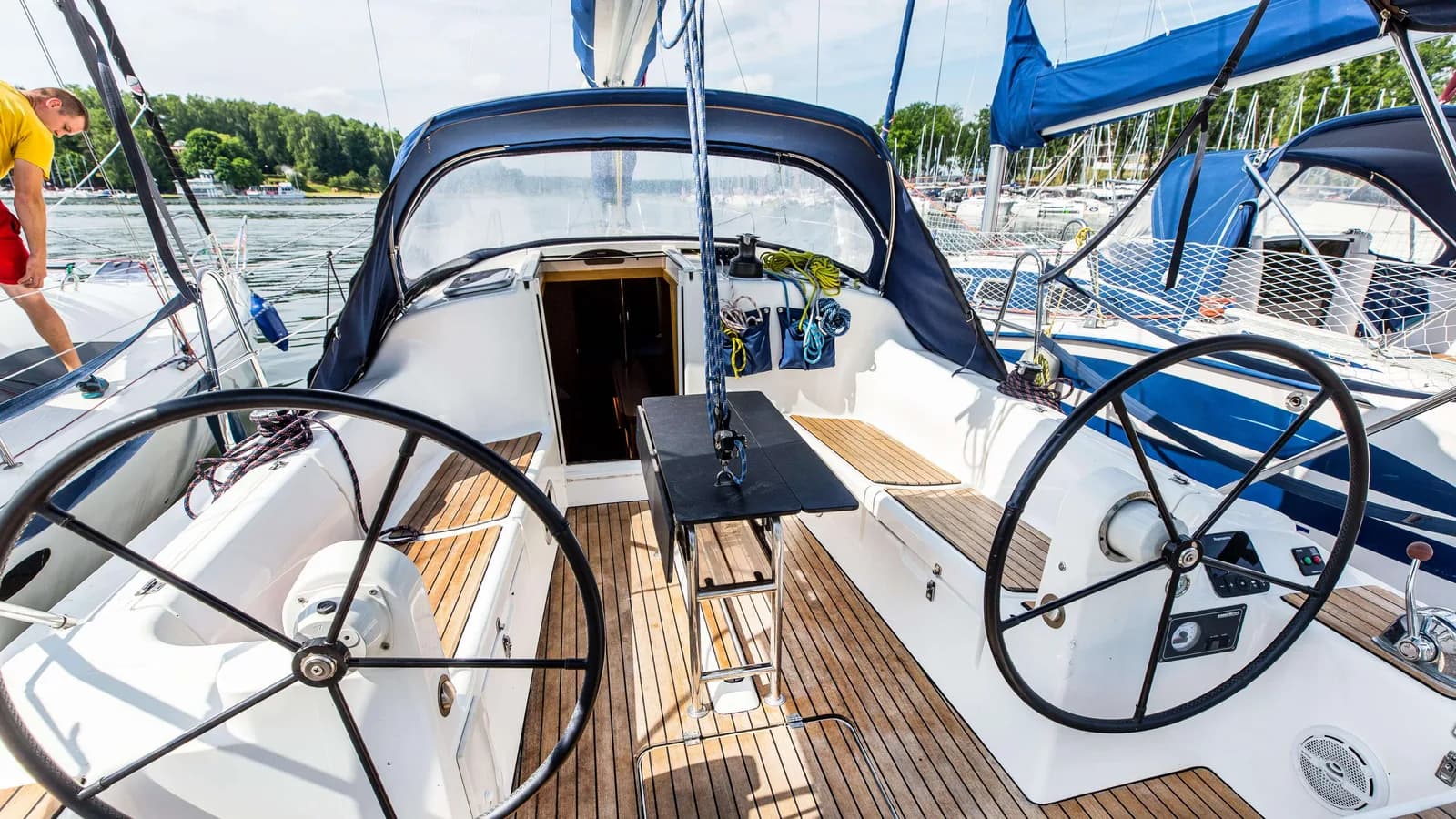
The simplest and most effective answer to heat is shade. Rig a bimini or an awning over the cockpit, and if you are at anchor, stretch an extra cloth or sail as a screen. Shade over the helm and the spot where you spend most of your time can lower the felt temperature by several degrees and removes the greatest risk of burns.
Drink more than you think you need
In the heat an adult should drink at least 2–3 litres of water a day, and usually more on a hot deck. Drink regularly, in small sips, before you feel thirsty — thirst is already a sign of dehydration. Still water is best, and with heavy sweating it is worth adding electrolytes. Skip alcohol entirely and limit coffee — both dehydrate you further. Instead of heavy, greasy meals, go for light, hydrating snacks: watermelon, cucumber, tomatoes, fruit. Keep a supply of water and food in a cool box with ice packs.
UV protection — cream, hat, sunglasses
- Sunscreen SPF 30+ (better 50) — apply generously before sun exposure and reapply every two hours and after every swim.
- A wide-brimmed hat that shades your face, neck and ears.
- UVA/UVB sunglasses, ideally polarised — they cut the blinding reflection off the water and protect your eyes.
- Light, loose, long-sleeved clothing in a pale colour — light fabrics reflect the sun, dark ones absorb it. A UV-rated shirt protects better than bare skin under cream.
Ways to keep cool on deck
When the heat pours down, a few tricks help:
- A wet bandana or buff on the neck and wrists — the evaporating water cools the whole body. You can also press a cold pack or an iced bottle to your neck.
- A swim — the most pleasant way to cool off, but look around: in warm, shallow water in late summer cyanobacteria can bloom, and those are best avoided.
- A 12V fan in the cockpit or cabin, plus good ventilation: open hatches and a „wind scoop” over the companionway drive a breeze inside. Cool the cabin in the evening and at night.
- Mind the hot deck and fittings — gelcoat and metal can burn, so wear shoes and grab the rails carefully.
Sail to the rhythm of the sun
The hottest hours, roughly 11 a.m. to 4 p.m., are for a swim, a stop in the shade or a harbour — not for long tacking in full sun. Cover the most distance in the morning and late afternoon, when the sun is lower and the air cooler. It is not only more comfortable but also safer.
Heat exhaustion or heatstroke? Recognise it and act
This is the most important part of this guide. Overheating comes in two stages, and you must tell them apart:
- Heat exhaustion is a warning sign: heavy sweating, headache and dizziness, weakness, nausea, body temperature usually below 40°C, but consciousness preserved. Response: shade immediately, rest, cooling and drinking water — that is usually enough.
- Heatstroke is life-threatening. It is marked by a temperature above 40°C, dry, hot skin — the person stops sweating — and disturbed consciousness: confusion, agitation, seizures, loss of consciousness. Do not wait: call the emergency number, move the person into the shade, cool the body hard (ice or cold compresses on the neck, armpits and groin — over the large arteries — and wrap in a wet sheet) and, if conscious, give water.
Watch children, older people and dogs especially — they overheat fastest. If you are sailing with a dog, see our guide to chartering with a dog.
Beware of what comes after the heat
On Masuria a hot, muggy afternoon often ends in a sudden storm, even a white squall. It is a paradox: the same heat you shelter from drives dangerous phenomena on the water in the evening. So follow the forecast and the Masurian warning signals — how to read them is covered in our guide to weather and safety on Masuria.
Ready for a cruise in the heat?
Heat does not have to ruin a holiday — all it takes is shade, water, sunscreen and a little sense in planning the day. Prepared like that, you turn the hottest days of summer into lazy swims and beautiful sunsets on the water. Check and book summer yachts online at NaCzarter — set out from Giżycko and catch the Masurian wind.