NaCzarter Team
· Updated
Yacht provisions: what to pack so you don't go hungry or haul too much
For a boat trip, buy long-life products for simple one-pot meals, proper breakfasts and plenty of bottled water, because the galley on a sailing boat means one or at most two gas burners, a small battery-powered fridge and a sink with a pump. Pasta with sauce, stew from a tin, rice with vegetables and scrambled eggs work best. Do your big shop before you set sail.
For years we have seen two extremes in the ports. Some people bring half a pantry and half of it goes off, while others have nothing left to put in the pot by day two.
What the galley on a charter looks like and why it changes your shopping list
On a typical charter sailing boat you have a gas cooker with one or two burners. A houseboat may have a bigger kitchen, sometimes even an oven. There is a fridge, but it is small and runs off the battery, so don't count on chilling a pack of beer in an hour. The sink has a hand, foot or electric pump, and the water comes from a tank that runs out.
So there is no point bringing frozen food you have nowhere to keep, or dishes that need three pots at once and half an hour on the burner. You go for things that don't spoil and cook in one pot.
If this is your first time at the helm, also read our first charter guide, and you can sort out clothes and the rest of your luggage with the list of things to pack for a boat trip.
Do your big shop before you set sail
In larger towns on the route, such as Giżycko, Węgorzewo or Mikołajki, you can do a week's shopping at a supermarket and drive it to the port. You usually pick up the yacht in the afternoon, so shop earlier the same day. Along the way, in smaller ports and villages, there are shops too, but the choice is smaller and you can't reach all of them straight from the boat. Treat them as top-ups for fresh bread, vegetables and something cold to drink, and the list of shops near ports in Masuria shows exactly where they are.
Split your shopping into two parts. Long-life items you buy once, at the start. Fresh food, such as butter, cold meats, vegetables and bread, you top up along the way, because the fridge won't hold much anyway.
Shopping list for a week's trip
| Category | What to pack |
|---|---|
| Long-life (basics) | Pasta, rice, groats, tinned food (stew, fish, beans), sauces in jars, tomatoes in cartons, oil, salt, spices, tea, coffee, cereal, sugar |
| Fresh (top up along the way) | Bread, eggs, butter, cheese, cold meats, vegetables and fruit, sausages or fish if you barbecue on land in port |
| Drinks | Bottled water (allow 2–3 l per person per day), juices, perhaps beer, but the small fridge limits how much you can chill |
| Kitchen and bathroom | Paper towels, washing-up liquid (ideally eco-friendly), a sponge, bin bags, aluminium foil, matches or a lighter, toilet paper, soap |
| Within reach on watch | Snack bars, nuts, dried fruit, crackers |
How to cook on a yacht so the gas and water last
One-pot dishes work best: pasta with sauce, tinned stew heated up with vegetables, rice with whatever you have, scrambled eggs for breakfast. One pot or one frying pan saves gas and water, and there is less washing up.
Make proper breakfasts, because you get hungry quickly on the water. Scrambled eggs, sandwiches, cereal and hot tea keep the crew going until the afternoon. During the day on the water, sandwiches, fruit and snack bars are enough, and you cook a hot dinner in the evening in port.
Save gas: don't boil water “just in case” and don't keep the burner on full flame when you don't need to. A spare gas cylinder may cost extra from the owner, so ask about it at handover. Save tank water too. Rinse vegetables in a bowl, and fill pots with water and leave them to soak before you start scrubbing. You can only refill the tank in port.
It's better not to drink water from the tank. It sits for several days in the warmth and is filled up in different ports, so it is fine for washing and doing the dishes, while for drinking, coffee and tea you use bottled water. That is why you buy more water than you think you need.
Washing up and rubbish: Masuria's waters are protected
You wash up in the sink on the yacht or in the port's dishwashing area, which in some ports, for example in Sztynort and at Stranda in Giżycko, is included in the mooring fee. Don't pour grease, food scraps or chemicals into the lake, because Masuria is a protected area and the Water Law Act prohibits discharging waste into water. Use little washing-up liquid, ideally eco-friendly, and wipe the grease from the pan into the bin bag with a paper towel before you even reach for the sponge.
You collect rubbish in a bag and throw it away in port when you refill the water. Larger marinas have bins, water and toilet blocks, and we compare them in our overview of the best ports and marinas in Masuria. You also leave the toilet waste in port, and before your trip you can check where in Masuria to empty the yacht's toilet.
Cooking is more comfortable on a houseboat
On a houseboat you usually have more kitchen space, sometimes an oven and a bigger fridge, so you can cook more comfortably and keep a larger stock of fresh food. The other rules stay the same: limited tank water, bottled water for drinking, rubbish and grease into the bag. If you are still choosing a boat, take a look at our guide to houseboats in Masuria.
Frequently asked questions
Is there a fridge on a charter yacht? Yes, usually, but it is small and runs off the battery. It is enough for day-to-day shopping, so top up fresh food every few days. Don't count on freezing anything and don't pack frozen food.
How much drinking water should I take on a boat trip? Polish dietary reference values give about 2 l of water a day for a woman and 2.5 l for a man, including water from food. On the water and in hot weather you drink more, so allow 2 to 3 l of bottled water per person per day and buy more in ports along the way.
Where should I shop for a boat trip? Do your big shop in a larger town before you set sail. Treat shops near ports along the way as places to top up bread, vegetables and drinks, because the choice is smaller and you can't reach all of them straight from the boat.
Can you barbecue on a yacht? You don't barbecue on the deck of a charter yacht. You can only light a barbecue on land, where the port allows it, so ask at the harbour master's office first.
What should I do with food left over after the trip? Take it home. You return the yacht with an empty fridge and empty cupboards, and scraps go into the bins in port.
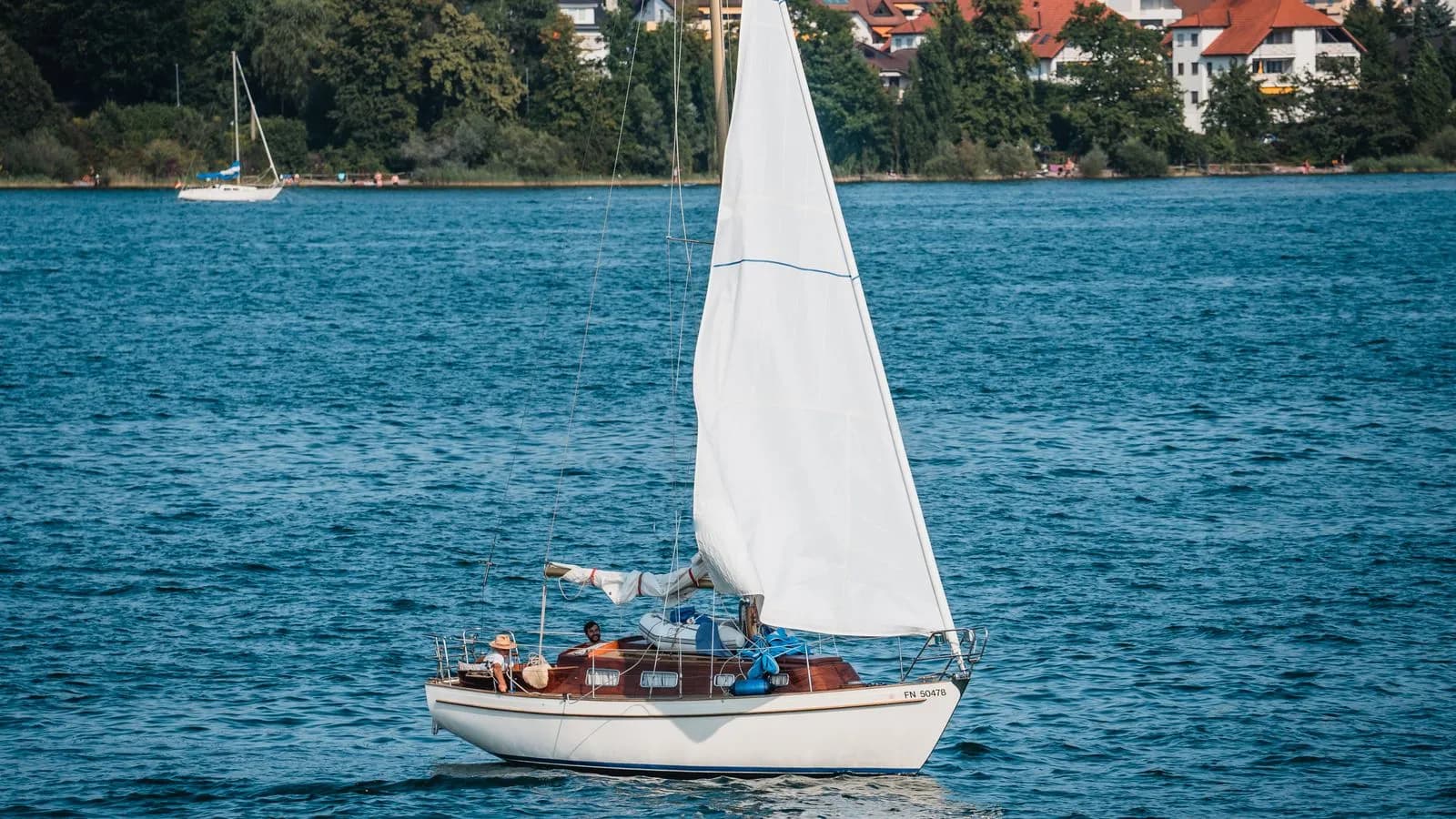
Cover photo: Ludwig Schneider, CC BY-SA 3.0, via Wikimedia Commons