NaCzarter Team
The Beaufort Scale on a Lake — How Much Wind Is It Really
The Beaufort scale describes wind strength in 13 forces (0–12) based on what the wind does to the water and the surroundings — not with an instrument. In practical sailing, forces 0–8 matter most: "force 4 on the Beaufort scale" is a moderate wind of 5.5–7.9 m/s (20–28 km/h) with the first white crests, while 15 km/h, for example, is force 3 — a gentle wind that is perfect for learning. Below is the full table with conversions and an honest answer to the question of which force still lets you sail and which sends you back to port.
Table: Beaufort forces, speed and the look of the water
| °B | Name | m/s | km/h | What you see on the lake |
|---|---|---|---|---|
| 0 | Calm | 0–0,2 | <1 | Surface smooth as a mirror, sails hang limp |
| 1 | Light air | 0,3–1,5 | 1–5 | Faint ripples, the boat barely moves |
| 2 | Light breeze | 1,6–3,3 | 6–11 | Small waves, the sails start to work |
| 3 | Gentle breeze | 3,4–5,4 | 12–19 | The boat sails steadily — best for learning |
| 4 | Moderate breeze | 5,5–7,9 | 20–28 | First white crests, lively sailing |
| 5 | Fresh breeze | 8,0–10,7 | 29–38 | Clear foaming waves — time to reef the main |
| 6 | Strong breeze | 10,8–13,8 | 39–49 | Tough conditions, on a lake consider heading back |
| 7 | Near gale | 13,9–17,1 | 50–61 | Get off the water — sailing for the experienced only |
| 8 | Gale | 17,2–20,7 | 62–74 | Do not go out; if you are on the water, head to port |
Forces 9–12 (from 20.8 m/s upward) are a strong gale, hurricane and phenomena you practically never meet on the Masurian lakes — they belong to the open sea.
How to convert quickly in your head
Two shortcuts are enough on the water. First: to turn metres per second into kilometres per hour, multiply by 3.6 (10 m/s is 36 km/h). Second, for the scale itself: a Beaufort force roughly corresponds to 2 m/s times the force number (4 °B ≈ 8 m/s). It is an approximation, but in the cockpit what counts is the order of magnitude, not the second decimal place. Wind speed in knots is a separate conversion — we cover it in our guide to the nautical mile and knots.
What wind should you sail the Masurian lakes in?
For beginners the sweet spot is 2–3 °B: the boat answers the helm, and a mistake does not end in drama. From 4 °B it gets sporty and it is worth knowing how to reef the sails. 5 °B is already a wind where a less experienced crew should reef right after leaving, and 6 °B on a narrow, forest-lined lake can be trickier than the same "force six" on open water — the gusts coming off the shore can be capricious. From 7 °B we get off the water. Remember that the forecast gives the average wind, and in gusts it can be 2–3 forces higher.
Beaufort and the white squall
The scale describes a settled wind — and Masuria's number one hazard is its sudden jump. A white squall can, in a few minutes, lift the wind from a gentle 3 °B to a storm-force 8–9 °B, which is why a simple "today is going to be 3–4" does not free you from watching the sky and the IMGW warnings. Before you go out, check the forecast and the weather from a safety standpoint.
Where the scale came from
The name comes from Francis Beaufort, a British naval officer who in the early 19th century organised the description of wind so that different observers would report the same thing. Its brilliant simplicity is that the scale is used without any instrument — you just look at the water, the trees and your own sails. To this day it is used by meteorologists and sailors all over the world, and institutions such as IMGW convert it into metres per second in their bulletins.
Frequently asked questions
How much is force 4 on the Beaufort scale? A moderate wind of 5.5–7.9 m/s, that is 20–28 km/h — the first white crests appear on the water.
15 km/h is what on the Beaufort scale? That is force 3 (gentle breeze, range 12–19 km/h) — calm, friendly conditions for learning to sail.
At how many Beaufort forces should you not go out? From 6 °B on a lake consider heading back, and from 7 °B (from about 50 km/h) get off the water — those are conditions for the experienced, and in gusts it is stronger still.
How do you convert m/s to km/h? Multiply metres per second by 3.6 — for example, 10 m/s is 36 km/h.
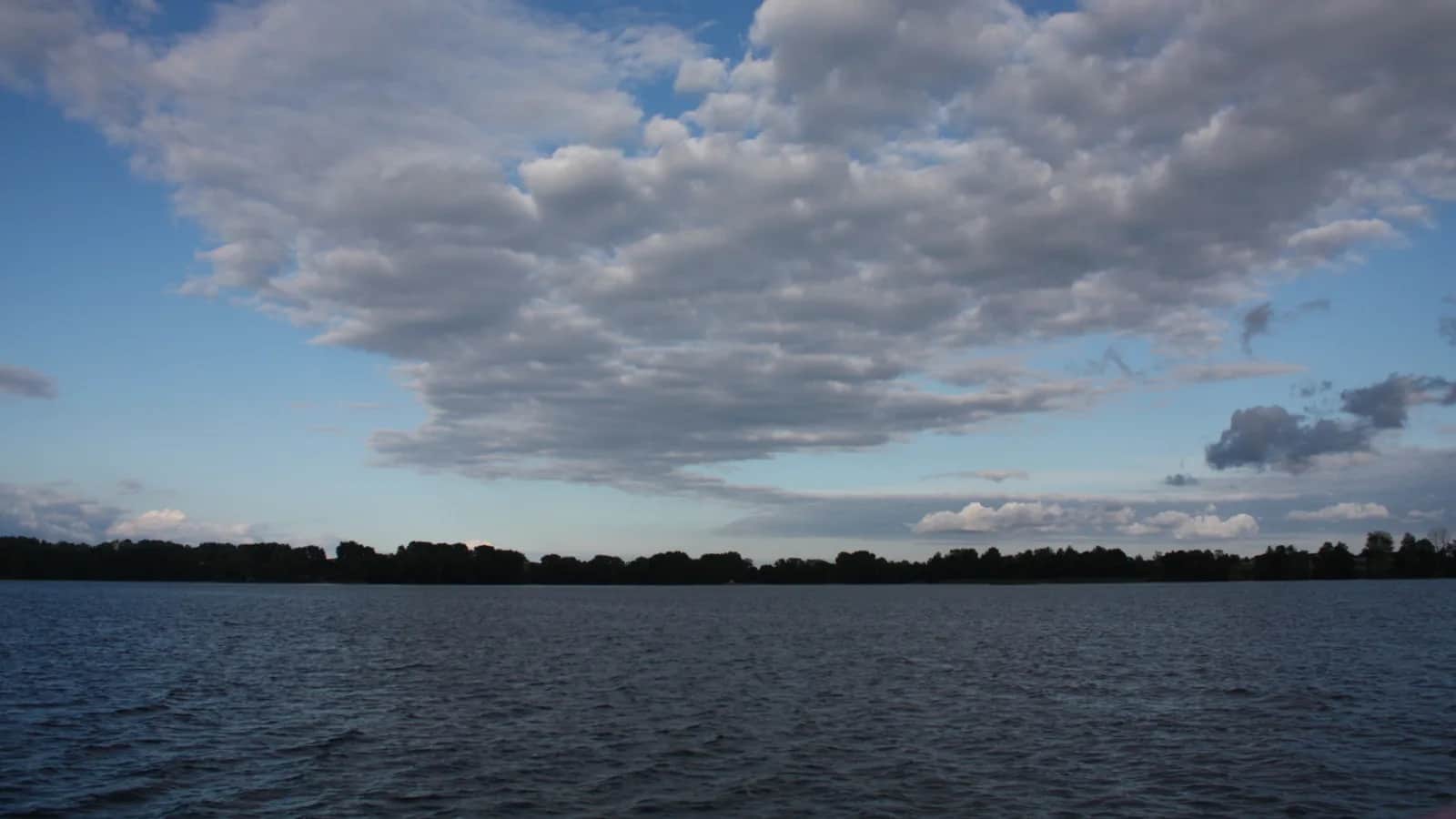
Cover photo: Ludwig Schneider / Wikimedia (CC BY-SA 3.0).