NaCzarter Team
Lake Dargin, open water just north of Giżycko
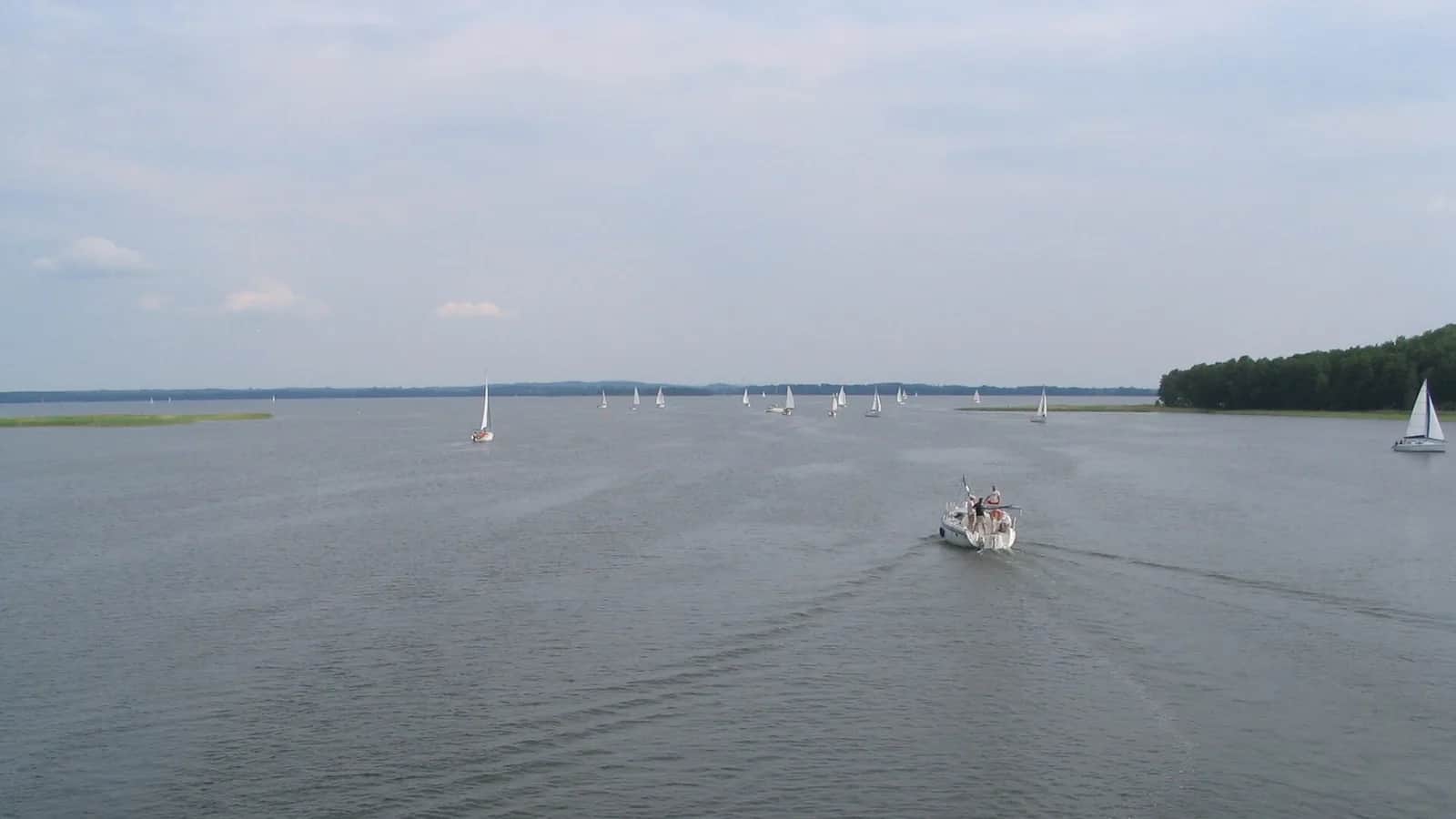
Dargin is a big, sprawling, open lake in the Mamry complex, north of Giżycko and Kisajno. It's your closest taste of "real" sailing on Masuria, but in stronger wind, especially from the north, it builds a genuine wave and can be demanding for beginners. When you leave Giżycko, say from Port Royal marina, cross Kisajno and drop onto Dargin, you feel the difference right away. It opens up. The shore pulls back, there's less shelter, and the boat starts working differently.
For a lot of people this is the best part of a cruise around northern Masuria. For some it's the first moment where you have to think before you crank up full sail.
The character of the water: a little sea by Masurian standards
The Great Masurian Lakes bring to mind tight channels, reeds and water tucked away behind forest. Dargin breaks that picture. It's part of the Mamry group, the largest water complex on the trail, and you can see it with the naked eye. Open water, a distant horizon, wind that gets up to speed across the whole width.
To the south Dargin connects with Kisajno, and through the Giżycko canals further on with Niegocin. To the north and east it flows into the next Mamry waters: Kirsajty, Lake Dobskie, and further on Mamry Północne. So you're standing at a crossroads. From here you can head in several directions and plan a cruise without doubling back the same way.
That openness is both an advantage and a trap. An advantage, because you sail long tacks, the boat picks up speed, there's room. A trap, because on open water you've got nowhere to hide when the weather turns.
Wind and wave: why Dargin can be moody
On a narrow lake a wave has no room to build up. On Dargin it does. With wind from the north the water gets a long run-up and builds a real, short Masurian chop that can throw the boat around more than someone who only knows calm bays would expect. It's not the Baltic, but for a lake it makes an impression.
That's why on Dargin the forecast isn't a formality. Before you head out of sheltered Kisajno onto open water, check which way and how hard it's meant to blow. In stronger wind from the north it's worth backing off or shortening the route and staying closer to shore. Reef in time, not when it's already coming over the rail.
How to work Dargin into a cruise from Giżycko
The simplest way: base in Giżycko, and Dargin as the goal for the day or a leg on the way north. You leave Port Royal, pass through Kisajno. Narrower, calmer, good for a warm-up. And only then does Dargin open up in front of you. It's the natural order. Kisajno eases you in, Dargin gives you open water.
From here you've got a few options. You can do a loop: Giżycko → Kisajno → Dargin and back the same way, when the wind only favours one direction. You can push further north into Mamry, through Kirsajty and Dobskie, and come back on a different tack. Or you can treat Dargin as a full-day training ground: mess around on the open water, practise long tacks and head back for the night to the port by Giżycko.
Important: Dargin links up nicely with the rest of the trail, but on its own the shores are wilder and there are fewer facilities than around Giżycko. So plan your base and overnight closer to town, and treat Dargin as water to sail, not to sit on.
Where you can actually moor
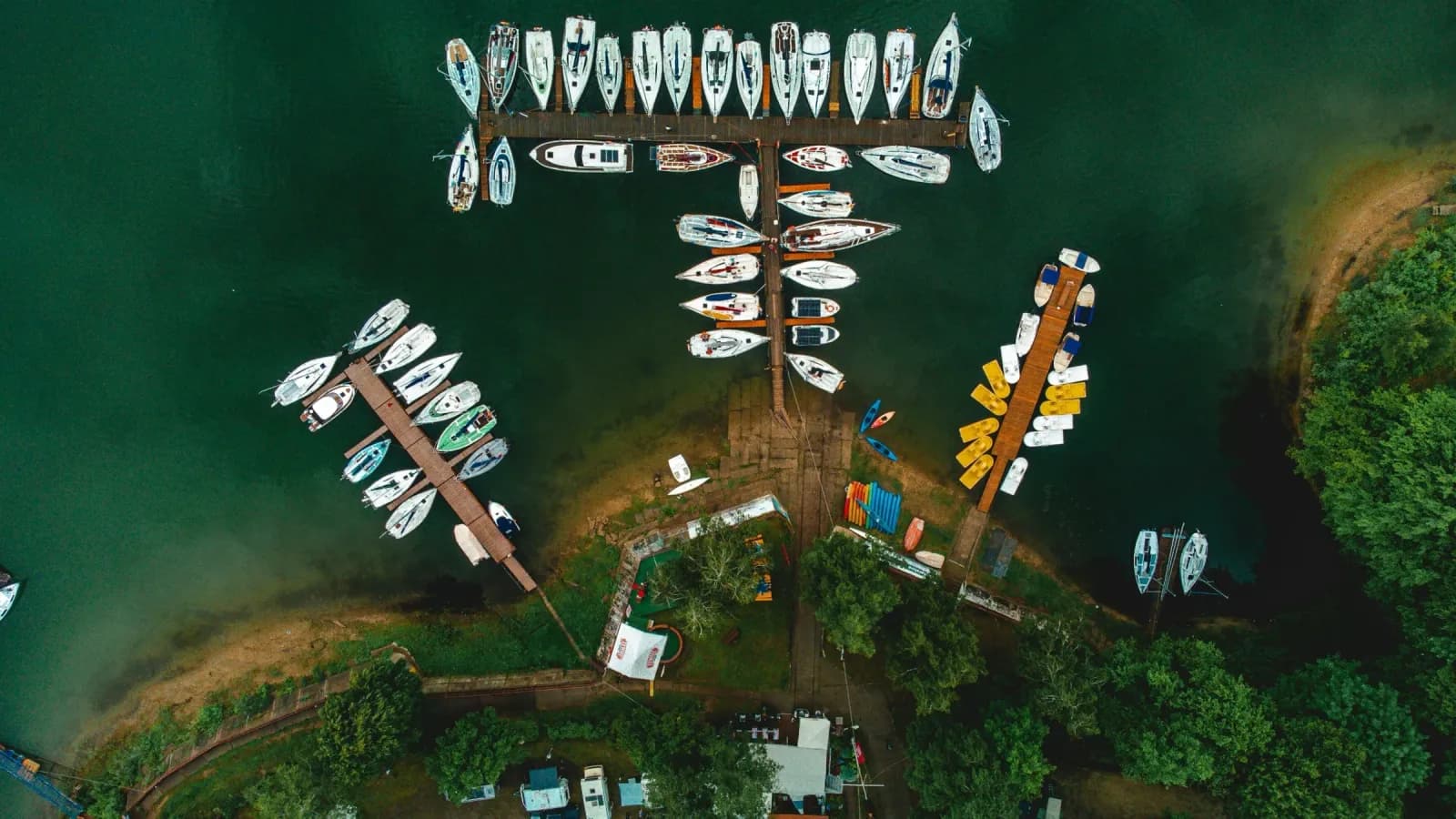
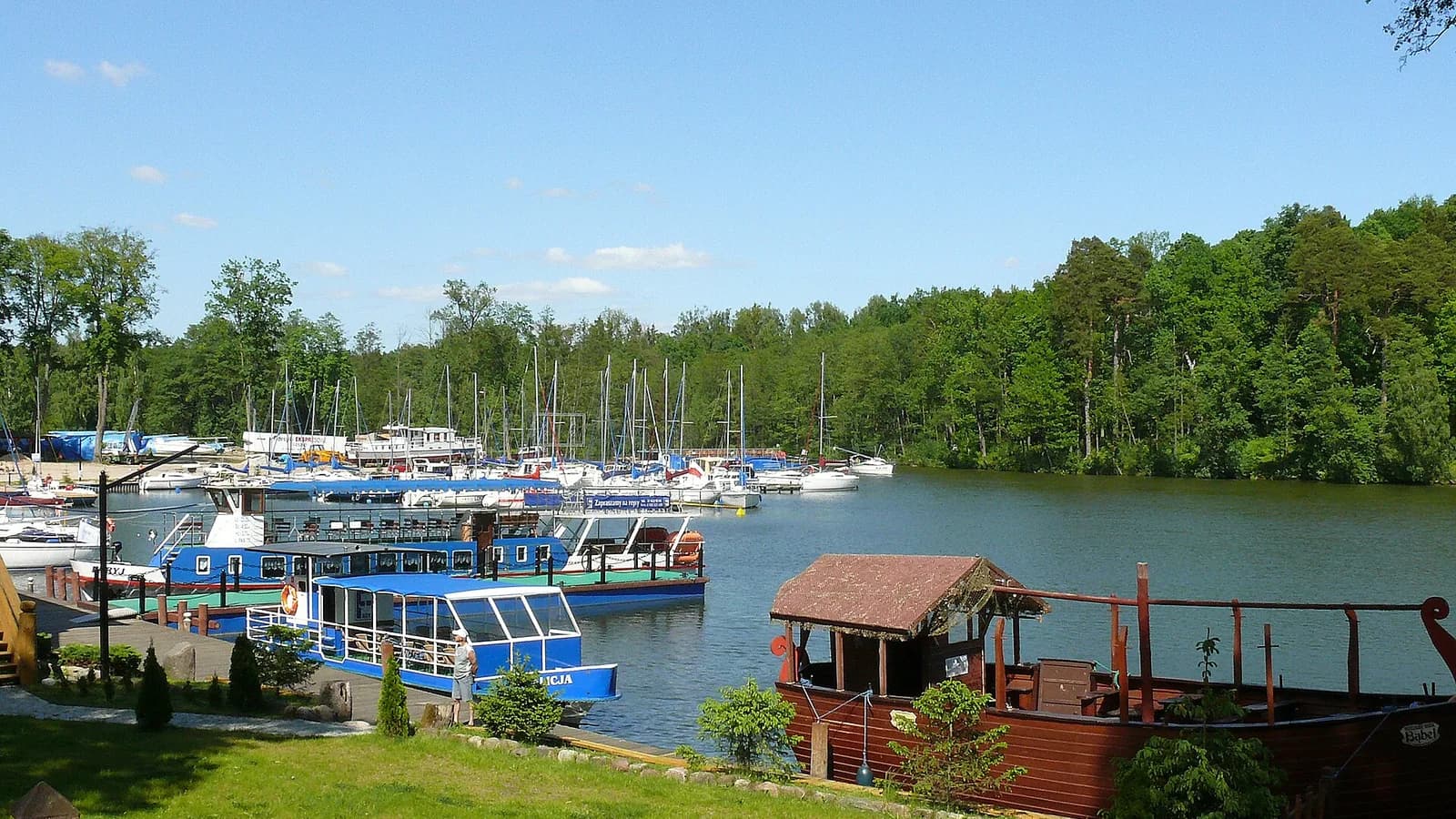
No sugar-coating here: a reliable, well-equipped marina is easier to find on the Giżycko and Kisajno side than on Dargin itself. By town you've got ports and jetties with power, water, sanitary facilities. All the infrastructure at hand. Port Royal marina sits right there, on Kisajno, and it's a good jumping-off point and a place to come back to.
On Dargin the shores are rougher. If you're not sure about a specific port on the lake itself, don't force it. Head back for the night to the Giżycko area. Mooring in a Masurian port means piles or a mooring line: you come up to the jetty, catch the mooring line with a boat hook from the stern and pull it forward to the bow. You don't drop your own anchor in port. You only do that at a wild stop. And remember: on a charter yacht you've got an anchor line, not a chain.
If you're planning stops along the route, take a look at our roundup: the best ports and marinas in Masuria. And around the town and area you'll be guided by our guide to Giżycko, its ports and attractions.
Dargin at a glance
| Aspect | Dargin |
|---|---|
| Character | Big, open, wide lake in the Mamry complex. Distant horizon, little shelter, "real" sailing |
| Wind and wave | On open water the wind gets up to speed. With wind from the north it builds a real wave. Forecast mandatory |
| Who it's for | For sailors who want to pull long tacks. Beginners: only in calm weather and with care |
| What it connects to | South: Kisajno and further Giżycko, Niegocin. North and east: Kirsajty, Dobskie, Mamry Północne |
If you want to understand the whole complex that Dargin is part of, read our guide to Lake Mamry. And about the neighbouring, calmer water you pass on the way, we write in our guide to Lake Kisajno.
Frequently asked questions
Is Dargin suitable for beginners? In calm, light weather, yes. It's a great place to feel open water and long tacks. But in stronger wind, especially from the north, it gets demanding, because it builds a wave and there's no shelter. Beginners should check the forecast and, if in doubt, stay closer to Kisajno.
How do you get to Dargin from Giżycko? From the base in Giżycko you head out onto Kisajno, cross it, and beyond it Dargin opens up. It's a short, natural route. Kisajno for the warm-up, then open water.
Is there a wave on Dargin? There can be. It's open water, so in stronger wind it rocks up and makes a short, nagging Masurian chop. That's why you always check the forecast before you leave sheltered water.
Where do you moor on Dargin? Reliable, well-equipped marinas are easier to find on the Giżycko and Kisajno side than on Dargin itself, where the shores are wilder. The most sensible thing is to sail Dargin during the day and head back to the Giżycko area for the night. In port you moor to piles or a mooring line, not your own anchor.
Cover photo: Pitert — CC BY-SA 2.5, via Wikimedia Commons