NaCzarter Team
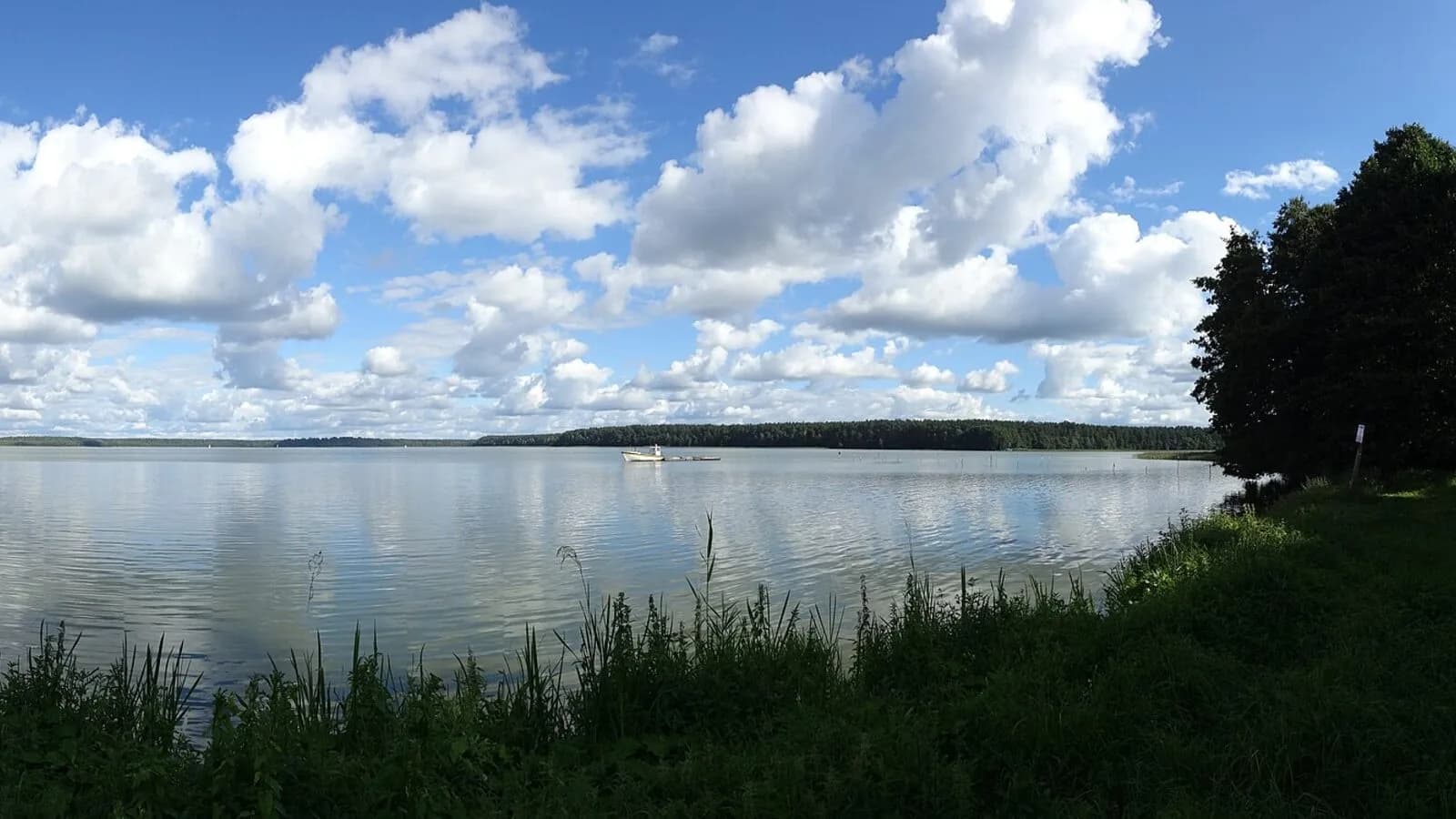
Mamry is the kind of water that teaches humility, even to seasoned sailors. Poland's second-largest lake complex can turn a lazy, sun-flat surface into a short, steep chop in a matter of minutes — a chop that will test your gear and your crew's nerve alike. At the same time, it is one of the most beautiful, most "sea-like" waters on the entire Great Masurian Lakes trail — with a real water horizon, wild islands and a quiet you won't find on crowded Niegocin. In this guide we work through Mamry step by step: depths and traps, wind and waves, harbours, islands, canal connections, and where it's best to set off from on your own cruise.
Mamry in a nutshell — Poland's second-largest water and a complex of six lakes
When we say "Mamry," we usually mean the whole lake complex, not a single body of water. It is Poland's second-largest lake basin — after Śniardwy — covering roughly 104 km² in total. The complex is made up of six interconnected lakes: Mamry proper, Kirsajty, Kisajno, Dargin, Święcajty and Dobskie. As you sail, you pass between them almost without noticing, through straits and narrows, yet each of these lakes has a slightly different character, a different depth and a different exposure to the wind.
Lake Mamry proper alone covers around 2,504 ha, or roughly 25 km². It is a broad, open stretch of water in the northern part of the complex, between Węgorzewo and Sztynort. The whole system lies at the northern end of the Great Masurian Lakes trail — for many crews it's the turning point of a cruise, the northernmost stop, reached via Giżycko and its swing bridge. You'll find more about the trail itself in the description of the Great Masurian Lakes, but in practice it's worth remembering one thing: Mamry is not "just another lake along the way" — it's a separate, serious body of water that deserves a plan of its own.
Depth and shallows — why a "shallow" lake can be deceptive
The numbers for Mamry are like those of a mountain lake that looks harmless. The maximum depth of Lake Mamry proper reaches about 43.8 metres — a deep trench, one of the deepest in Masuria. But that figure can lull you into complacency. The average depth of the lake is no more than roughly 10 metres, and a large part of the surface is in fact shallow. In other words: the deep water is there, but it's concentrated in narrow trenches, with broad shallows spreading out all around. The figures are confirmed by the description of Lake Mamry.
For a sailor this means a very concrete discipline. In the middle of the wide water you can hold your course without much worry, but the moment you approach the shores, headlands, islands and the narrows between the lakes of the complex, the depth can drop sharply. Mamry is notorious for boulders and glacial erratics lying just beneath the surface — often marked, but not always. The classic traps are:
- Inshore shallows and rocks off islands and headlands — never "cut the corner" of a shore on a sharp tack; stay in the middle of the channel.
- Narrows and straits between the lakes, where the fairway can be tight and shallow — read the buoyage and the chart, don't go "by eye."
- Reed beds and shoaling in the bays — they tempt you with shelter from the wind, but they can hide a rock or the bottom right under your keel.
The practical rule on Mamry is simple: sail by the chart, not by the shore. An up-to-date sailing chart of the lake (paper or in an app) is not a luxury but basic equipment. It's also worth remembering that a Masurian charter yacht usually has a lifting centreboard or a shallow keel — but "shallow" doesn't mean "rock-proof."
Winds and waves on Mamry — an unpredictable, open water for the experienced
If Mamry has a reputation, it's because of the wind. This is open, largely unsheltered water, across which the wind builds up over a long fetch, raising a short, steep wave. In gusts it can blow hard, and worse — capriciously: direction and strength change faster than a calm morning would suggest. That's why Mamry is regarded as water for more experienced crews, not for the first cruise of your life without a skipper.
In practice this means a few habits you can skip on calmer lakes but shouldn't skimp on here:
- Reef early. On Mamry it's better to shorten sail "on spec," the moment you see the wind picking up — putting in reefs in a cauldron of waves is far harder.
- Watch the forecast and the sky. A front from the west can move in fast; a darkening wall of cloud and a sudden drop in wind are the signal that a squall is about to hit.
- Plan your open-water crossings with your head. Cross the middle of Mamry or Kisajno in a strong wind only with time to spare and a clear plan of where you'll take shelter.
- Have a plan B for a harbour. Always know which sheltered bay or marina you'll run to if conditions worsen.
All of this sounds serious because Mamry is serious — but that's exactly why it's so rewarding. For a crew that can read the wind, a few hours of hard close-hauled sailing across the open water of Mamry is one of the finest sailing experiences Masuria has to offer.
Harbours and marinas — Węgorzewo, Sztynort and the approach from Giżycko (Kisajno)
The number-one base on Mamry is Węgorzewo in the north — a town with well-developed sailing infrastructure, marinas, shops and services, a good place to return to after a day on the open water. It's the natural starting and provisioning point for cruises around the whole complex; if you plan to spend more than a day on Mamry, a yacht charter in Węgorzewo gives you the shortest route to the water and the closest access to the heart of the lake.
The second landmark stop is Sztynort, in the area of Dargin and Kirsajty — one of the best-known and most atmospheric marinas in Masuria, with a historic palace in the background and a large harbour. It's a popular place to moor and switch course for crews travelling between the south and the north of the trail; a yacht charter in Sztynort can be a good choice when you want Mamry, Dargin and Święcajty all within one short hop.
From the south, you enter Mamry through Kisajno, which links the lake with the Giżycko area. It's the most common gateway for crews coming up from the main channel of the trail — and that's why a yacht charter in Giżycko is a classic starting point if you want to combine Niegocin, the swing bridge and a run out onto open Mamry all in one cruise. Węgorzewo, Sztynort and Giżycko are three different strategies for the same water: a northern base, a central staging point and a southern entrance.
Islands and reserves — 33 islands, bird sanctuaries and where you can't land
Mamry is not just water — it's an archipelago too. The complex contains 33 islands with a combined area of about 213 ha — from small, wooded islets to larger, wild sanctuaries. It's these that give the lake its "sea-like," surprising character, and they're one of the reasons it's worth sailing here. But the islands of Mamry are largely protected land, not a playground for crews.
Some of the islands fall under nature-reserve protection — including a reserve covering the islands on Lakes Mamry and Kisajno — as bird sanctuaries. There, landing and mooring are prohibited, and you should take that seriously: it's not a formality but genuine protection of breeding grounds. Before you approach any island, make sure you're allowed to land there. In practice:
- Don't moor to reserve islands or go ashore — not even "for a moment," not even for a swim.
- Keep your distance from the islands' shores — beyond protecting the wildlife, you're also protecting your own keel from the rocks.
- Check the current buoyage and signs — the extent of protection is updated from time to time.
The islands are best admired from the water, under sail, while choosing legal bays and marinas on the main shore for your stops. The view of the Mamry archipelago at sunset repays that discipline many times over.
Water connections — the Łuczański Canal to Niegocin, the Węgorzewski Canal
Mamry is not an isolated body of water — quite the opposite, it's part of a coherent, navigable system. To the south, Kisajno connects with Lake Niegocin via the Łuczański Canal and the historic swing bridge in Giżycko. This is the most important gateway between the north and south of the trail; the details of this link are described in the entry on the Łuczański Canal. If you plan to take this route, check in advance when and how to pass through the swing bridge in Giżycko — its opening times set the rhythm of traffic between Niegocin and Mamry.
Since you'll be passing between waters anyway, it's worth pairing this guide with our sister guide to Lake Niegocin — the two lakes make a natural pair for a cruise, and it's good to plan them together. In the north, in turn, the Węgorzewski Canal links Mamry and the Węgorzewo area to the wider water network, closing off the northern end of the navigable system. To compare the scale and character of the whole trail, our sailing guide to Śniardwy is also useful — Poland's largest lake, which together with Mamry forms the two poles of Masuria's "big water."
The best bays and spots to moor and anchor
Because Mamry is open and windy, choosing where to stop is not a matter of the view but of shelter from the wind. There's one rule: spend the night where you have a lee shore for the forecast wind direction, not where the sun happens to set nicely. A few practical tips:
- Choose bays sheltered from the prevailing direction — on Mamry the wind more often comes from the western sector, so the eastern and south-eastern shores of the bays give a calmer night.
- When anchoring, reckon with a shallow, rocky bottom — pay out more chain or rode than you would on soft mud, check the hold, and keep some depth to spare under the keel.
- Don't anchor in the fairway or too close to reserve islands — leave room for others and don't break the rules.
- Prefer mooring in a marina when the wind is stronger — Węgorzewo and Sztynort give you the certainty of a peaceful night, even when it blows.
For many crews the best plan on Mamry is a hybrid: a day on the open water and among the islands, and a night safely in a marina or in a well-sheltered, legal bay. That's not cowardice — it's how you get to sail Mamry for years, not just once.
When and how to sail Mamry in high season (July–August)
High season — July and August — is both the best and the hardest time on Mamry. The best, because of warm water, long days and full facilities in the harbours. The hardest, because it's also the season of the most dynamic weather: sweltering mornings can end in violent thunderstorms and squalls in the afternoon. On open water like Mamry, such a front is a real hazard, not a curiosity.
A proven daily rhythm in high season looks like this:
- Set off early. Mornings are usually calmer and more predictable — the best time to cross open water.
- Plan your cruise for the earlier hours. Try to reach your destination before the afternoon peak of instability.
- Track forecasts and warnings. In season it's worth checking the storm forecast in the morning and at midday, not just the evening before.
- Book a berth in advance. In July and August, Węgorzewo and Sztynort can be full — it's good to know beforehand where you'll tie up.
If you treat Mamry with respect — reefing in good time, reading the sky and not risking a crossing ahead of a storm — high season will repay you with some of the best sailing conditions in all of Masuria.
Chartering a yacht on Mamry — where to set off from and what to choose
Your choice of home base shapes the whole character of the cruise. Węgorzewo is the shortest route to the heart of Mamry — a good option when you want to spend most of your time on the lake's open water. Sztynort puts you in the middle of the complex, between Dargin, Kirsajty and Święcajty, ideal for exploring. Giżycko, in turn, offers flexibility: you start in the south, pass through the swing bridge, and have both Niegocin and Mamry at your disposal in a single cruise.
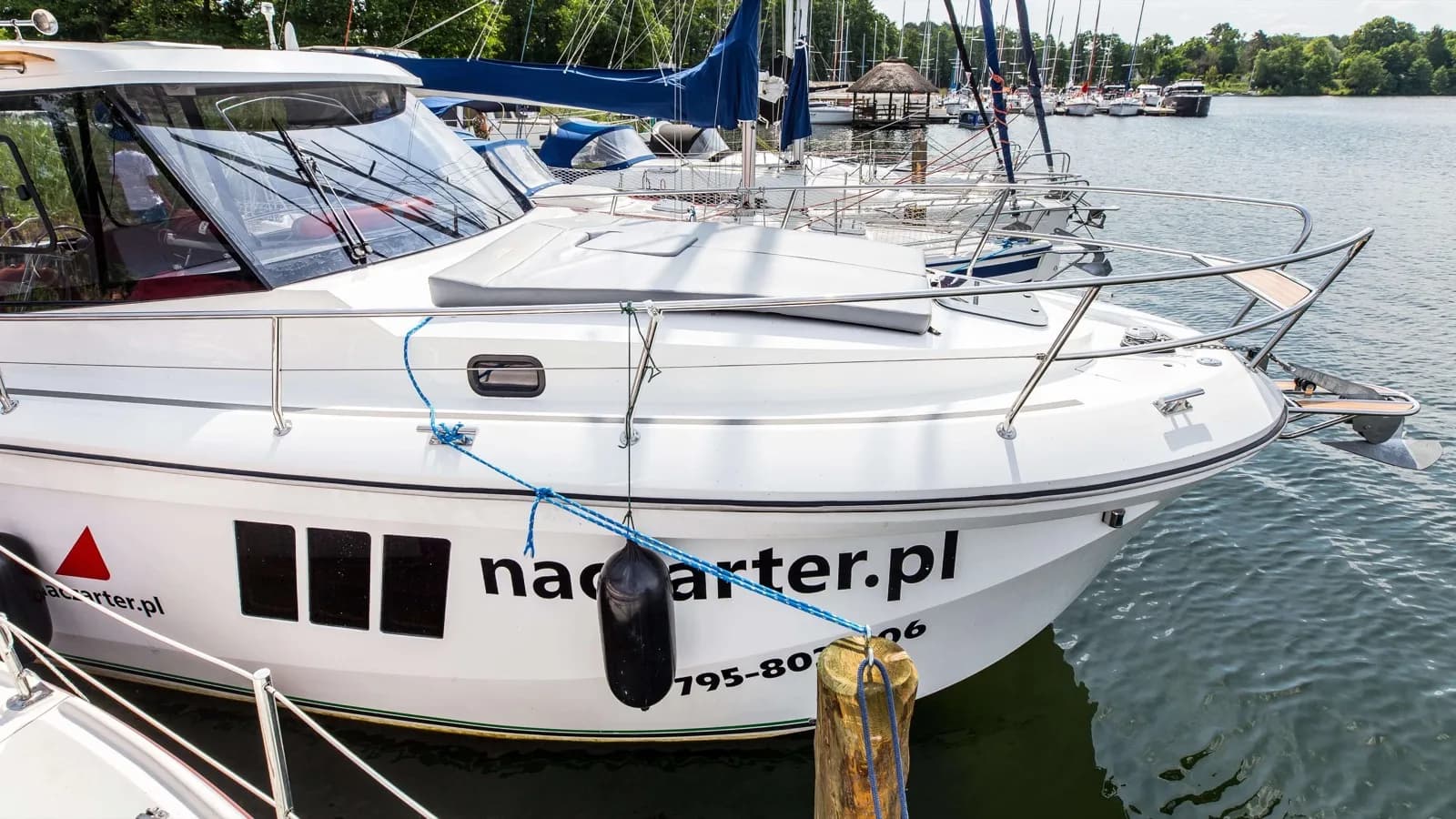
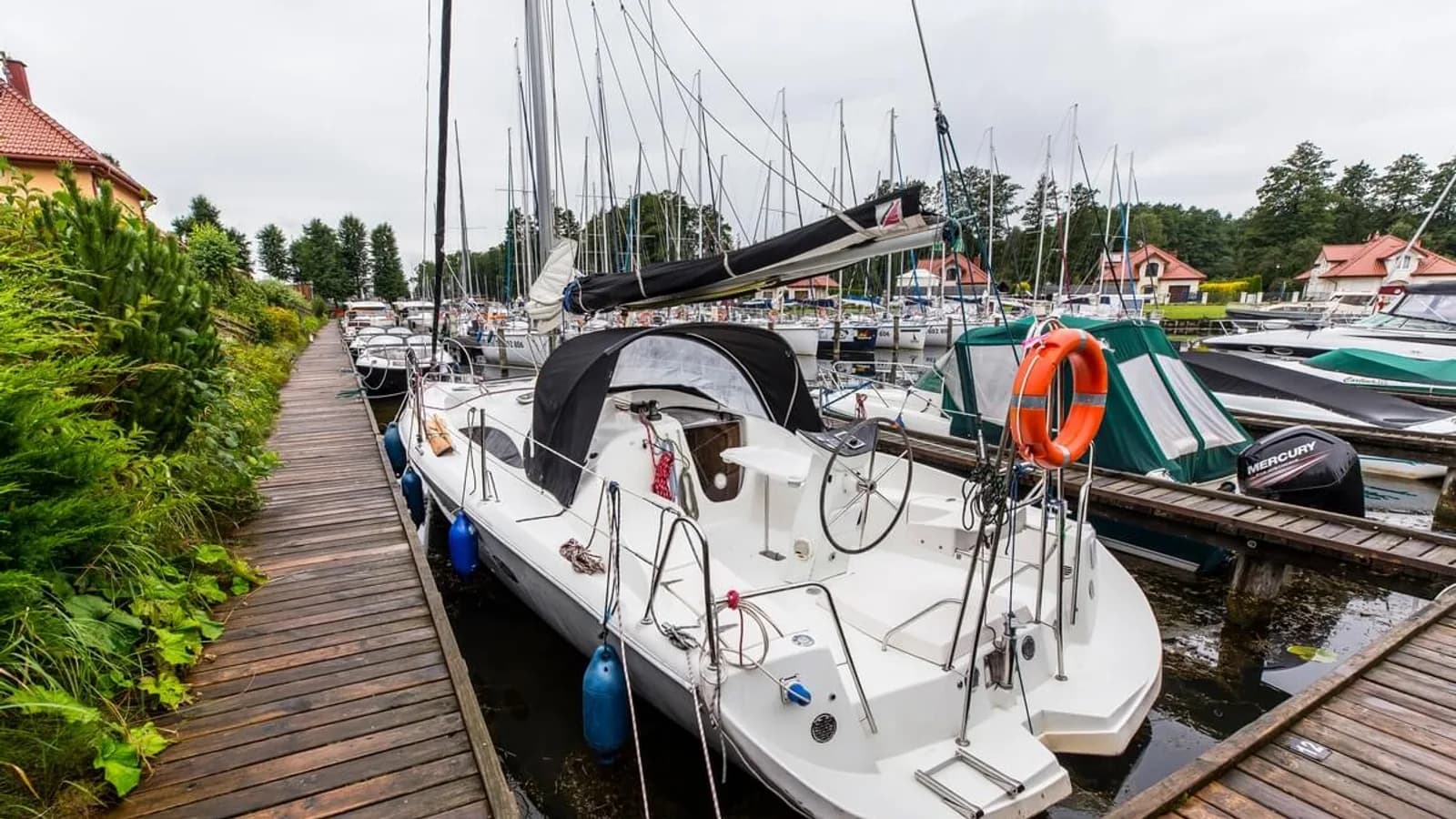
As for the yacht: for windy, open water, choose a boat your crew can confidently handle. The point isn't to sail the smallest possible boat "to be safe" — a well-rigged, steady Masurian yacht with quick reefing is, on Mamry, both more comfortable and safer than a small craft that gets lost in the waves. At NaCzarter we've been helping match the yacht to the water and the crew's experience for 25 years, so if you have any doubts about the size or type of boat for Mamry, ask before you book.
Frequently asked questions
Is Mamry a difficult water for beginners? Yes — Mamry is regarded as water for more experienced sailors. It's open, largely unsheltered water with a strong, unpredictable wind and a short, steep wave, plus shallows and rocks off the shores and islands. A beginner crew should venture onto Mamry with an experienced skipper, or after getting a feel for the calmer lakes of the trail first.
How deep is Lake Mamry? The maximum depth of Lake Mamry proper reaches about 43.8 metres in a narrow trench, but the average depth is no more than roughly 10 metres, and much of the lake is relatively shallow — which is why, despite the deep trench, you have to watch out for inshore shallows and boulders.
Can you moor at the islands on Mamry? Not at all of them — some of the complex's 33 islands fall under nature-reserve protection (including the reserve covering the islands on Mamry and Kisajno) as bird sanctuaries, where landing and mooring are prohibited. Admire the islands from the water and choose legal bays and marinas on the main shore for your stops.
Check availability and book your Mamry cruise online
Ready to take on the most "sea-like" water in Masuria? Check available dates and yachts and book your cruise online — NaCzarter will help you match the boat and home base to your crew's experience. Take a look at our offer and plan your Mamry cruise: yacht rental in Masuria with online booking.