NaCzarter Team
· Updated
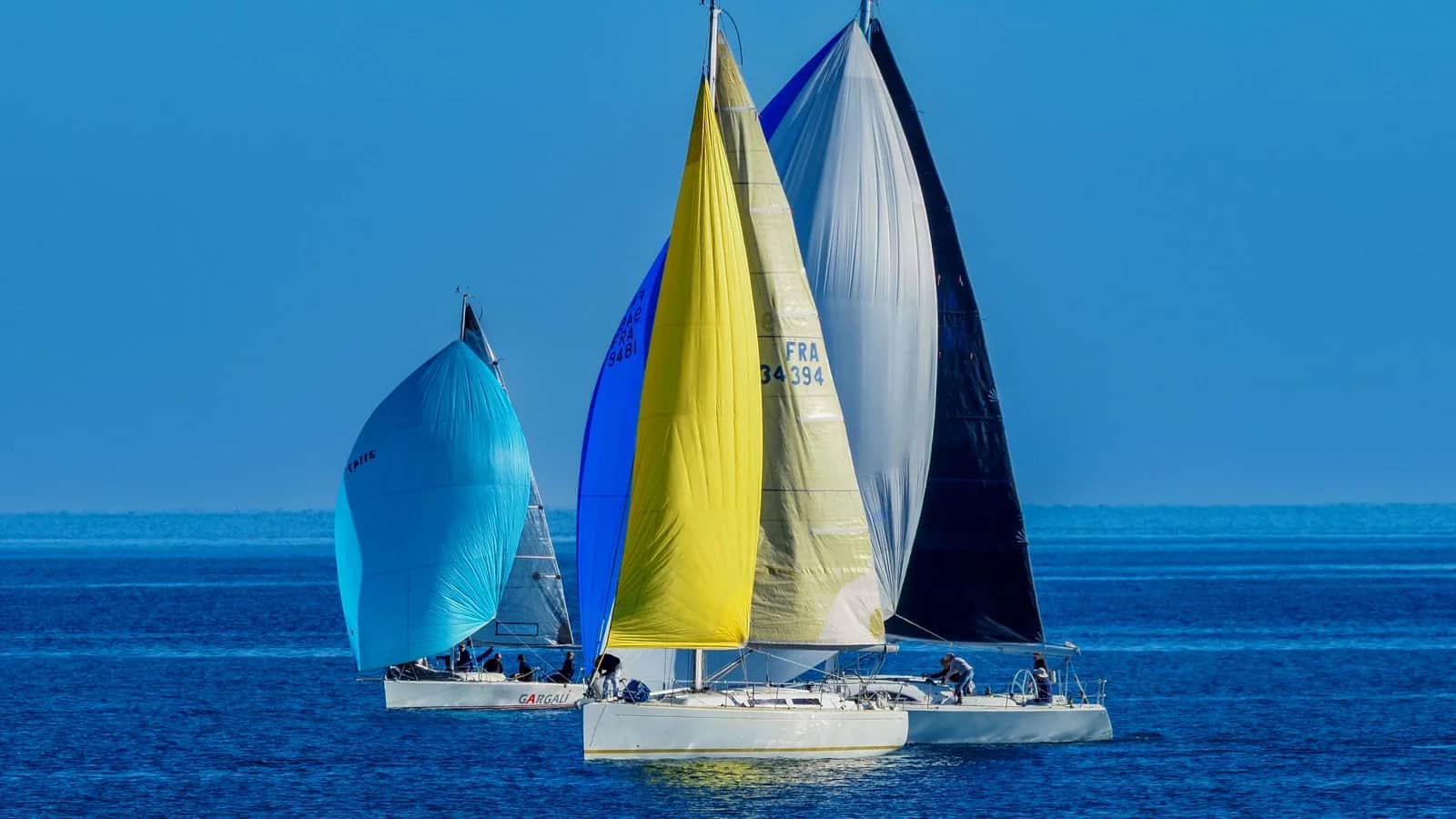
A regatta is simply a sailing race — a contest between yachts that race over the same course for the best time and placing, powered only by the wind. It sounds simple, yet it hides a sport full of tactics, excitement and beautiful views. We have been helping crews take their first steps on the water for 25 years, so we know the word “regatta” often inspires undue respect — there is no need for it. Below we explain what a regatta is, how a race unfolds step by step, what types there are, and why even an amateur on a chartered yacht can comfortably line up at the start.
What a regatta is
In short, a regatta is a competition between wind-powered craft. It can last a few minutes, like a short dinghy race around a buoy, or many days, like an offshore long-distance race. They all share one thing — the winner is whoever best combines sailing skill with reading the wind, tactics and good teamwork. This is not a sport for professionals only: regattas are held all over the world at every level, from children's classes to prestigious cups. And if you dream of giving it a try one day, a good first step is sailing with a skipper in Masuria — you learn from someone experienced before you ever take the helm yourself.
How a regatta works
Although every regatta has its own sailing instructions, the pattern is surprisingly consistent. It all begins with a starting procedure counted down by signals — flags and sound signals — so that the whole fleet sets off at the same moment. Anyone crossing the line too early makes a false start and must turn back. The race itself runs around marks, that is buoys (usually orange), which must be rounded in a set order and from the correct side.
- The start line — usually set between a flagged mast on the committee boat and a start mark on the water. The art lies in crossing it at full speed at the exact moment of the start.
- Marks and courses — buoys define the route. Classic courses are the triangle, the “windward-leeward” (hard upwind to a mark and back downwind) or a longer course around the body of water.
- The finish line — ends the race, often marked by a different flag than the start to avoid confusion.
- Scoring — most regattas use a low-point system: first place earns 1 point, second 2 and so on, and the winner is whoever has the fewest after the whole series of races. The worst result is usually discarded too, so one bad race does not ruin the whole regatta.
A race committee and judges oversee it all, and sailors play by the international racing rules — which dictate, for instance, who must give way to whom when rounding a mark.
Types of regatta
Regattas are classified in several ways — by the form of competition, the course and the class of boat. It is worth knowing these terms, because they decide whether it will feel like a sporting arena or a cheerful, sociable race.
- One-design (class) regattas — all the yachts are identical, so the result depends solely on the crew's skill. This is the purest form of competition and the basis of Olympic sailing.
- Handicap regattas — boats of different sizes and performance start together, and the results are evened out by a mathematical rating (e.g. ORC, KWR, Yardstick). This lets a small boat race a larger yacht in the same event — and both have a real chance of winning.
- Tourist regattas — a looser, festival-style version of handicap racing, often on chartered yachts. Fun, bonding and a taste of competition matter more than tenths of a second.
- Match racing — a one-on-one duel, two boats of the same class fighting for the advantage. The most tactical and spectacular form, known for instance from the America's Cup.
- Long-distance races and marathons — multi-hour or multi-day races where strategy, working with the weather forecast, energy management and the crew's night watches all count.
Can an amateur take part
Yes — and it is one of the loveliest secrets of this sport. In tourist regattas and many handicap events, amateur crews on sailing yachts in Masuria are warmly welcome, including boats rented for a week's holiday. You need no medal and no boat of your own — just basic skills, a willingness to learn and a little sporting spirit. Many people sail their first regatta during a charter, often with an experienced helmsman aboard who advises when to tack and how to trim the sails. It also makes a great idea for an active bachelor party in Masuria or a company outing — excitement guaranteed, with a shared celebration in port after the race.
Regattas in Masuria
Masuria is one of Poland's best regions for sailing competition. On the Great Lakes — above all Niegocin, Śniardwy and Mamry — dozens of regattas take place all summer long, from prestigious events with decades of tradition, like the Masurian Sailing Autumn in Giżycko, to friendly tourist races and local leagues open to everyone. The broad, open waters provide wind and space, while a dense network of ports means there is always somewhere to moor and celebrate after the race. And if all this sounds tempting, the simplest thing is to step aboard yourself — check the available dates and book a yacht rental in Masuria to go from spectator to participant.