NaCzarter Team
· Updated
The Guzianka Lock is one of the most important gateways on the entire Great Masurian Lakes trail — this is the very passage that takes you through to quiet, forest-wrapped Lake Nidzkie and on to the town of Ruciane-Nida itself. For many sailors it is the climax of a cruise south: the moment the boat leaves the busy main body of water and enters a calmer, more intimate world of the southern Masuria. Getting through the lock isn't difficult, but it does take preparation — you need to know the operating hours, how much locking through costs and how to behave inside the chamber. At NaCzarter we've been sending crews onto this trail for 25 years, so in this guide we've gathered everything worth knowing before you approach Guzianka in the 2026 season — clearly, step by step, and with no unnecessary theory.
The Guzianka Lock — the gateway to Lake Nidzkie and the southern trail
The Guzianka Lock lies right beside Ruciane-Nida and acts as the link between two worlds of Masurian water. On one side is the main Great Masurian Lakes trail — on the other, the vast, forested Lake Nidzkie and the town of Ruciane-Nida itself. The lock bridges a difference in water levels of about 2 metres, which for the sailor means passing through a closed chamber where the water surface is raised or lowered by the operators.
Why does this level difference exist in the first place? The southern part of the trail, with Lake Nidzkie at its heart, sits lower than the waters to the north. Guzianka is therefore a natural step that regulates the flow of water and makes safe navigation between the levels possible. Without the lock, the southern Masuria would be cut off from the rest of the region by boat — and it is precisely there, on Lake Nidzkie, that many of us look for the quiet you no longer find on the crowded main trail in summer.
Guzianka is one of two key "manually operated waypoints" on the entire trail. The other is the swing bridge in Giżycko to the north. If you're planning a cruise from one end of the region to the other, you need to keep both of these places in mind right from the route-planning stage — because they dictate the rhythm of the day. You can read more about the lock in this detailed Wikipedia entry, and about the lake beyond it in the entry on Lake Nidzkie.
Guzianka I and Guzianka II — two locks side by side, and how they differ
Many sailors approaching Guzianka for the first time are surprised: there are actually two locks here, standing right next to each other. This is no mistake and they aren't two separate obstacles — they are two structures serving the same function, though in different ways.
Guzianka I is the historic lock — older and smaller. For decades it handled all the traffic heading south along the trail, and to this day it retains its own unique, historic character. Because of its dimensions and the pace of its operation, though, it could become a bottleneck at the height of the season — on July and August afternoons the queues of boats waiting to lock through could get genuinely long.
Guzianka II is the new structure, opened in recent years. It is larger and designed to ease traffic during the busiest period. Thanks to it, the throughput of the whole junction has risen noticeably, and waiting times at peak season have shortened. For a yacht crew this means one simple thing: fewer nerves on a hot July day.
The most important practical point: the operators decide which lock you pass through and when. The operator controls the traffic, admits boats into the appropriate chamber and signals when it's safe to enter. Your job is to approach the waiting area calmly, watch the signals and the operators' gestures, and follow their instructions. You don't "choose" a lock — you fall in with the traffic organisation run by the staff on site.
Opening hours in the 2026 season — when the lock operates
Guzianka actually has two separate lock chambers, each with its own schedule: the historic Guzianka I and the newer Guzianka II. You don't choose between them — the lock operators direct traffic to one or the other. Guzianka II opens earliest, at 9:00, while Guzianka I stays open longest (until 21:00 in peak season) — so no lock operates from 7:00, as some sailors remember. The 2026 season hours below follow Navigation Notice No. 2/2026 of 21 April 2026.
Guzianka I — historic chamber:
- April: 10:00–19:00
- May: 10:00–19:00
- June: 10:00–20:00
- July: 10:00–21:00
- August: 10:00–21:00
- September: 10:00–19:00
- October: 10:00–17:00
Guzianka II — new chamber:
- April: 9:00–17:00
- May: 9:00–17:00
- June: 9:00–17:00
- July: 9:00–19:00
- August: 9:00–19:00
- September: 9:00–18:00
- October: 9:00–17:00
What does this mean in practice for planning your cruise? Above all — don't leave locking through to the last minute. If you want to drop down onto Lake Nidzkie on a given day, or come back from it, make sure you reach the waiting area with time to spare before the lock closes. Bear in mind, too, that locking through itself takes about 20 minutes, and at peak season you have to add the time spent waiting in the queue of boats.
The second thing: the hours are seasonal and can vary from year to year, and may even be adjusted mid-season. That's why the NaCzarter rule is unchanging: always confirm the current hours before your cruise. You can do this on the official website of the Ruciane-Nida municipality — you'll find complete, up-to-date information about navigation and the lock in the official Ruciane-Nida municipality service. If in doubt, the quickest route is a phone call, which we'll come to shortly.
Locking fees 2026 — how much you'll pay (and why it's cheaper by day)
Locking through Guzianka is chargeable, and the tariff depends on two things: the type of boat and the time of day. The second criterion is the crucial one and often surprises newcomers — it's cheaper by day than by night. "Day" is taken to be the window 7:00–19:00, and "night" 19:00–7:00. The approximate rates for the 2026 season (day / night) are as follows:
- Kayaks and rowing boats: approx. 6.20 PLN / 12.50 PLN
- Sports, touring, sailing and motor boats up to 15 tonnes: approx. 10.90 PLN / 22.00 PLN
- Passenger vessels and barges: approx. 23.58 PLN / 24.76 PLN
A typical charter sailing yacht or houseboat on the Masurian lakes falls into the middle category — up to 15 tonnes — so realistically we're talking about a few złoty for the passage. It's a token expense in the scale of the whole cruise, but it's worth knowing that by day you'll pay less than half of what you would after 19:00. For the crew the conclusion is obvious: plan to lock through in the morning and early afternoon — it will be cheaper and usually quieter too.
Keep some cash on you for small fees — that's the most reliable way to settle up at facilities like this. And, as always: confirm the price list before your cruise, since tariffs can change from year to year. The simplest thing is to call the operators directly — the numbers are Guzianka I: 532 032 806 and Guzianka II: 532 032 066. One phone call in the morning clears up any doubts and lets you ask about the current level of traffic.
How to lock through step by step — approach, lines, filling, exit
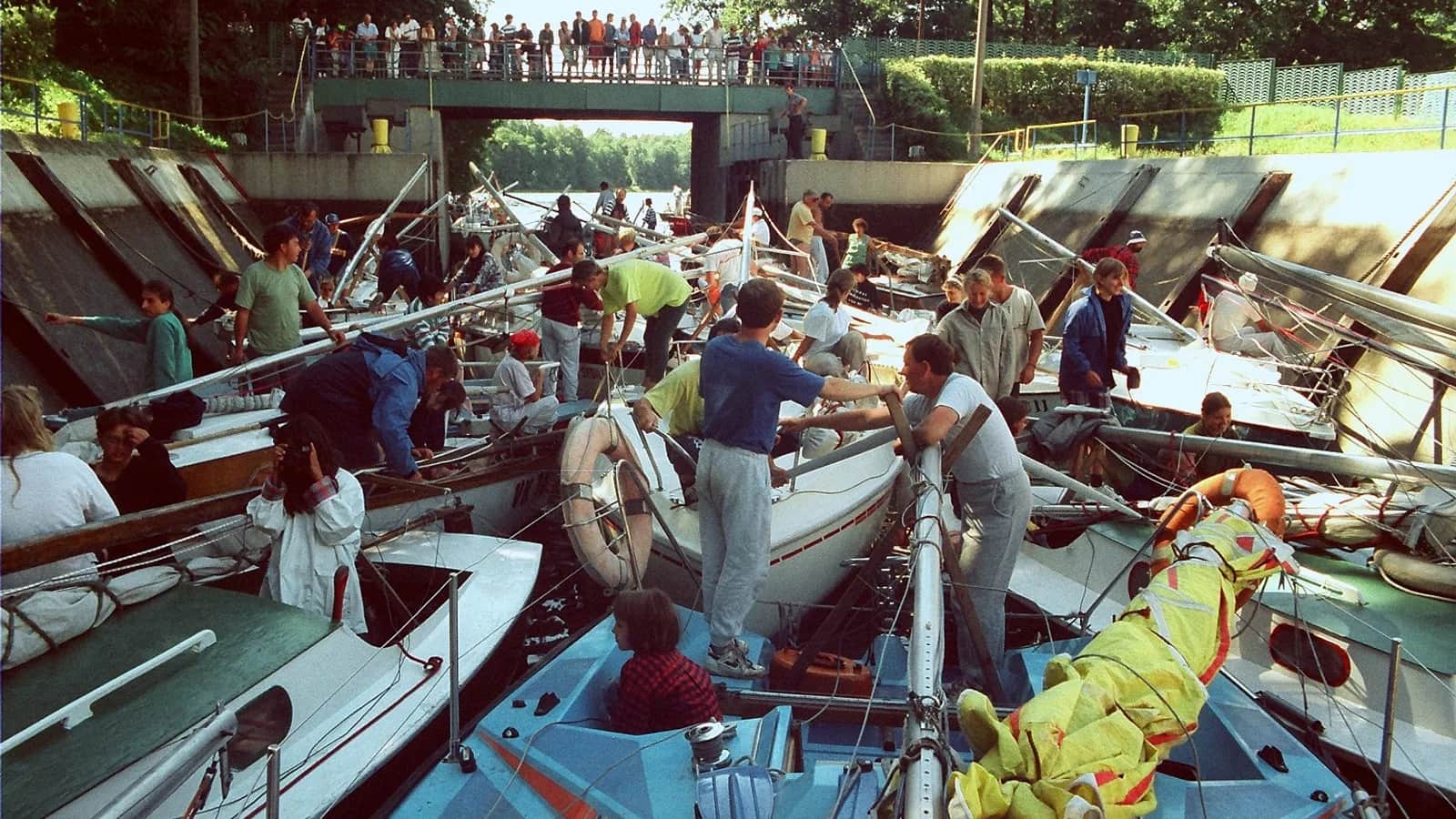
Locking through only sounds daunting until the first time. In practice it's a calm, repeatable procedure — as long as you stick to a few rules. Here's how to get through Guzianka step by step:
- Approach and waiting. As you near the lock, slow down and move up to the waiting area. Watch the traffic lights and the operators' gestures. Don't enter the chamber until you get a clear signal. Prepare your fenders on both sides and long lines in advance.
- Entering the chamber. On the signal, motor in slowly and position the boat along the chamber wall as the operators direct. In a tight chamber, low, controlled speed is what counts — better to come in too slowly than too fast.
- Securing the lines. The crew makes the lines fast to the fittings provided for the purpose — bollards, ladders or lines running along the wall. Keep the lines in your hands and take them in or ease them out as the water level changes. Never make the lines fast "hard and fast" — the level changes and the line has to be able to work.
- Filling or emptying. The operators raise or lower the water level. The water can come in with some swirl and a jolt — which is why you keep control of the lines the whole time and hold the boat against the wall. This goes most smoothly when every crew member knows in advance what they're responsible for.
- Leaving the chamber. Once the levels equalise and the gates on the far side open, wait for the signal, take off the lines and motor out calmly, without overtaking other boats. Beyond the gates, bring in the fenders again and tidy the deck.
The whole thing, as we mentioned, takes about 20 minutes. The key is dividing up roles in the crew before you enter the chamber: who's on the bow, who's on the stern, who's holding which line. If this is your first time locking through, sort it out calmly while you're still on the water before the approach — there's no time for discussion inside the chamber.
The most common mistakes and lock-chamber etiquette
A lock is a place where many boats come together in a small space, and one crew's mistakes affect everyone. Here's a list of things worth avoiding — and a few rules of good manners:
- Too much speed on the approach. Low speed applies both in the chamber and at the waiting area. Coming in with a flourish risks hitting the wall or a neighbouring boat.
- Lines made fast hard and fast. The most common and most dangerous mistake. When the water level changes, a line tied off rigidly can rip out a cleat, heel the boat over or — in an extreme case — leave the boat dangerously hanging. Keep the lines in your hands and work them.
- No fenders. Put out your fenders in good time, on both sides. Chamber walls can be rough, and neighbouring boats are close.
- Ignoring the operators. The lock staff control all the traffic. Their instructions and signals take priority — follow them without argument.
- Forcing your way out. Wait for the signal and for your turn. Don't overtake and don't jostle at the gates.
Add to that a few points of etiquette: be ready before you enter the chamber (fenders out, lines ready, roles assigned), stay calm and quiet, help a neighbouring crew take a line if you see they're struggling, and don't block the entrance any longer than necessary. The lock works most smoothly when everyone plays as a team — and a well-handled lock passage is one of those small satisfactions you remember from a cruise.
Beyond the lock — Lake Nidzkie, Ruciane-Nida and the quiet of the southern Masuria
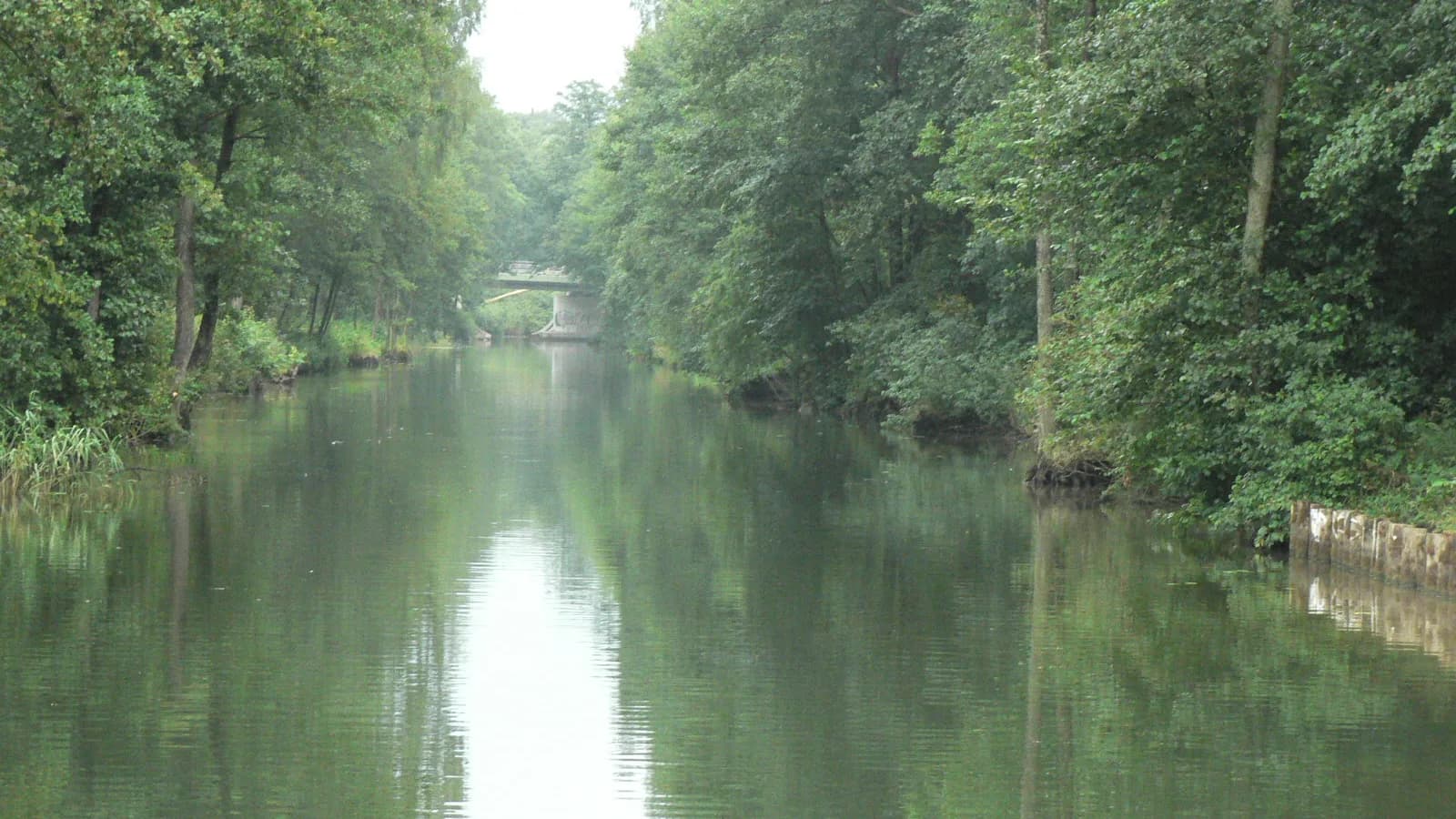
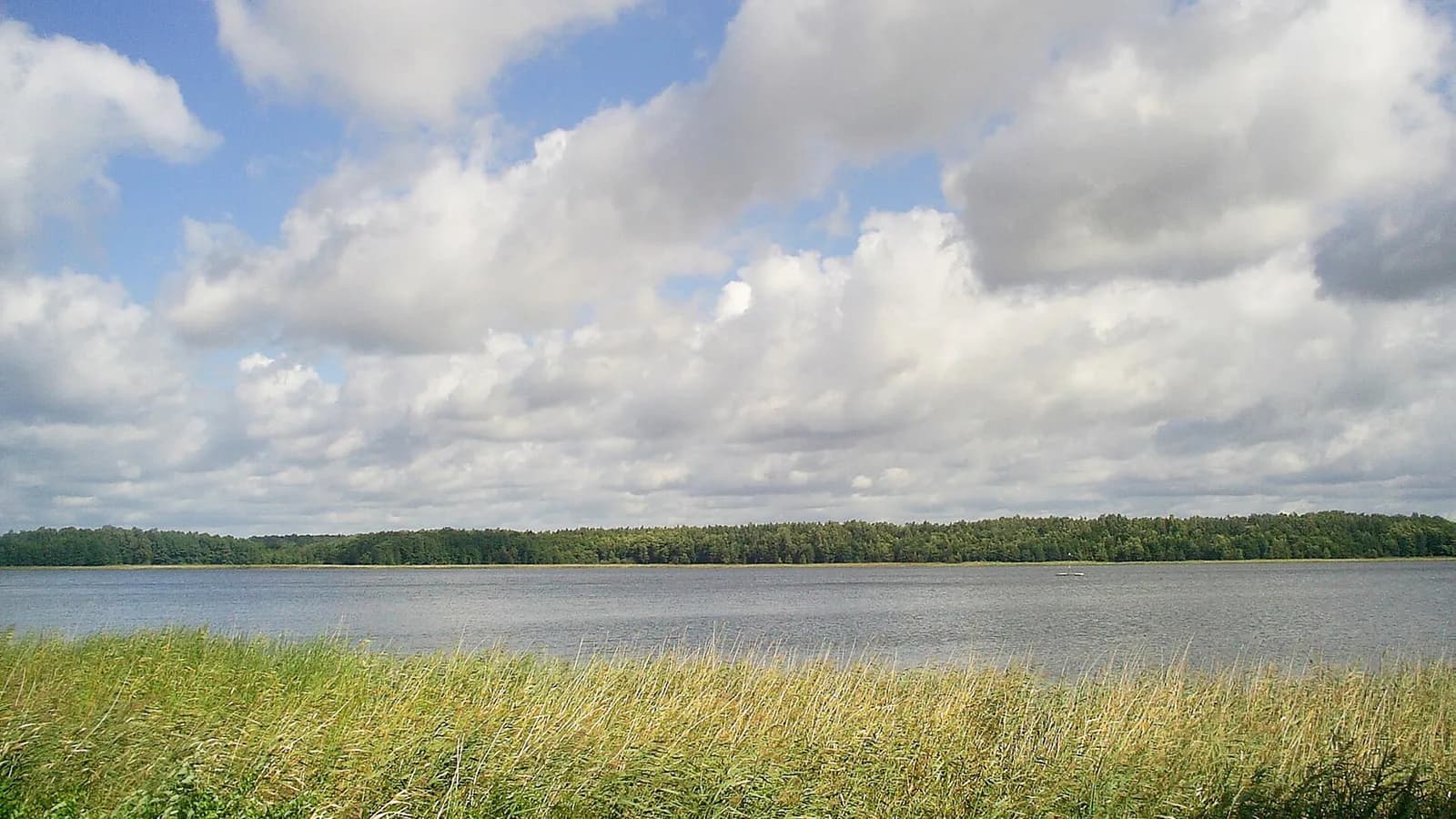
What's all this effort for? The answer is waiting just beyond the gates. The Guzianka Lock opens access to Lake Nidzkie — one of the most beautiful and most peaceful bodies of water in all the Masurian lakes. It's a long, narrow lake cutting into the Piska Forest, wooded along almost its entire length. The atmosphere here is different from the main trail: less crowding, more quiet, and in the evenings — mist drifting over the water and birdsong instead of the bustle of harbours.
Ruciane-Nida itself is a welcoming base: shops, places to eat, marinas and the chance to restock before the next leg of the cruise. It's a good place to spend the night, take on water and rest after a day's sailing. For many crews the southern trail is a destination in its own right — quieter and more intimate than the popular north.
It's worth remembering that Guzianka isn't the only engineering attraction on the route. The southern Masuria is connected to the rest of the region by an entire system of waterways — if other passages interest you, take a look at our guide to the Masurian canals, which describes the artificial links joining the individual lakes together. Guzianka fits the same spirit: it's a piece of living, working infrastructure that makes it possible to sail the whole trail from end to end.
Chartering from the southern trail — where to set off for Guzianka
If you want Guzianka and Lake Nidzkie to be at the heart of your cruise, the most convenient thing is to set off from a base close to the lock. The natural choice is a yacht charter in Ruciane-Nida — you start practically at the gates of Guzianka, and on the very first day you can drop down onto Lake Nidzkie or head north through the lock towards the main waters.
Guzianka also lies on one of the most popular routes linking the north with the south. It's worth getting to know the whole main Giżycko–Mikołajki–Ruciane trail, on which Guzianka is a key point at the southern end. If you're planning to sail the entire region, there's one more manually operated waypoint waiting along the way — so check in advance how to pass the swing bridge in Giżycko, the northern counterpart to Guzianka. Both of these points run on similar logic: hours, order of passage, operators' signals.
When planning your stops, it's also worth knowing in advance where to moor for the night. Our ranking of the best ports and marinas will help with that — from large, well-equipped harbours to quiet corners in the south of the trail. At NaCzarter we've been helping crews match their route and base to their experience and expectations for 25 years, so that the cruise fits the crew — and Guzianka almost always makes an impression, whatever your sailing experience.
Frequently asked questions
Can I pass through the Guzianka Lock on my own, without prior experience? Yes — locking through doesn't require any special qualifications beyond those you already need to skipper a boat on the Masurian lakes, and the procedure itself is simple and repeatable. The key is preparation: fenders out, long lines held in your hands (never made fast rigidly), roles divided up among the crew, and calmly following the operators' signals. If it's your first time, enter the chamber slowly, watch the others and don't rush — the whole thing takes about 20 minutes and, with a little attention, goes off without a hitch.
How much does locking through cost, and why is it more expensive at night? For a typical charter sailing or motor yacht up to 15 tonnes, the approximate rate for 2026 is about 10.90 PLN by day (7:00–19:00) and about 22.00 PLN at night (19:00–7:00), so after 19:00 you'll pay roughly twice as much — which is why it pays to lock through in the morning or early afternoon. Kayaks and rowing boats are cheaper, passenger vessels and barges more expensive, and you should always confirm the exact price list before your cruise on the official Ruciane-Nida municipality website or by phone, since tariffs change from year to year.
What hours does the Guzianka Lock operate during the 2026 season? Approximately: in May and September 10:00–19:00, in June 10:00–20:00, in July and August 10:00–21:00, and in October 10:00–17:00 — the longer the day and the heavier the traffic, the longer the lock stays open. Hours are sometimes adjusted seasonally and from year to year, so before your cruise confirm them on the official Ruciane-Nida municipality website or by calling the operators directly: Guzianka I 532 032 806, Guzianka II 532 032 066.
Plan your cruise to Guzianka with NaCzarter
The Guzianka Lock is one of those moments of a cruise that stay with you — the gateway to the quiet southern Masuria and Lake Nidzkie. If you want it on your itinerary, start with a good boat and a comfortable base. At NaCzarter we've been matching yachts and routes to the particular crew for 25 years, and you can sort out your booking straight away online — check the available boats and plan your cruise using our yacht rental on the Masurian lakes with online booking. See you on the water, at the gates of Guzianka.