NaCzarter Team
· Updated
Omega — the Boat All of Poland Learned to Sail On
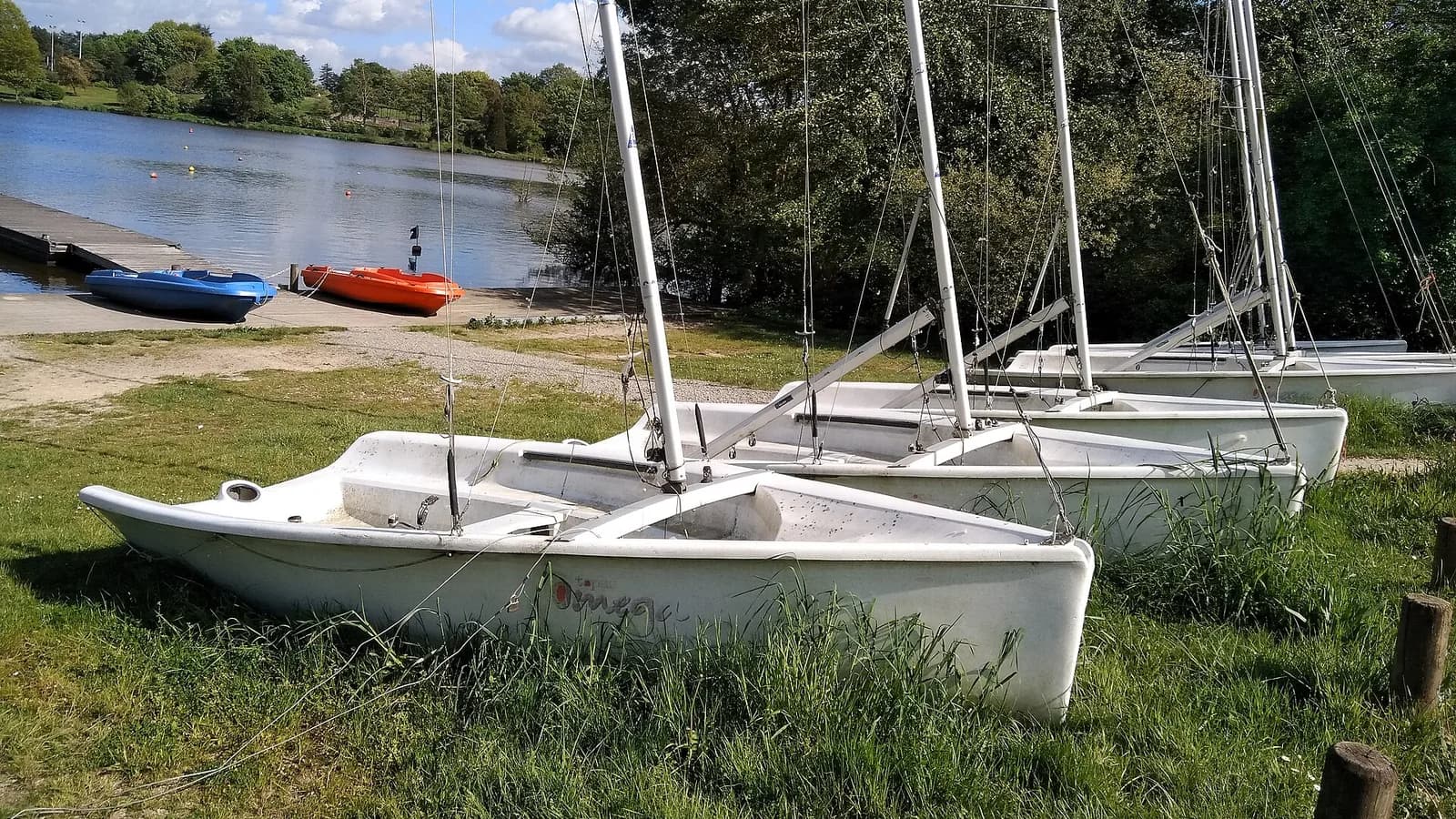
Ask older Polish sailors what boat they made their first tacks on, and most will answer without hesitation: the Omega. For decades this unassuming six-metre centreboard dinghy was the first boat of scouts, sailing-course trainees and summer campers — from the Vistula to the Masurian lakes. The story of the Omega is really the story of Polish sailing: it begins in occupied Warsaw and continues to this day, because the class is still racing.
A shed by the Poniatowski Bridge
The Omega was designed by Juliusz Sieradzki in 1942 (some sources even point to 1941) in occupied Warsaw, and the first boats were built in a small shed by the Poniatowski Bridge. The first hull was ordered by Leon Jensz of the Polish Yacht Club, the second by Czesław Marchaj, who would later gain world fame as the author of "Sailing Theory and Practice". The boat had to cope with the shallow Vistula — hence the flat bottom, the pivoting centreboard and the modest draft. The hulls of the first Omegas were built from thin pine strips fastened to a harder wooden frame, and the whole thing carried 15 square metres of sail. As the sailing chronicles recall, during the war soldiers of the Home Army are said to have trained on Omegas, and during the Warsaw Uprising the boats carried people and supplies along the Vistula.
Who was Juliusz Sieradzki
The Omega's designer (born 1912 in Lwów, died 1999 in Sopot) was himself a top-flight sailor: in 1936 he competed in the Olympic regattas in Kiel (11th place in the 6-Metre class on the yacht "Danuta"), and in the 1950s he became Poland's first national champion in the Finn class — and took a national title on his own Omega as well. It is hard to imagine a more beautiful arc: the man who raced at the Olympics gave Poles a boat on which anyone could begin.
The "Polish Fiat of sailing" — how the Omega taught a whole country to sail
After the war, the Polish Sailing Association took over the one-design's documentation and in 1950 ordered the first 250 boats from the Yacht Shipyard in Szczecin. By 1959 there were already 419 Omegas afloat. The boats went to scouting water troops and clubs, and at sailing camps it was on Omegas that you earned your licences. The magazine "W ślizgu!" called it the "Polish Fiat of sailing" — whole generations passed through this boat. In the 1970s informal Omega regattas were held on the Masurian lakes for camp participants, and "Omega touring" — sleeping under the boom with a tarpaulin thrown over it — remains one of the fondest camp memories to this day. We have gathered more stories like these in our article on sailing the Masurian lakes in the old days.
From wood to fibreglass — with the silhouette unchanged
The first Omegas were wooden, with cotton sails. The turn of the 1970s brought the fibreglass "Ostróda-Omega '74", followed by Dacron sails and aluminium masts. The modern Omega measures 6.15–6.25 m in length with a beam of about 1.8 m, carries 18 square metres of sail (main and jib), and since 2001 the sport fleet also flies a spinnaker. It is still an unballasted centreboard dinghy: with the board raised, the draft is a mere 16 cm, so it will nose up to almost any shore. It races with a crew of three, takes up to six for touring, and you can recognise its silhouette from the far end of the lake.
The Omega today: a class that still races
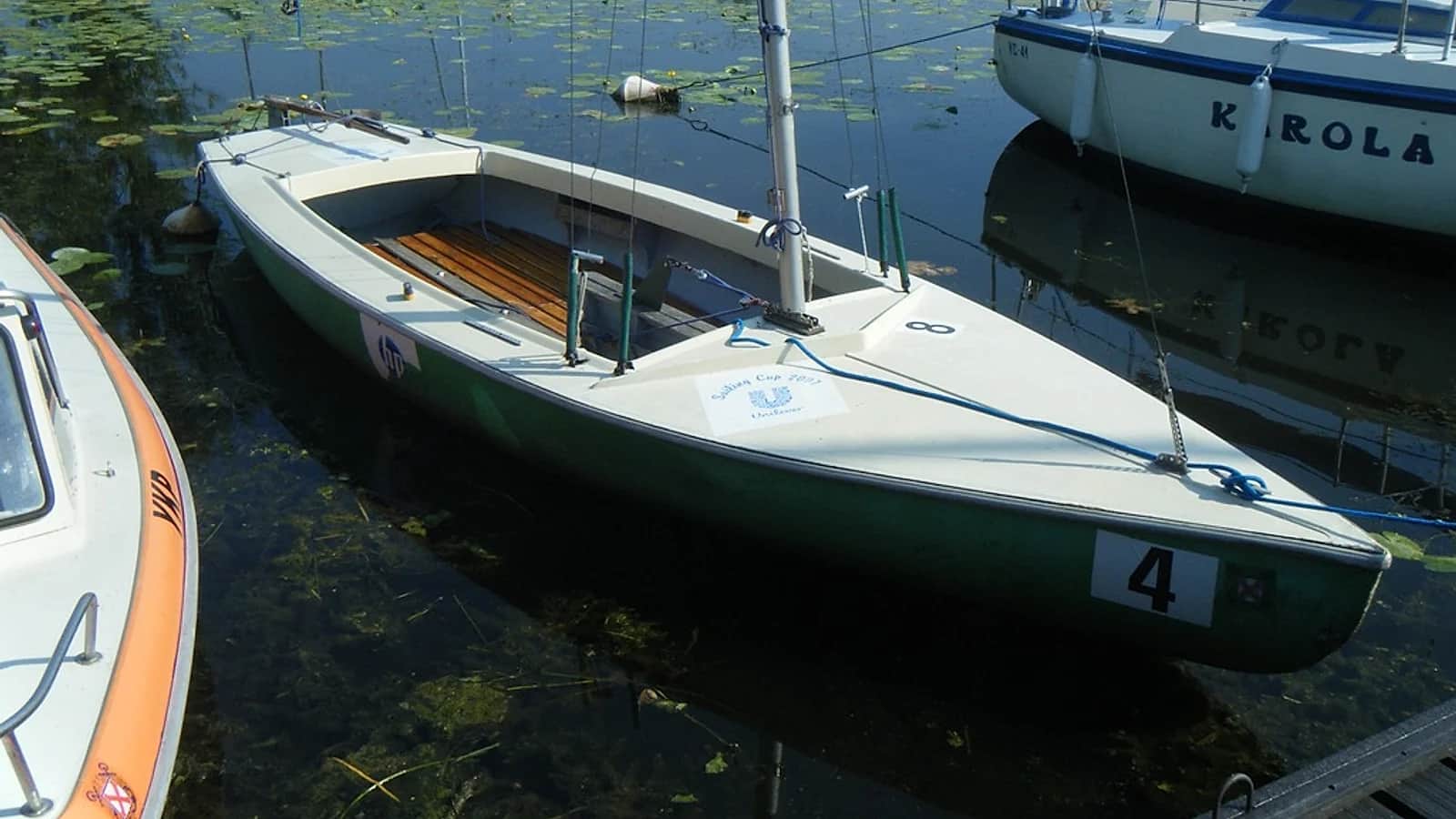
This is no museum piece. The class is looked after by the Polish Omega Class Association, based in Olsztyn, and the Sport and Standard fleets race all season long. Around 50 boats lined up at the 2025 Polish Championships in Puck, and 55 crews were ranked in the Standard fleet of the Polish Cup alone. The 2026 calendar opens in May in Morąg, in Warmia and Masuria, and Puck will host the championships once again (18–20 September). New hulls are still leaving the yards, and in 2027 the class will turn 85. In Masuria its spirit is thriving: corporate regattas on Lake Niegocin are sailed on Omegas, and you can still charter one along the trail. Curious about this world? See what regattas are and how they work.
What to sail today in the spirit of the Omega
If this has brought back the scent of the old camps, we have good news: that style of sailing hasn't disappeared. A nimble, forgiving centreboarder, shallow draft and a tiller in your hand — that is exactly what you will find in our fleet, led by the intimate Twister 26. Browse the other sailing yachts in Masuria too, and if you enjoy stories like this one, read about the Sportina — the iconic sailboat of Masuria.
Frequently asked questions
Who designed the Omega, and when? Juliusz Sieradzki, in 1942 (some sources point to 1941), in occupied Warsaw, in a shed by the Poniatowski Bridge.
What are the dimensions of the modern Omega? Length 6.15–6.25 m, beam about 1.8 m, 18 square metres of sail and only 16 cm of draft with the centreboard raised. Crew: three for racing, up to six for touring.
Is the Omega class still racing? Yes — around 50 boats started at the 2025 Polish Championships in Puck, and the 2026 Polish Cup opens in May in Morąg.
Can you still sail an Omega in Masuria? Yes — Omegas still sail in charter fleets and at corporate regattas, including on Lake Niegocin. The same spirit also lives on in today's charter centreboard dinghies.
Cover photo: Tadeusz Rudzki / Wikimedia Commons (CC BY-SA 3.0).