NaCzarter Team
· Updated
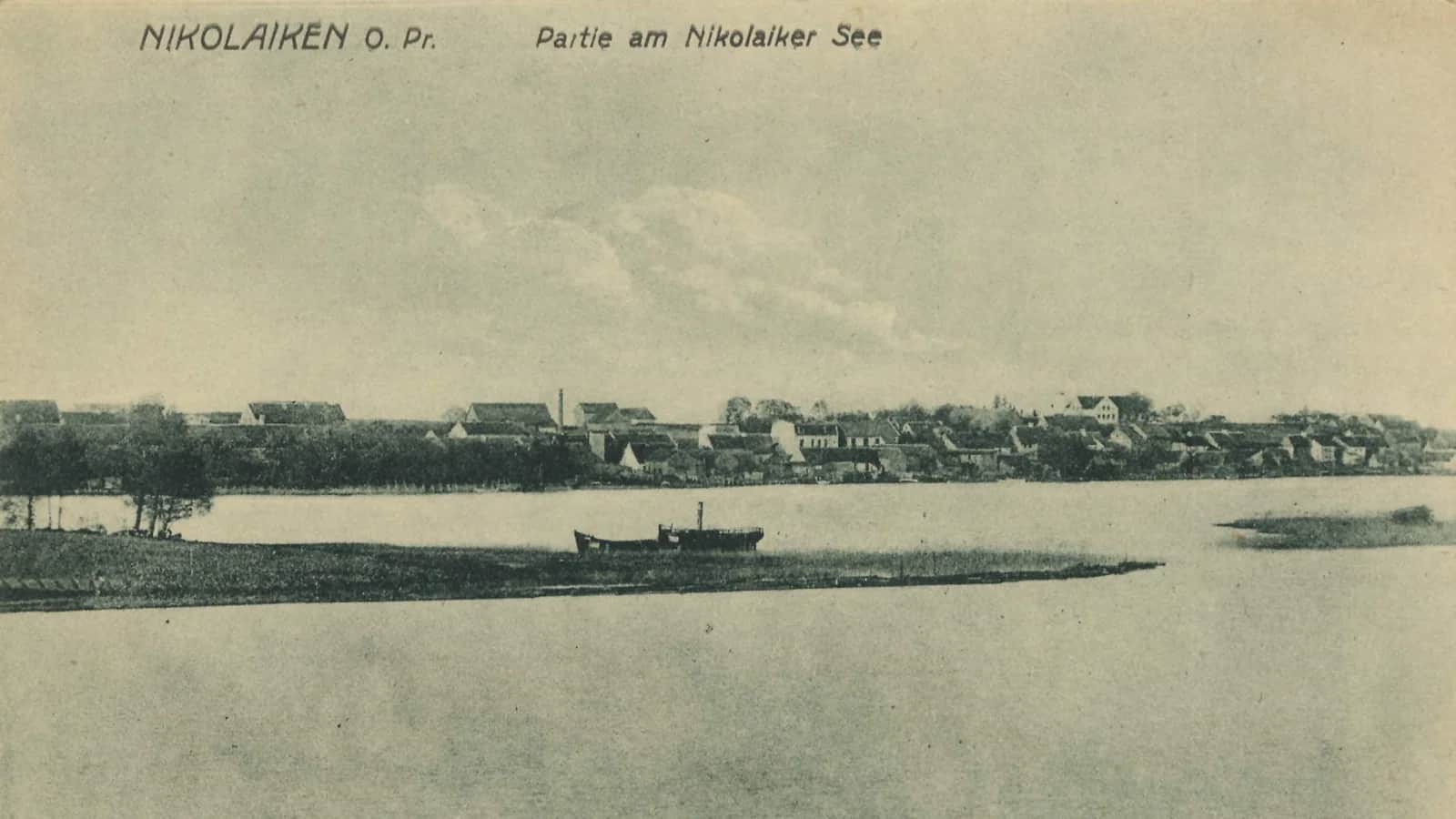
Picture a postcard from 1925. The postmark reads: Lötzen, Ostpreußen. The photograph shows the lakeside promenade on Niegocin — men in straw boaters, smoke from a steamboat's funnel drifting behind them. If someone had told the locals then that a hundred years on, the lake would keep its name but the town would carry a completely different one — and that thousands of Polish sailors would ply the very same routes — they would probably have shrugged. And yet. The Masuria of a century ago is a world that vanished from maps and shop signs, but not from the landscape. The canals, locks, bridges and waterways we sail today were laid out exactly then — or earlier still. This is a story about that Masuria: about towns with other names, about the first steamboat that sank shortly after her debut, and about the smoked vendace that the author of a 1923 guidebook raved about.
Different names on the same map
Start with the basics: a hundred years ago Masuria — Masuren in German — lay in East Prussia. Mikołajki was Nikolaiken, Giżycko was Lötzen, Węgorzewo was Angerburg, Mrągowo was Sensburg, Ryn was Rhein, and Pisz was Johannisburg, though Poles had long called it Jańsbork. Ełk appeared on the maps as Lyck.
Here's the curious part: the renaming began before 1945 — only in the opposite direction. In 1938 the Nazis decided that roughly half of the local place names sounded "too Polish or too Prussian" and wiped them off the maps. That is how Rudczanny, an old settlement by the lock, became Niedersee overnight. Today's Ruciane-Nida, for the record, has only existed as a town since 1966.
After the war the map flipped a second time. The Polish names were settled by the Commission for the Determination of Place Names, which worked from 1946 to 1951. Some names were simply restored or polonised, but two of them are genuine tributes. Lötzen — briefly called Łuczany just after the war — has since 1946 borne the name of Gustaw Gizewiusz, a pastor who defended the Polish identity of the Masurians in the nineteenth century. Sensburg became Mrągowo in honour of Krzysztof Celestyn Mrongowiusz. Węgorzewo was, for a moment, Węgobork. When you moor in Giżycko today, you are tying up in the port of a town that changed its name twice within a single generation.
Canals older than the steamboats
The Great Masurian Lakes were not always one continuous waterway. People joined them together — and surprisingly long ago: the canal system was dug between 1765 and 1772, on Prussian initiative. The purpose was prosaic — transport and timber floating, no tourism of any kind. The real breakthrough came in 1854–1857, when the canals were rebuilt and deepened. From that moment regular navigation could begin — and it did, almost at once.
The best known of these canals, the Łuczański Canal (also called the Giżycko Canal), runs 2,130 metres and links Niegocin with Kisajno. A swing bridge from the late nineteenth century crosses it — built around 1889 and still turned by hand to this day, which makes it one of the very few working nineteenth-century bridges of its kind in Europe. Anyone who has taken a yacht through the Łuczański Canal has waited for the same bridge the steamboats waited for a hundred years ago. Opening hours and practical tips are gathered in our separate guide to the Giżycko swing bridge.
One caveat, because the names love to get tangled: the Łuczański Canal is not the Masurian Canal. The latter — an unfinished waterway that was meant to lead from the lakes towards the Baltic — is a different and much longer story.
The Masovia — a steamboat, a king, and bad luck on Lake Ryńskie
Passenger shipping in Masuria has an exact birthday: 19 June 1854. On that day the Prussian king Frederick William IV ceremonially inaugurated steam navigation with a cruise of the steamboat Masovia. The handsome beginning had a bitter end — the ship soon sank on Lake Ryńskie. The history of Masurian shipping thus opens with a disaster, which sounds like a bad omen and turned out to be nothing more than a false start.
In 1890 a passenger shipping company was founded in Giżycko, and from then on the traffic on the lakes only thickened. Before 1939 more than 26 vessels sailed the Great Lakes. One detail from that fleet says everything about the determination of the age: a certain paddle steamer was brought to Masuria by rail. A ship on railway wagons, rolling across East Prussia towards a lake — today that transport would make the evening news; back then it was simply logistics.
The railway brings the summer visitors
The steamboats needed passengers, and the railway delivered them. The Ełk–Königsberg line opened in 1868; the train reached Mikołajki in 1911. The third piece of the puzzle was the Guzianka I lock of 1879, which opened the Giżycko–Mikołajki–Pisz waterway — and it is from that lock that the beginnings of sailing tourism in Masuria are counted. Results came quickly: after the First World War, Ruciane was receiving about 12,000 summer visitors a year. For a forest settlement beside a lock — crowds.
The interwar years were the golden age of the Masurian resorts. From 1920 Mikołajki was a popular holiday town. Lötzen grew into a fashionable resort with hotels, a yacht harbour, a bathing beach on Niegocin and promenades through the woods. In winter, iceboat regattas were raced on the frozen lake; in summer the sailing and rowing clubs took over. Angerburg — today's Węgorzewo — was known as a summer retreat and a centre of water sports. It was then that someone coined the slogan that still does its job today: "the Land of a Thousand Lakes" — though on the numbers, for once, the advertising undersold it, because there are around two thousand lakes here, led by Śniardwy (113.8 km², the largest lake in Poland) and Mamry (around 105 km²).

Look at that photograph a moment longer. The cobbles, the shop signs, the townhouses around the square — a small town that lived off the lake and its summer guests, exactly as it does now. The name on the sign changed; the language over the shopfronts changed. The rhythm stayed.
Mikołajki: vendace, pearls, and a fish on a chain
If any Masurian town had a distinct flavour a hundred years ago, it was Mikołajki — and the flavour was smoked vendace. A fish processing plant had operated here since 1864, and smoking over alder wood counted as a local speciality. Mieczysław Orłowicz, author of a 1923 guidebook, wrote plainly that "Mikołajki is famous for its smoked vendace — a delicacy." The same plant, by the way, produced something stranger still: artificial pearls made from bleak scales. Fish scales turned into jewellery — trades like that no longer exist.
The nickname "Venice of Masuria" comes straight from geography: the town sits squeezed between lakes Tałty and Mikołajskie, and its life has always run along the quays and out on the water. And then there is him — the King of the Vendace, Stinthengst in German. Here we step onto the ground of legend, so let's say it clearly: this is a folk tale, not a chronicle. According to it, the lakes were ruled by a crowned fish that tore the fishermen's nets. Caught at last in an iron net, it spoke with a human voice and, in exchange for its life, promised bountiful catches. The fishermen — trusting, but not naive — chained it to a bridge span just in case. The fish made it into Mikołajki's coat of arms, and the name Stinthengst hides a comic pairing: "Stint" means smelt (a small fish, not the vendace itself), "Hengst" — a stallion. Today the legendary king watches over a town that celebrates in its own fashion every year — we write about it in our piece on the Mikołajki Days.
1945: new names, ships raised from the lakebed
The war cut this story in half. Masuria found itself in Poland, the towns received new (and often very old) names, and the passenger fleet lay on the bottom. Literally: the first post-war fleet was made up of raised German vessels. The first ship built in Poland — the Mazury — was launched in 1956. Today the white fleet carries around 100,000 passengers a year, largely along routes the steamboats had already covered a century earlier. The war left other traces in these forests too — the Wolf's Lair near Gierłoż still stands among the trees — but the lakes went back to being lakes.
Under the People's Republic, sailing stopped being a pastime for hotel guests and went mass-scale — whole generations passed through sailing camps and clubs. Giżycko earned the title of "capital of Polish sailing", and the Great Lakes route from Węgorzewo to Ruciane-Nida — over 100 kilometres, and counting the branches more than 330 kilometres of waterways — became the most popular inland sailing route in Poland. The entire Masurian Lake District sails today on infrastructure whose skeleton was built between the eighteenth and nineteenth centuries: canals from 1765–1772, a lock from 1879, a bridge from around 1889. Few tourist regions rest on a foundation this solid, or this old.
Then and now — four small proofs
- Steamboats → the white fleet. The routes are the same; only the funnel smoke gave way to engines — and more than 170 seasons have passed since 1854.
- Smoked vendace. The delicacy praised in the 1923 guidebook still smells of alder wood in Mikołajki's fish bars.
- The swing bridge. Turned by hand in the nineteenth century — and still turned by hand in 2026, exactly as it was when it let the steamboats through.
- Regattas on Niegocin. In the 1920s and 30s people raced here on the water in summer and on iceboats in winter; sailors race on the same waters today — and you can see many of these places from the deck, as we show in our top 10 Masurian sights from a yacht.
Frequently asked questions
What were the Masurian towns called before 1945? Mikołajki was Nikolaiken, Giżycko — Lötzen, Węgorzewo — Angerburg, Mrągowo — Sensburg, Ryn — Rhein, Pisz — Johannisburg (Jańsbork in Polish), Ełk — Lyck. The Polish names were settled after the war by the Commission for the Determination of Place Names (1946–1951); Giżycko commemorates the pastor Gustaw Gizewiusz, and Mrągowo — Krzysztof Celestyn Mrongowiusz.
When did Masuria become a tourist and sailing region? The nineteenth century brought the breakthrough: the rebuilding of the canals (1854–1857), the first steamboat Masovia (1854), the Ełk–Königsberg railway (1868) and the Guzianka I lock (1879), which opened the Giżycko–Mikołajki–Pisz waterway. The boom came in the interwar years — Lötzen was a fashionable resort, and Ruciane received about 12,000 summer visitors a year.
Why is Mikołajki nicknamed the "Venice of Masuria"? Because of its setting: the town lies between lakes Tałty and Mikołajskie, and its life has always run along the waterfront and on the water.
Who is the King of the Vendace from Mikołajki's coat of arms? A figure of legend: a crowned fish (the Stinthengst) that tore the fishermen's nets, and, once caught in an iron net, spoke with a human voice and promised bountiful catches in exchange for its life. The fishermen chained it to a bridge span, and its likeness ended up in the town's coat of arms.
What is the difference between the Łuczański Canal and the Masurian Canal? The Łuczański (Giżycko) Canal is a working 2,130-metre canal linking Niegocin with Kisajno, crossed by a hand-turned swing bridge from around 1889. The Masurian Canal is an unfinished waterway that was meant to connect the lakes with the Baltic — it was never completed and never opened to regular navigation.
The best thing about this story is that you don't have to read it — you can sail it. The same route the Masovia took, the same canals dug in the eighteenth century, the same bridge that let the steamboats pass. A week on a yacht from Giżycko to Mikołajki and on across Śniardwy is the most pleasant history lesson we know — with smoked vendace in the harbour instead of a school bell.
Cover photo: Emil Bönke, Nikolaiken, ~1900 / Wikimedia Commons (public domain).