NaCzarter Team
Boyen Fortress is one of those spots on the Giżycko map that truly justify stepping off the deck and devoting a few hours to dry land. When you moor in Masuria's sailing capital, you have the fortress ramparts literally within arm's reach — a mighty 19th-century Prussian fortress that guarded the narrows between the lakes for more than a hundred years. At NaCzarter we've been taking crews to Masuria for 25 years, and we know one thing: a day on the water takes on a whole new dimension if you weave it together with a good story. And Boyen Fortress has stories in abundance. In this guide I'll show you why it's worth stopping by, what exactly to see inside, how to walk there from the harbour, and how to fit the visit into a cruise across the Great Masurian Lakes.
Boyen Fortress — why it's worth stepping ashore in Giżycko
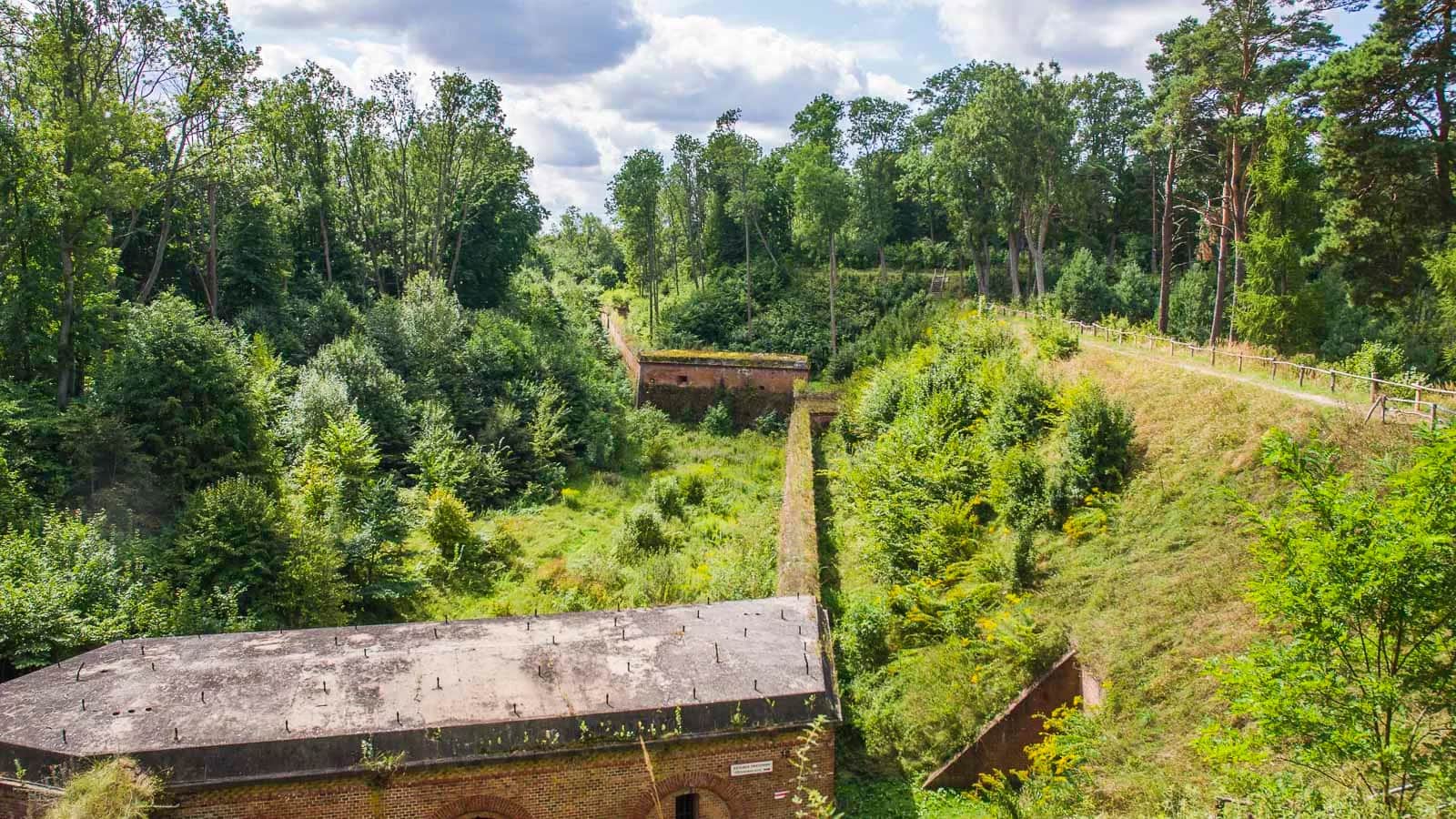
Sailors often treat Giżycko as a mere stopover: restock supplies, wait out the queue for the swing bridge, top up the water and move on. That's a shame, because right here, a few hundred metres from the quays, stands one of the best-preserved 19th-century earth-and-brick fortifications in Poland. Boyen Fortress is not a ruin you view from behind a fence — it's a sprawling, star-shaped complex of bastions, ramparts and gates that you can walk through, climb onto the crests of the ramparts, and enter the casemates.
For a cruising crew, Boyen Fortress has three advantages that are hard not to appreciate. First — it's close by, so you don't need to rent a car or plan a full-day expedition. Second — it's an attraction that stands up to the whims of Masurian weather: when a front rolls over Niegocin and the wind picks up enough that staying in the harbour is the wiser choice, a walk along the fortress ramparts and a descent into the cool casemates make an excellent fallback plan. Third — it's a place with real, tangible history, not just another souvenir stall. If you're planning your whole stay in this town, it's also worth taking a look at our broader guide to Giżycko (ports and attractions), where the fortress is one of several must-see points.
A brief history — a Prussian fortress between two lakes
Boyen Fortress was built between 1844 and 1856 as a Prussian fortress guarding a strategic narrows. It was named in honour of Hermann von Boyen — a Prussian general and minister of war, one of the reformers of the army, whose name became permanently tied to this place. Construction began in an era when Prussia was tidying up its eastern border and looking for a point that would allow it to control traffic along the water axis of the Great Lakes.
The key to understanding the fortress is geography. The stronghold was raised on a narrow spit — the isthmus between the lakes Niegocin and Kisajno. This was a natural chokepoint: whoever held this narrows controlled the waterway linking the southern and northern Masurian waters. The fortress therefore didn't have to defend a broad front; it was enough that it closed off the one narrow passage that everyone had to pass through anyway. That's why its layout was fitted so tightly into the terrain between the waters — the engineers used the lakes as natural flanks of the defence.
For decades the fortress remained an active military site and, although it never became the arena of a great, decisive battle, its significance lay precisely in deterrence — in the fact that it stood where it stood, and every adversary had to reckon with it. Anyone who wants to delve into the architectural details and the history of the site will find a solid write-up in the article on Boyen Fortress. The broader context of the town itself — its growth around the harbour and the waterway — is well complemented by the entry on Giżycko.
What to see inside — bastions, gates, ramparts and casemates
Boyen Fortress has a bastion layout — from a bird's-eye view it takes the shape of a distinctive, polygonal star. This form is not an architect's whim but pure defensive mathematics: the projecting, sharply pointed bastions allowed the ramparts to defend one another with flanking fire, so that no stretch of the wall was left as a blind spot. Walking along the crest of the ramparts, you'll get the best feel for this logic — you can see how one bastion "looks at" its neighbour and how the moats and forefields fall into a coherent system.
Here's what to pay attention to as you tour the fortress complex:
- Ramparts and moats — mighty earth-and-brick embankments along which walking paths now run. It's these that give the fortress its scale; from their crest, views open out over the surroundings and over the waters the fortress was meant to guard.
- Gates — several historic gates lead into the complex, including the Giżycko, Kętrzyn, Powder and Water gates. Each served a different transport and logistics function; the brick portals are among the most photogenic features of the site.
- Bastions — the projecting corners of the defence, whose star-shaped arrangement is best seen from the inside, wandering along the ramparts.
- Casemates — vaulted brick chambers set into the ramparts, providing shelter for the garrison and stores. They stay cool and quiet even on a scorching July day. Interestingly, the casemates are today also valuable for nature: bats hibernate in them, and these damp, thermally stable interiors make an ideal hibernaculum.
This blend of military and natural heritage makes Boyen Fortress interesting for different types of visitors — a history buff will inspect the fortifications, while a family with children will simply have a good run around on the ramparts. An important practical note: always check the exact opening hours and ticket prices before your visit, as they change seasonally, and some outdoor events may temporarily affect the availability of particular zones.
The fortress through a sailor's eyes — how to get there from the harbour and how much time to set aside
The biggest advantage of Boyen Fortress for a crew is that it's easily reachable on foot from Giżycko and its quays. You don't need a bike or transport — all you need is good footwear and the urge to stretch your legs after a day on deck. The fortress lies right by the town, on the very same isthmus where most yachts moor, so the walk from the harbour is a matter of a leisurely stroll, not an expedition.
How much time to set aside? From experience I'd advise treating the fortress as a solid, few-hour supplement to a day ashore. Just the walk along the ramparts and a look at the gates takes about an hour and a half to two hours at a relaxed pace; if you want to delve deeper — into the casemates, the exhibitions, to sit down and soak up the atmosphere of the place — you can easily add another hour or two. It's a comfortable plan for an afternoon that, in Giżycko, is often given over to harbour matters anyway.
A practical navigational trick: many sailors stop in Giżycko anyway, waiting for the opening of the swing bridge in Giżycko (nearby, on the Łuczański Canal). That's the perfect moment to stop nervously watching the clock and simply moor up, walk to the fortress ramparts, and return on board for the next opening. The visit then fits naturally into the rhythm of the cruise instead of breaking it up. And since the fortress guarded the waterway, it's worth taking a look at the body of water it watched over — our sailing guide to Lake Niegocin (the fortress guards it) will help with that.
Events and the atmosphere of the place — what happens here in summer
Boyen Fortress is not just dead walls to be looked at — it's a living museum and tourist site where a lot happens in summer. On the expansive forefields and within the ramparts, outdoor events, fairs and historical reenactments take place. For a cruising crew that's a double attraction: first, that the site itself is impressive, and second, that if you catch an event, you get an extra dose of atmosphere — whether it's stalls of local crafts or reenactors in period costume bringing the fortress walls to life.
The atmosphere of the place is in any case its greatest asset. In the evening, when the sun sits low over Niegocin, the brick gates and grass-covered ramparts take on a completely different character than in the full sun of midday. That's a good moment for a quiet walk — no crowds, in the stillness, with a view over the water. Many sailors later recall exactly that evening on the ramparts as one of the stronger points of the whole cruise.
One organisational note: the programme of summer events and the hours of access change from year to year and depending on the season. Before you set out from the harbour to the ramparts, it's worth quickly checking the current calendar and any disruptions. That way you'll avoid a situation where you arrive at a closed zone or — conversely — miss an interesting event that happens to be running right next to your quay.
Combine sightseeing with a cruise — Giżycko as a base for setting out
Boyen Fortress works best not as the goal of a standalone trip, but as part of a larger whole — a day spent in Giżycko during a cruise. The town is a natural base for setting out onto the Great Masurian Lakes: it lies on the isthmus between the waters, has extensive harbour infrastructure, shops, services and dining, and from here the popular sailing routes branch off in every direction. By starting your cruise right here, you have the fortress within walking distance on the very first day — before you've even properly raised the sails.
How to weave the fortress into your cruise plan? A simple scheme works well: on the first day you sort out harbour matters and walk to the ramparts of Boyen Fortress to catch the historical context of the whole area; the following days you devote to sailing on Niegocin, Kisajno and further north and south. If you're looking for inspiration on what else to see from the deck, take a look at our roundup of the top 10 Masuria attractions from a yacht — the fortress is in fine company there.
On the organisational side, the simplest way is to start out from here by taking a boat on the spot. You'll find the range of boats available in this town on the yacht charter in Giżycko (base for setting out) page, and if you're only just planning the whole trip and want to compare dates and boats, take a look at our yacht rental (online booking). At NaCzarter we've been arranging such cruises for 25 years so that they combine sailing well with the best of what's on land — and Boyen Fortress is a superb example of that.
Frequently asked questions
How much time should I set aside for visiting Boyen Fortress? For a relaxed walk along the ramparts and a look at the gates, about an hour and a half to two hours is usually enough, and if you want to explore the casemates and soak up the atmosphere of the place, it's worth setting aside a few hours — a comfortable supplement to an afternoon spent in Giżycko, which is often given over to harbour matters anyway.
How do I get to the fortress from the harbour in Giżycko? Boyen Fortress is easily reachable on foot — it lies right by the town, on the very same isthmus between the lakes where most yachts moor, so from the quays you can walk there with a leisurely stroll, with no need for a car or a bike.
Can the fortress be visited throughout the season, and how much do tickets cost? The fortress functions as a museum and tourist site and buzzes with life in summer — outdoor events, fairs and reenactments take place here — but the exact hours of access and ticket prices change seasonally, which is why it's always worth checking the current information just before your visit.
Plan a cruise with Boyen Fortress in the background
Boyen Fortress is proof that the best Masurian cruises happen not only on the water but also on land — in places you can easily reach straight from the deck. At NaCzarter we've been helping sailors put together such trips for 25 years: with Giżycko as a base, the fortress as a warm-up, and the whole of the Great Lakes to discover. Choose a date and a boat, and the rest — including a good walk along the fortress ramparts — you'll fill in on the spot. Check out our yacht rental in Masuria and book your cruise online.